The Car Colour You Can Undo
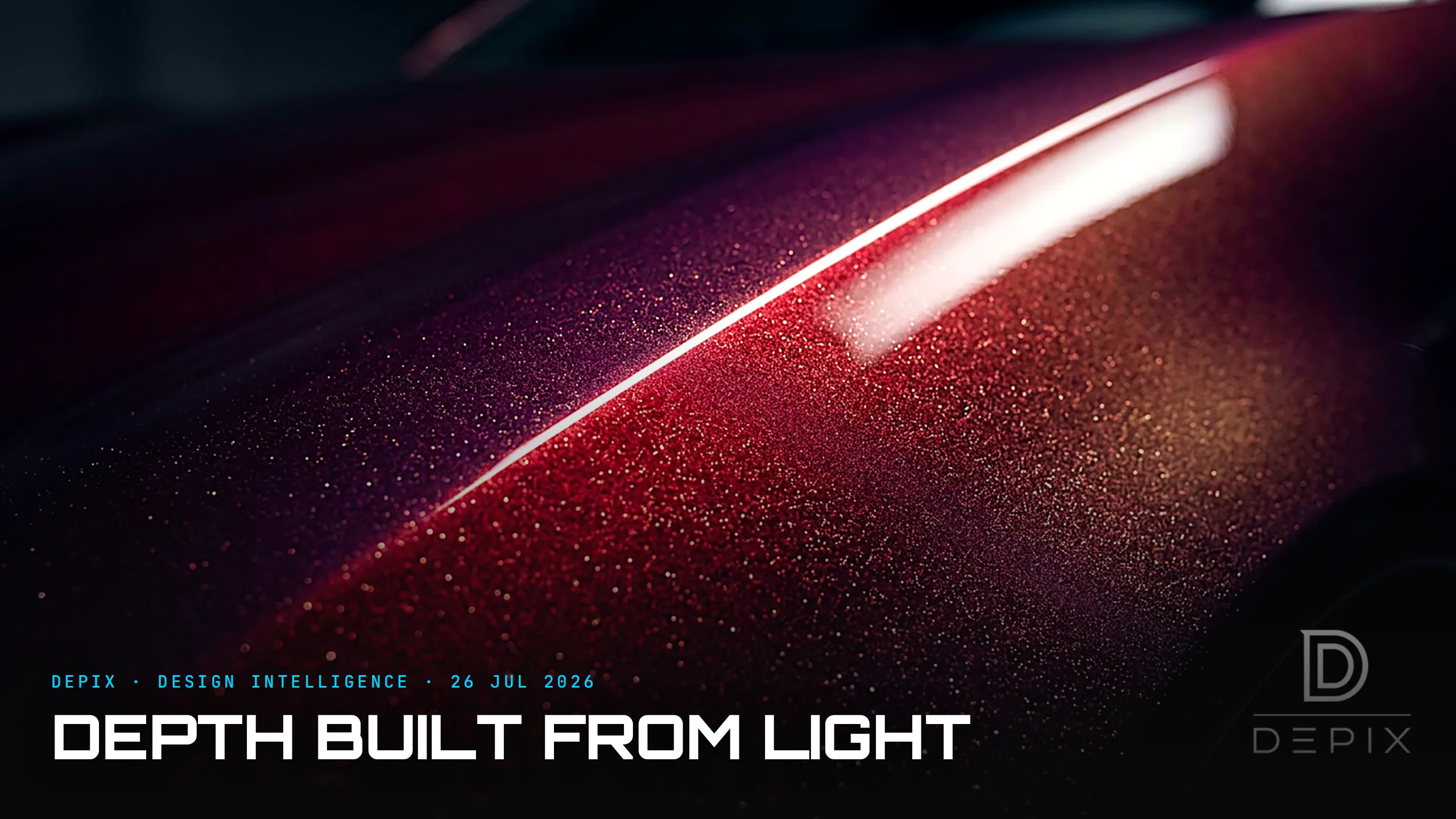
Candy and pearl paint carry a catch buried in their beauty: the depth is engineered in layers, which makes the colour effectively impossible to repair. Paint, in general, is the most permanent decision on a car — expensive, one-shot, hard to change, painful to fix. That permanence has a quiet consequence almost nobody notices: it makes people cautious. When a colour is forever, most buyers pick the safe, resale-proof option, which is a large part of why the world's roads are grey, black, white and silver. The vinyl wrap exists to break that logic entirely.
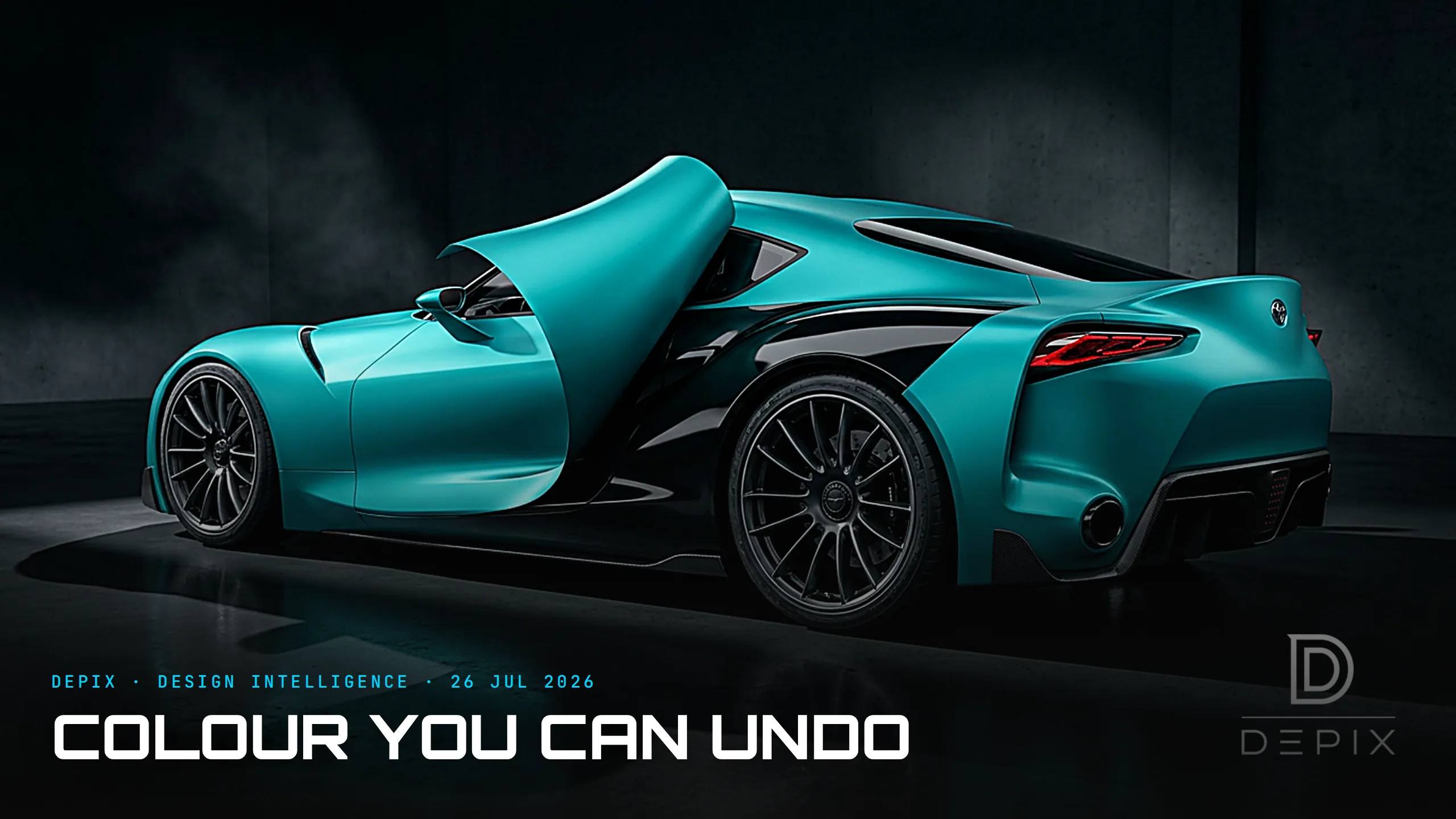
A wrap is a thin printed or coloured film applied over the factory paint — a technology that began as fleet advertising and became personal expression. The crucial word is reversible: a quality wrap, professionally installed and removed within its rated life, comes off without harming the paint underneath. That single property changes everything about the decision. Your colour is no longer a permanent commitment; it is a layer. You can run matte military-green this year, satin plum next year, and peel it all off before you sell — and the original factory finish is revealed intact, often better protected than if it had been left bare, because the film shielded it from UV, stone chips and weather the whole time.
The economics reinforce the shift. A full wrap typically runs around $2,500 to $9,000, against $8,000 to $15,000-plus for a quality respray — and crucially, a repaint permanently alters a premium car, while a wrap that protects the resale-critical factory paint is the reason so many Porsche, BMW and Tesla owners choose film over pigment. A good wrap lasts five to seven years; it is, in effect, a semi-permanent costume rather than a new skin.
What makes this a design story rather than a detailing one is what reversibility does to behaviour. The wrap market is not growing quietly — it is projected to expand from roughly $13 billion in 2025 to $95 billion by 2035, compounding at over 22% a year, and the demand is explicitly for bold colour, matte and satin finishes and personalisation rather than safe neutrals. The moment the downside of a colour disappears — no permanence, no resale hit, no unrepairable damage — people get brave. The same person who orders a grey car will happily wrap it electric teal, because they can undo it. Even the manufacturers have noticed: several now sell factory wrap options, quietly conceding that "your colour" no longer has to be a lifetime sentence. It is a preview of where CMF is heading more broadly: colour and finish decoupling from the object and becoming a changeable layer — today a film you swap at a shop, tomorrow, with e-ink and programmable panels, a setting you change from your phone. The direction is the same either way: away from permanence, toward colour as something you edit.
That is the concept-phase lesson, and it generalises far beyond cars. Reversibility is not a detail you bolt on at the end; it is a fundamental design decision, made early, that shapes how boldly people will use what you make. Permanence forces caution — when a choice can't be undone, users default to the safe option, hedge, and under-express. Reversibility unlocks experimentation — when a choice can be undone, the same users take risks, personalise, and engage far more. Software learned this long ago with undo, autosave and drafts; physical design is learning it now with wraps, modular interiors and swappable panels. If you want people to be brave with your product, the highest-leverage thing you can design is often not a bolder default — it is a cheap, clean way to reverse the decision.
And it closes the loop on this run of finishes. Matte earns its premium by subtraction; candy and pearl by engineered, unrepairable depth; a technical microsuede by making a synthetic outperform the natural. The wrap is the meta-move: it takes the single most committing CMF decision a car owner makes — its colour and finish — and quietly makes it optional. Design the reversibility, and you don't just change the paint. You change how much courage the choice requires. A colour you can undo is a colour people will actually dare to love.
Sources:
- ●Vehicle wrap — Wikipedia
- ●Wrapping vs Painting: The Ultimate U.S. Guide — Carvira
- ●Vinyl Wrap vs Paint: Cost, Longevity — Summit Graphics
- ●Vehicle Wrap Market Size & Growth to 2035 — Market Research Future
- ●Trend of Car Wraps Vinyl: 2025 Insights — Accio
- ●Car Wrap Ideas for 2025: Colors, Finishes & Trends — Aluko Vinyl
- ●Paint protection film — Wikipedia
- ●Car Wraps vs Paint: Which Is Better in 2025? — Print It Big
- ●Car Wrap vs Paint: Cost, Durability & Style — Vinyl Wrap Pro
- ●Vinyl Wrap vs Paint: Which Is Better? — Summit Customs
- ●Wrap advertising — Wikipedia