The Death of Piano Black
Piano black is the finish that looks like money under showroom lights and like a smudged phone screen ten minutes into ownership. You know the surface: the mirror-gloss plastic wrapped around the gear selector, the climate panel, the screen surround. It is the most photographed material in the modern car interior — and one of the most hated.
Here is the part designers rarely say out loud: piano black was never chosen for you. It was chosen for the sale. As Jalopnik and Yahoo Autos have documented, Ford worked with BASF to get the piano-black look without the traditional paint-and-clearcoat process — a route estimated to cut cost by roughly half by skipping the clearcoat step. It photographs like hand-lacquered luxury, it reads "premium" in the four-minute showroom sit, and it does all of that while hiding the fact that underneath it is ordinary injection-moulded plastic. It is a finish engineered for the first impression.
The bill comes due the moment you touch it. A mirror finish reflects everything — every fingerprint, every fleck of dust, every micro-scratch. CarBuzz calls it the worst interior design trend in modern cars; The Drive calls it an abomination and argues automakers have known it all along; Consumer Guide tells buyers to skip it; CarExpert simply wants it dead. Worse, it sets a trap: wipe the dust away and the cloth drags grit across the gloss, laying down the very micro-scratches that catch the next light. You slowly destroy the trim by trying to keep it clean. Owners have noticed — threads on the Polestar and Chevy Bolt forums read like grief counselling for a dashboard.
This is the CMF lesson hiding inside a decade of glossy plastic. Piano black is a decision optimised for the state it is evaluated in — the showroom still, the press render, the unboxing photo — and silently taxed in the state it is actually lived in: touched, every day, for years. A finish is not a look. It is a promise about how a product ages. Piano black makes the best possible first impression and close to the worst possible thousandth one, and no amount of studio lighting will show you that gap. You cannot see a fingerprint in a render. You can only predict it.
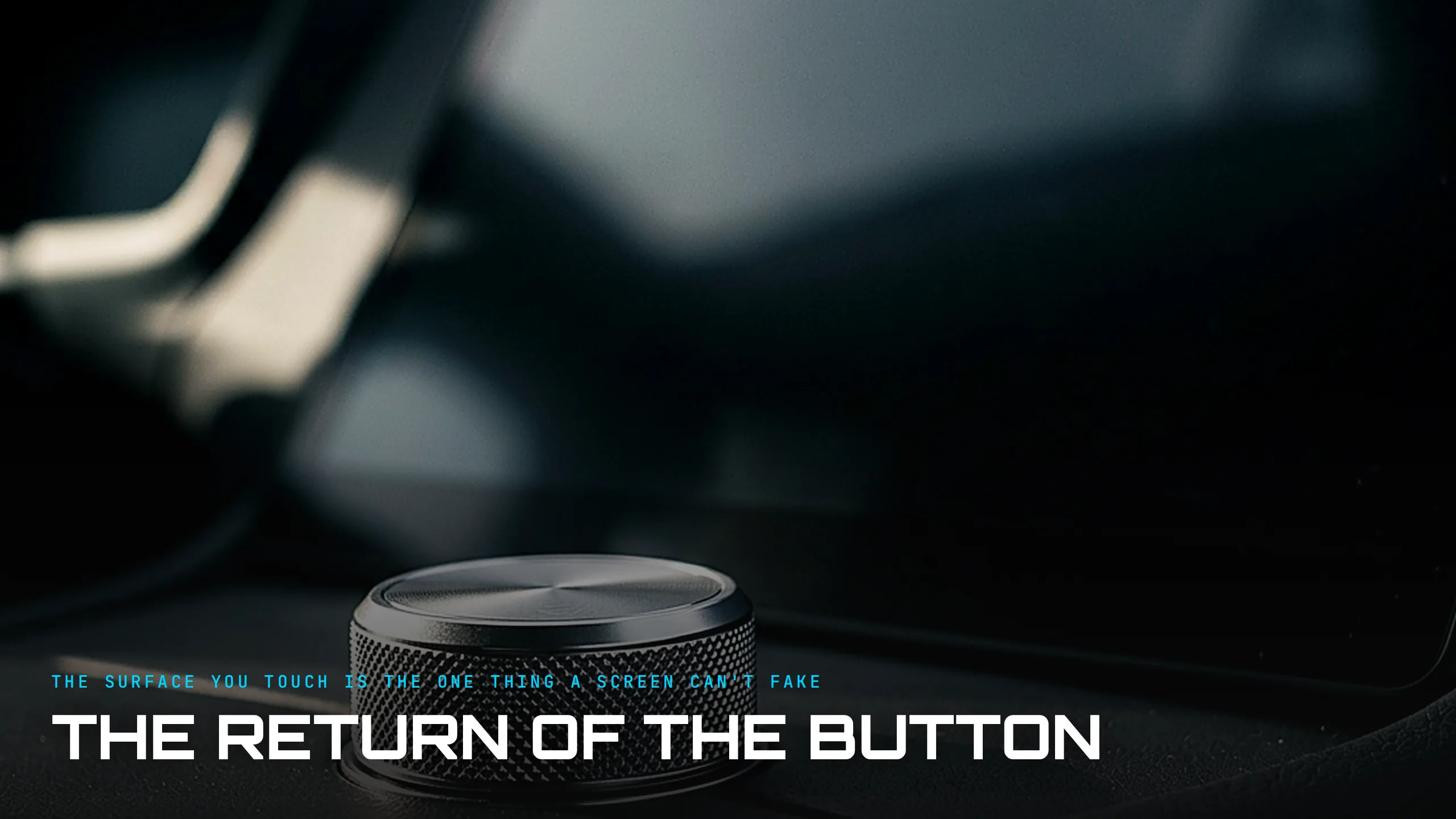
The encouraging news is that the industry is quietly correcting. The Autopian reports the trend finally dying; Motor1 notes Audi cutting piano black back across new models like the Q9 in favour of matte and textured materials that shrug off smudges, with Kia removing high-gloss from the EV9's centre stack for a fingerprint-resistant texture. Satin metallics, lightly grained plastics, woven textiles — surfaces designed to be touched rather than admired — are returning to the places your hands actually land.
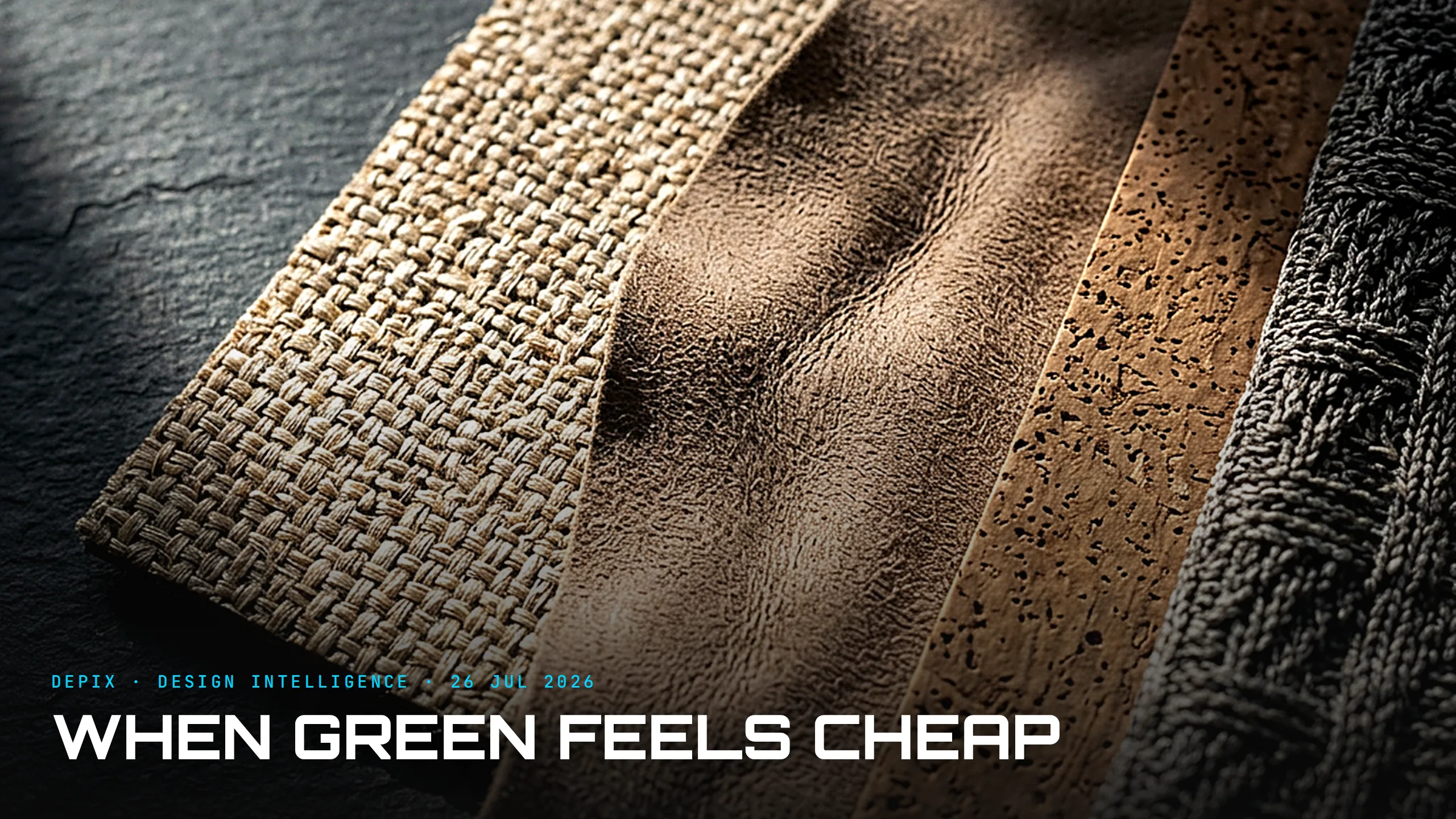
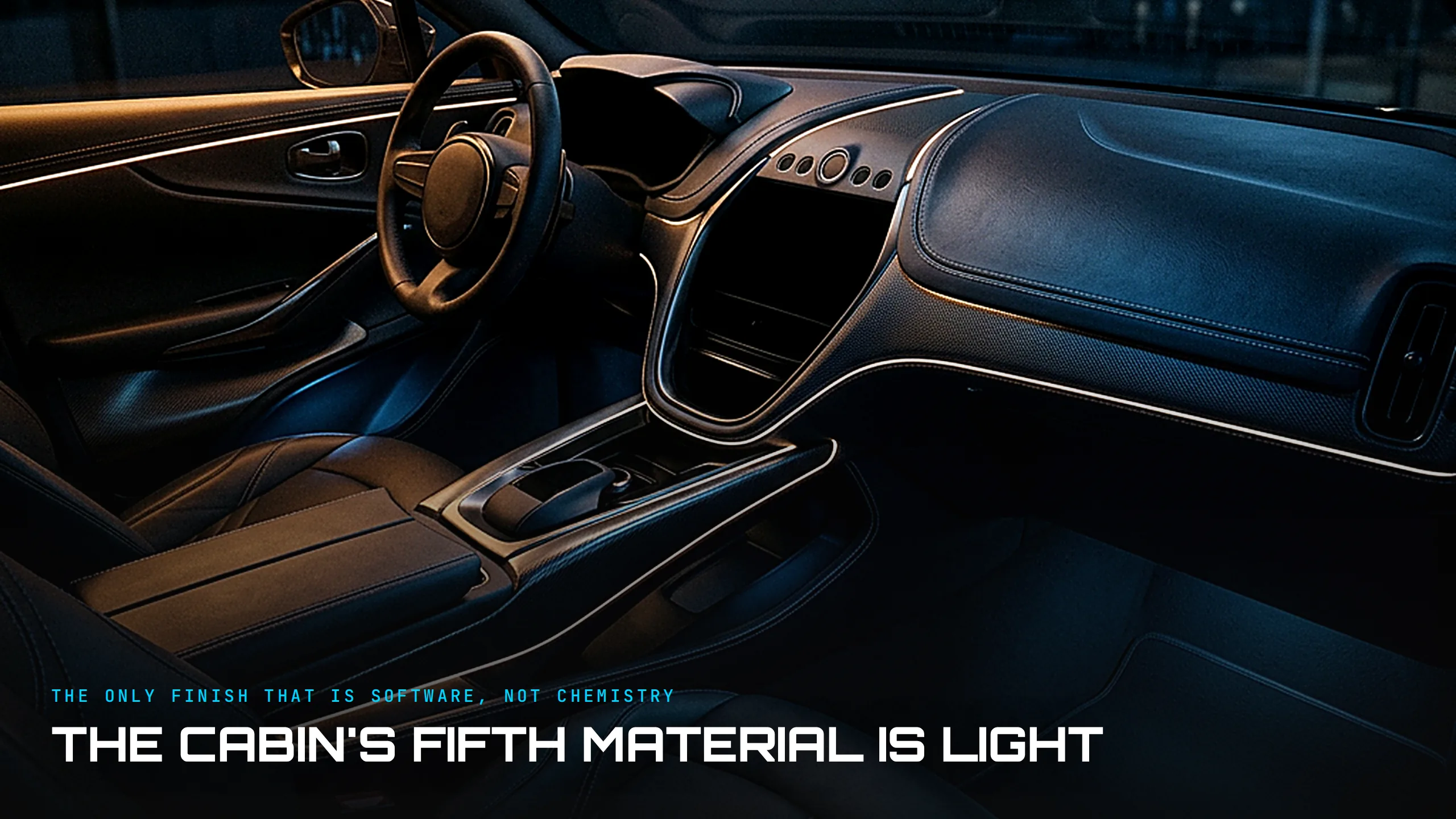
What comes next for CMF is more interesting than a simple swing back to matte. Three vectors are opening at once. The first is honest texture: grained, satin and open-pore materials that hide wear instead of advertising it. But even here there is no free finish — real open-pore wood, the darling of luxury cabins, has unsealed pores that embed grime far faster than a sealed gloss. Every finish trades one problem for another; the craft is choosing which problem your owner can live with. The second vector is chemistry: anti-fingerprint nanocoatings — ultra-thin oleophobic sol-gel layers — are a fast-growing coatings market, pushed hard by the spread of touchscreens that share piano black's smudge problem. The third is self-healing: clearcoats engineered to recover their finish after light scratches, so the surface repairs the very damage that cleaning inflicts.
That is the arc worth watching. Piano black won because it was cheap and it photographed beautifully. It is losing because a car interior is not a photograph — it is a decade of touch. The whole episode is a case study in why colour, material and finish cannot be judged from a single frame. The question that matters is never "how does this surface look right now?" It is "how will it look after ten thousand fingerprints, three years of dust, and one owner who wipes it with the wrong cloth?" — and that is a question you answer at the concept phase, before a single tool is cut. Design intelligence is seeing the fingerprint before the render does.
Sources:
- ●Jalopnik — Why Did Automakers Start To Use Piano Black Trim?
- ●Yahoo Autos — Why Did Automakers Start To Use Piano Black Trim?
- ●CarBuzz — Why Piano Black Plastic Is The Worst Design Trend In Modern Car Interiors
- ●The Drive — Piano Black Plastic Is An Abomination, and Automakers Have Known It All Along
- ●Consumer Guide — Piano-Black Interior Trim? Skip It
- ●CarExpert — Death to piano black trim!
- ●The Autopian — 'Piano Black' Trim On Cars Seems To Finally Be Dying
- ●Motor1 — Audi Is Cutting Back On Piano Black Trim, Finally
- ●Polestar Forum — Piano Black Was An Awful Choice (owner thread)
- ●Chevy Bolt EV Forum — Can we stop it with the piano black plastic? (owner thread)
- ●Dr. Beasley's — How to Clean Open-Pore Wood Veneer Trim in Cars
- ●Nanotech Magazine — Anti-Fingerprint Coatings
- ●Emergen Research — Anti-Fingerprint Coatings Market