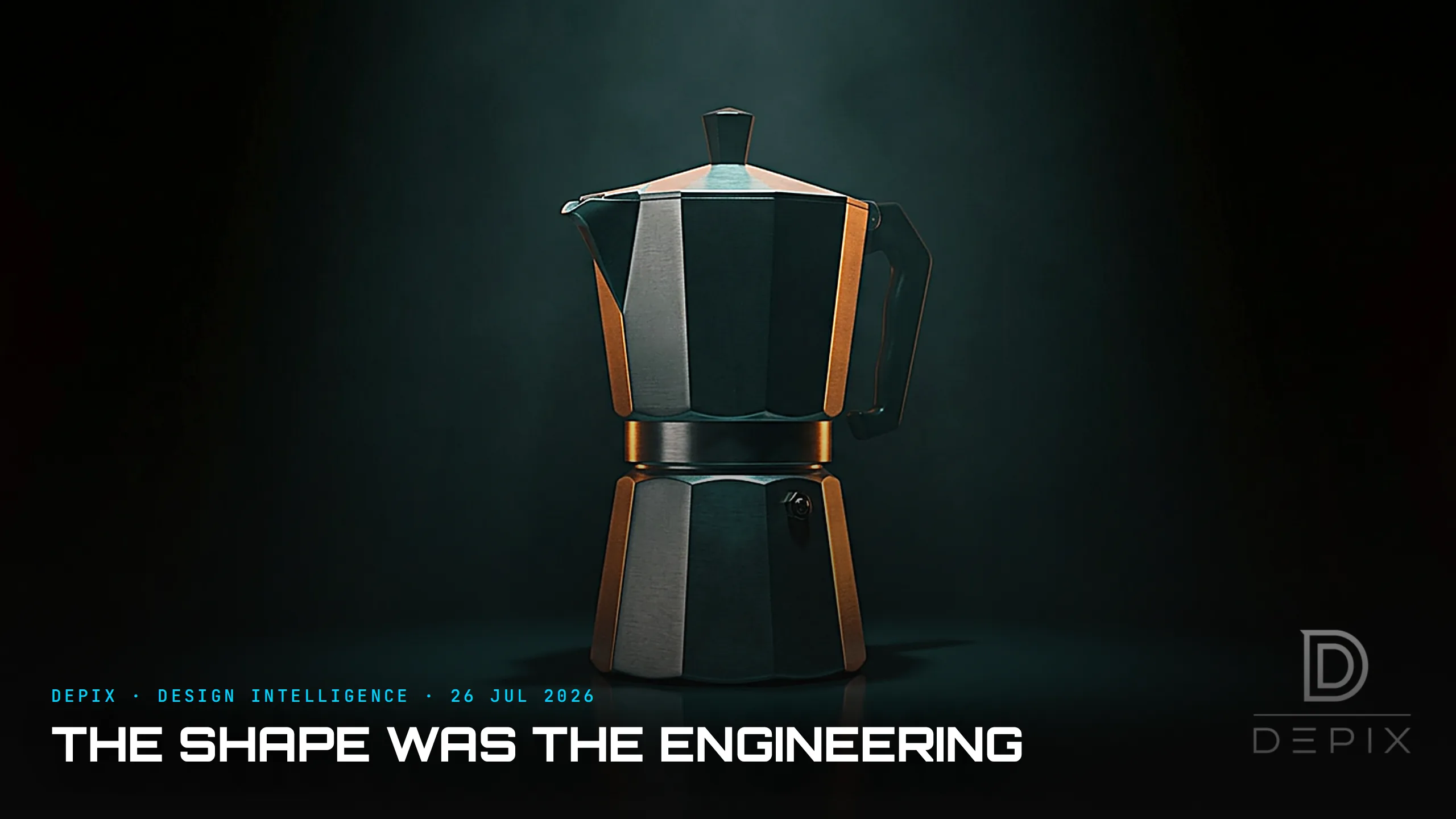
The Moka Pot's Shape Was the Engineering, Not the Styling
Pick up a Bialetti Moka Express and you are holding a shape that has barely changed since 1933 - the same faceted aluminium octagon, the same pinched waist, the same silhouette that says "coffee" before you have registered a logo. Nearly a century of design fashion has washed over it and left it untouched. That is not an accident of nostalgia. It is what happens when styling, engineering and identity are decided as a single thought instead of three.
The pot was invented by Alfonso Bialetti, and the first surprise is that he was not a coffee man. He was a metalworker who had learned aluminium casting in France, and the idea reportedly came not from a cafe but from watching his wife do the laundry: early washing machines heated soapy water in a sealed tub and forced it up a central pipe to spread over the clothes. Bialetti saw a coffee maker in that plumbing. Water in the base, steam pressure driving it up through a basket of grounds into a chamber on top, a safety valve to keep it honest, and a small pot of espresso-style coffee at the end. The mechanism was borrowed from a machine that had nothing to do with coffee.
The material was a decision made half by conviction and half by politics. In 1933, aluminium was an exotic, faintly futuristic metal, not the stuff of kitchenware - but Italy was rich in bauxite and, under Mussolini's drive for self-sufficiency, steel was restricted. Aluminium was cheap, light, conductive and available, and Bialetti knew exactly how to cast it. The material chose the process, and the process shaped the form.
Which is the real point. That famous octagon is usually admired as pure Art Deco glamour, all machine-age facets catching the light like cut crystal. And it is that. But the faceting was also friendly to the casting process, gave the pot rigidity and an easy grip, and helped move heat around the base. A rounder pot might have looked softer, but it would have been harder to cast cleanly, easier to dent and more slippery in a wet hand; the facets quietly answered all three at once. The styling, the manufacturing and the physics are the same set of decisions seen from different angles. You cannot peel the way it looks off the way it is made or the way it works, because Bialetti never separated them in the first place.
Only one part came later. For nearly two decades the Moka was a modest regional product. It was Alfonso's son, Renato Bialetti, who turned it into a household name after the war, with relentless marketing and, from 1952, a cartoon mascot - l'omino con i baffi, the little man with the moustache, drawn as a caricature of Alfonso himself. Even the brand fused into the object: the logo is literally the inventor, gesturing on the side of the machine he designed. Today the pot sits in the Museum of Modern Art, the Smithsonian and the Cooper-Hewitt, and it has sold in the hundreds of millions - reportedly found in around nine of every ten Italian kitchens.
For anyone deciding what to build, the Moka is an argument against the assembly line most design actually runs on. We are taught to sequence the work: make it function, then make it cheap to manufacture, then make it look good, then hand it to branding. Each hand-off quietly overrules the last, and you end up with a competent object full of seams - a shape styled over an engineering it does not express, a brand bolted onto a form that never asked for it.
The Moka did the opposite. The mechanism, the material, the manufacturing, the silhouette and eventually the mascot were one continuous decision, taken at the concept phase by someone who refused to treat them as separate departments. That is why it is effectively uncopyable - there is no styling layer to peel off and reapply to a rival - and why no one has seriously wanted to redesign it in ninety years. When form, function and identity are genuinely the same decision, you do not get a product that is merely finished. You get one that is closed: nothing left to add, and nothing worth taking away.
Sources:
- ●Moka pot - Wikipedia
- ●Alfonso Bialetti - Wikipedia
- ●Bialetti - Wikipedia
- ●Art Deco - Wikipedia
- ●Aluminium - Wikipedia
- ●Espresso - Wikipedia
- ●A Short History of the Bialetti Moka Express - Essential Italy
- ●Design Moment: Moka Express coffee pot, 1933 - The Irish Times
- ●In 1933, the Italian Moka Express coffee maker was born - Goodmoods
- ●Alfonso Bialetti: The Ingenious Mind Behind the Moka Express - Encyclopedia of Design
- ●The Story of the Bialetti Moka Express - INeedCoffee
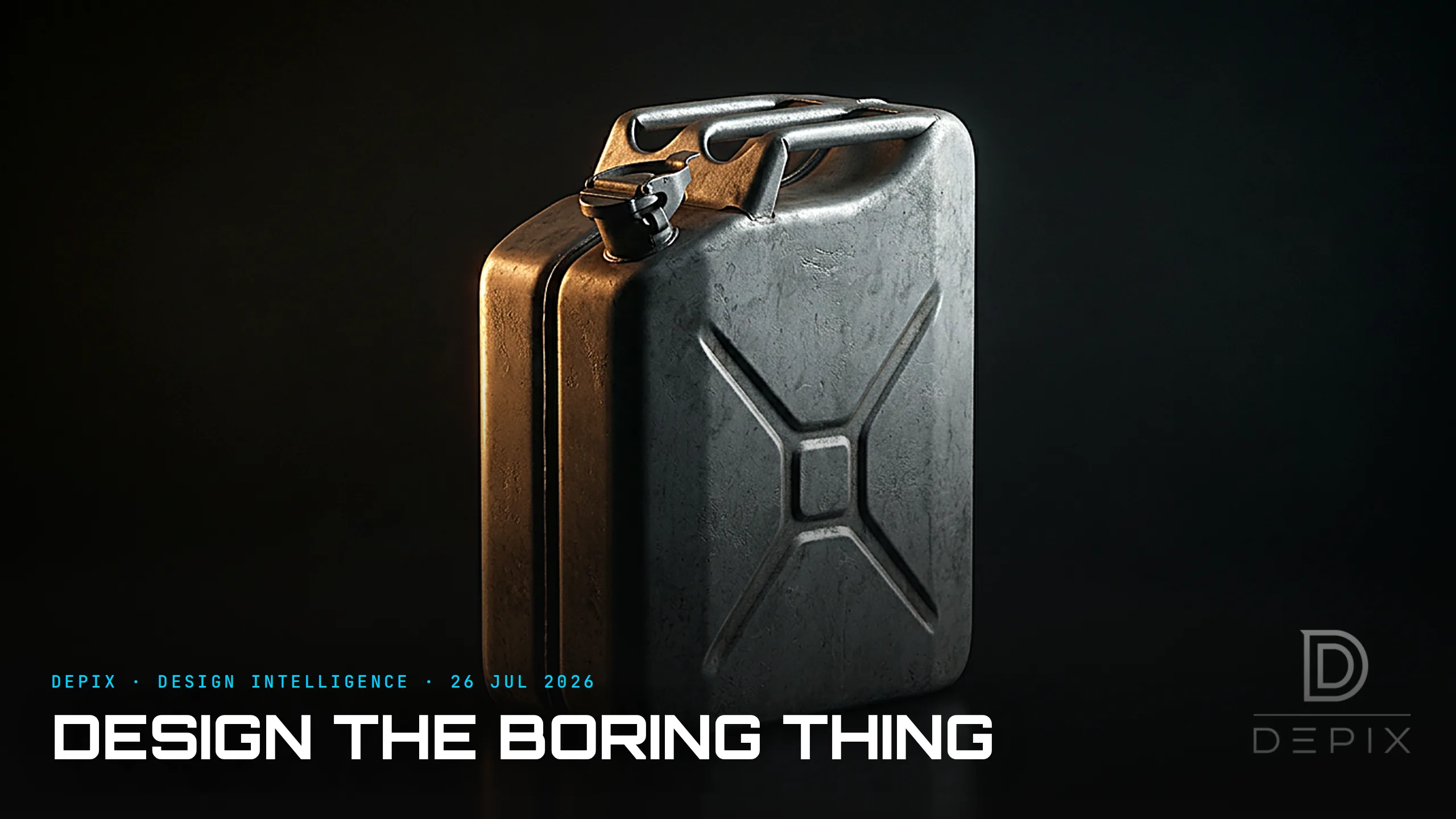
Design the Boring Thing: The Fuel Can That Helped Win a War

Sony's Best Product Was Defined by What It Couldn't Do