Sony's Best Product Was Defined by What It Couldn't Do
Every cassette machine in 1979 could record. That was the whole point of owning one. So when Sony prepared to launch a portable tape player that deliberately could NOT record - and had no speaker either - its own salespeople thought the company had lost its mind. They were wrong in the most instructive way possible. The Walkman went on sale on 1 July 1979 and became the defining consumer product of its generation. Its genius was subtraction.
The idea began as a personal favour. Masaru Ibuka, Sony's co-founder, wanted to listen to opera on long flights without lugging a bulky machine. Engineer Nobutoshi Kihara took an existing mono cassette recorder, stripped out the recording circuitry and the speaker, and used the freed-up space for a stereo amplifier and headphones. What was left did far less than any tape machine on the market - and did the one thing that mattered, private music on the move, better than anything ever had.
Inside Sony, this looked like heresy. Executives could not understand a tape recorder that would not record, and dealers predicted a flop. The market research agreed: buyers would reject a machine with no record function, and wearing headphones in public would embarrass them. Chairman Akio Morita overruled all of it on instinct, staking his own reputation on the bet. Sony projected a modest 5,000 units a month; the Walkman sold more than 30,000 in its first two months.
Even Morita hedged one call. Convinced it would be rude to listen alone, he insisted the first model, the TPS-L2, carry two headphone jacks and a "hotline" button with a tiny microphone, so one listener could talk over the music to the other. Buyers ignored the sociable features so completely that Sony quietly dropped them. The product's real meaning - a private bubble of sound, one person and their soundtrack - was the opposite of what its own maker had assumed.
The rest is the reward for conviction. Sony sold it under different names at first - Sound-about in America, Stowaway in Britain, Freestyle in Australia - before "Walkman" became the global word, entering the Oxford English Dictionary in 1986. Across its life the brand sold on the order of 400 million units, and it invented a behaviour that now feels eternal: the personal, portable soundtrack every pair of earbuds still delivers. The Walkman did not merely sell; it changed how people move through public space. Overnight a crowded train could hold a hundred people each sealed inside a different world, and headphones stopped being equipment and became a way of being in public. No focus group had asked for that, because no one knew it was a thing you could want.
For anyone deciding what to build, three things here are worth stealing. The first is that the defining act was a REMOVAL. Sony did not win by adding features; it won by having the nerve to take the obvious one away, trusting that a product is defined as much by what it refuses to do as by what it does. The second is that the removal was a bet on a use that did not yet exist. There was no market for private mobile listening because no one had felt it - which is precisely why the research could not see it. The third is where all of this happened: not in engineering, not in marketing, but at the very start, in deciding what the thing was for. Kihara could perform the subtraction in an afternoon; the hard part was Morita choosing it against every voice in the room.
That is the uncomfortable truth about the concept phase. The highest-leverage decisions are often removals, and removals rarely survive a consensus. Committees add; they almost never subtract, because every feature has a defender and no one wants to be blamed for taking something away. A product with a clear, brave idea about what it will NOT do usually got that clarity from one person willing to be wrong. The lesson is not that removal is always right - plenty of stripped-down products simply do less and deserve to fail. It is that when a removal is right, it tends to feel wrong to almost everyone until the finished object exists to prove it. The Walkman is the monument to that willingness - a machine remembered forever for the feature it did not have.
Sources:
- ●Walkman - Wikipedia
- ●Sony - Wikipedia
- ●Masaru Ibuka - Wikipedia
- ●Nobutoshi Kihara - Wikipedia
- ●Akio Morita - Wikipedia
- ●Personal stereo - Wikipedia
- ●As Sony's Walkman Turns 35, a Look Back at Its Inception - Time
- ●Sony Walkman celebrates its 40th birthday - Smooth Radio
- ●Sony TPS-L2 - Walkman.land
- ●Stowaway (TPS-L2) personal stereo, Sony - Victoria and Albert Museum
- ●The first Walkman, Sony Stereo Cassette Player TPS-L2 - Butsuyoku
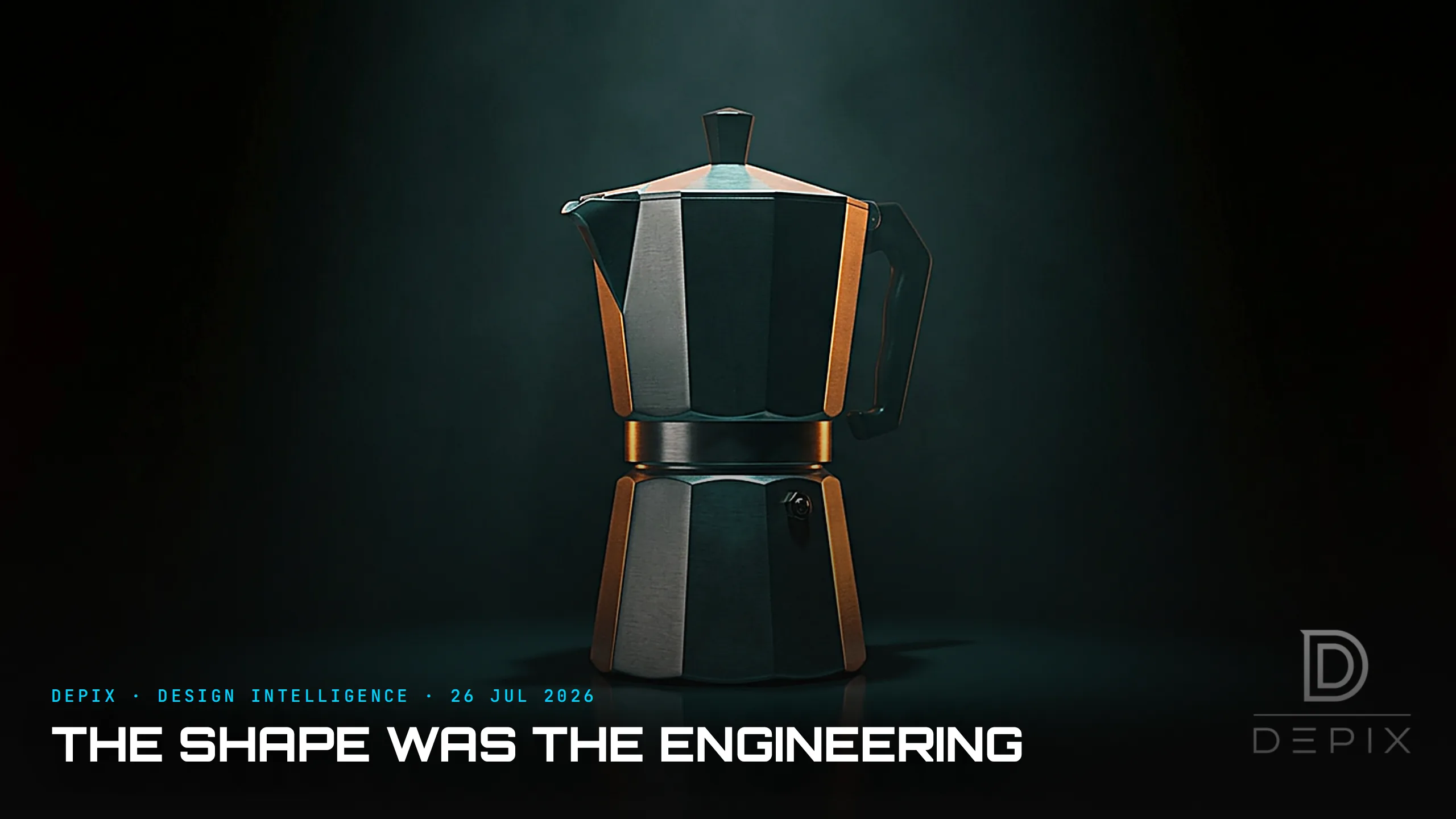
The Moka Pot's Shape Was the Engineering, Not the Styling
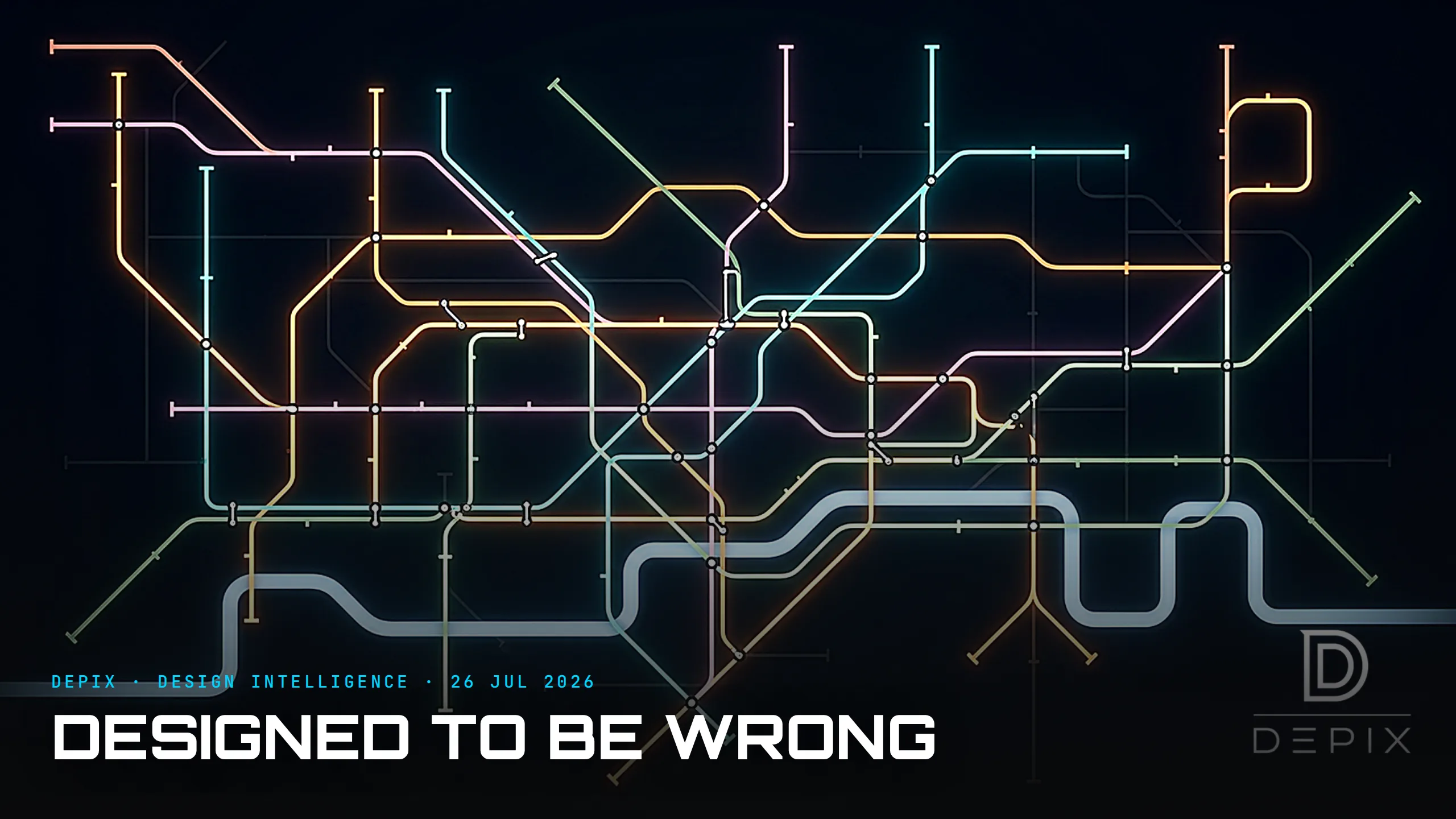
The Most Useful Map in Britain Is Deliberately Wrong