Design the Boring Thing: The Fuel Can That Helped Win a War
The single object most responsible for the Allied advance across Europe in 1944 was not a tank, a plane or a gun. It was a fuel can. And the Allies did not design it - they copied it, after spending years losing a quiet war of logistics with something far worse.
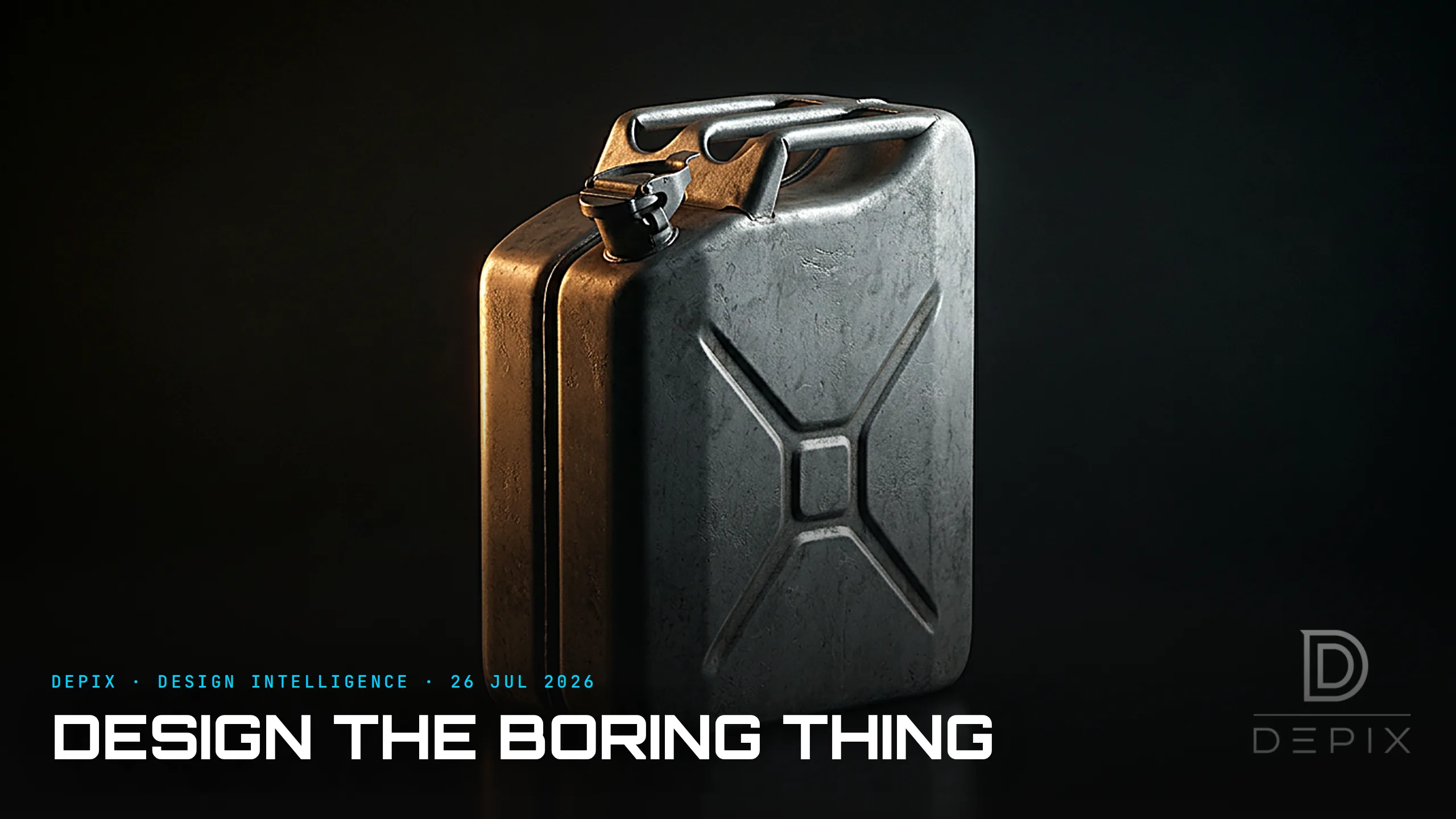
The jerrycan - "jerry" was British slang for the Germans - began as the Wehrmacht-Einheitskanister, developed in 1937 by chief engineer Vinzenz Grunvogel for the German military. It is the least glamorous object imaginable: a rectangular 20-litre steel box. But almost every line of it is the crystallised answer to a specific problem a soldier faces in a field, in the dark, under fire.
Consider the details. It has THREE handles on top, not one - so a single soldier can carry two full cans at once, a line of soldiers can pass them hand to hand, and four empties can be gripped together. The body is stamped from two halves and welded, with recessed X-shaped indentations pressed into the sides; those are not styling - they stiffen the panels and let the contents expand in heat without splitting the seams. An air pocket is built in beneath the handles, so a full can floats - you could swim fuel across a river - and the same chamber lets it pour smoothly. The short spout has a cam-lever lock and a breather pipe so it glugs out fast and clean, no funnel required. The inside is lined so the same can carries petrol or drinking water. It stacks. It seals. It survives a fall from a truck. Nearly ninety years on, essentially unchanged, it is still NATO's standard fuel and water container - the signature of a problem solved so completely it never needed solving again.
Now look at what the other side brought to the same war. The British went into North Africa with flimsy 4-gallon tins - soldiers literally called them "flimsies" - that split at the seams and punctured on rough ground. Fuel loss ran as high as a quarter of everything shipped. Every gallon that leaked into the sand was a mile a tank could not advance. The Germans had treated the fuel container as a serious, multi-year engineering project; the Allies had treated it as a commodity tin, and paid for the gap in stalled offensives.
The correction is one of the great accidental-espionage stories in design. In 1939, an American engineer named Paul Pleiss and a German colleague drove overland toward India; the German quietly obtained three jerrycans from a Berlin airfield stockpile and handed over the complete manufacturing specifications. Pleiss shipped one to Washington, where the War Department showed no interest - until captured German cans in the desert made the point undeniable. The Allies reverse-engineered it, tidied a few details for mass production, and built millions. By 1944 it was theirs too. Franklin Roosevelt said plainly that "without these cans it would have been impossible for our armies to cut their way across France at a lightning pace." The correspondent Ernie Pyle ranked the humble can among the few pieces of equipment that won the war.
For anyone deciding what to build, the jerrycan is a rebuke to how we rank design problems. We lavish attention on the parts that are visible, glamorous and fun to design - the silhouette, the interface, the hero shot - and quietly treat the boring, utilitarian components as commodities to be sourced rather than designed. The jerrycan says that judgement is exactly backwards. Greatness in design is not beauty or novelty; it is the density of real problems a form quietly resolves - and the object that decides the outcome is very often the one nobody is excited to work on.
That decision - which problems deserve serious design effort - is made at the very start, before anyone draws anything. Take the humble, decisive component seriously and you can out-build a better-resourced rival who dismissed it. Treat it as an afterthought and no amount of brilliance on the glamorous parts will save you, because the whole system moves at the speed of its weakest, most ignored piece. The war did not turn on the prettiest object. It turned on the one someone bothered to take seriously when no one else did.
Sources:
- ●Jerrycan - Wikipedia
- ●Wehrmacht-Einheitskanister - Wikipedia (German)
- ●Deep drawing - Wikipedia
- ●World War II - Wikipedia
- ●North African campaign - Wikipedia
- ●The astonishing story of the jerrycan - Hagerty UK
- ●Military logistics - Wikipedia
- ●Franklin D. Roosevelt - Wikipedia
- ●Ernie Pyle - Wikipedia
- ●Jerry Can - Legends Live On
- ●Blitzkrieg - Wikipedia
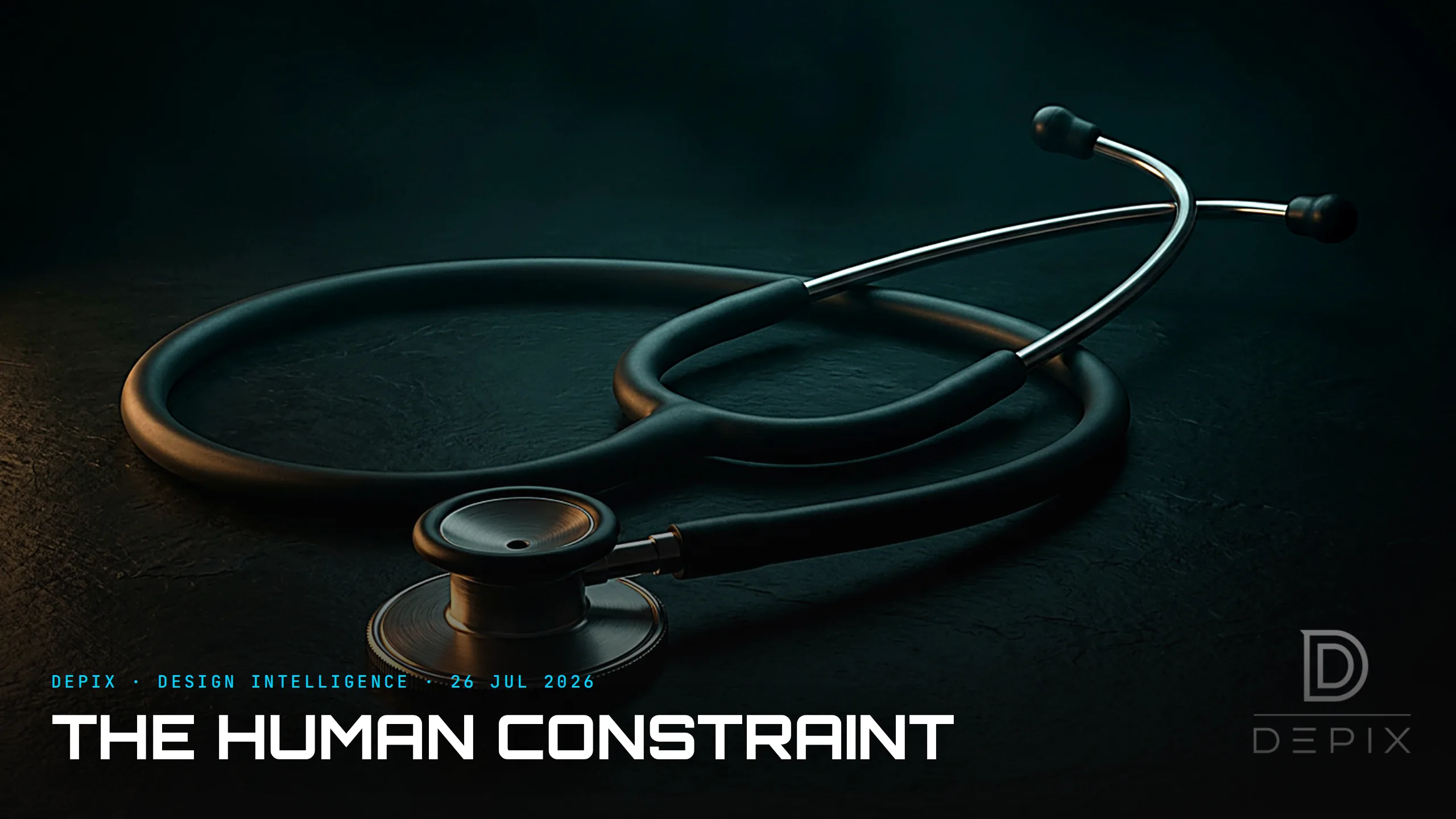
The Stethoscope Was Invented Because a Doctor Felt Awkward
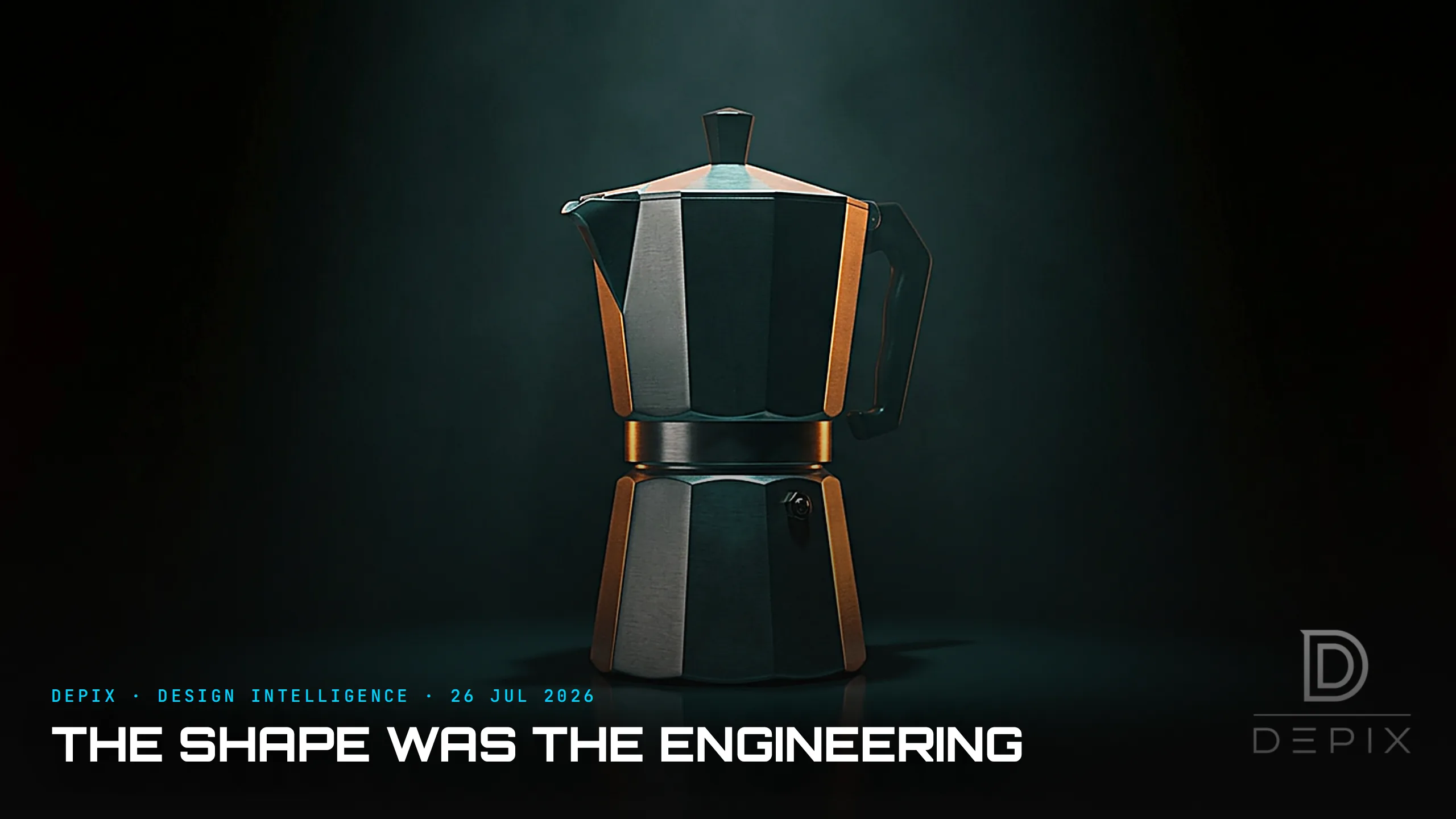
The Moka Pot's Shape Was the Engineering, Not the Styling