Sustainable Car Interiors Have a Desire Problem
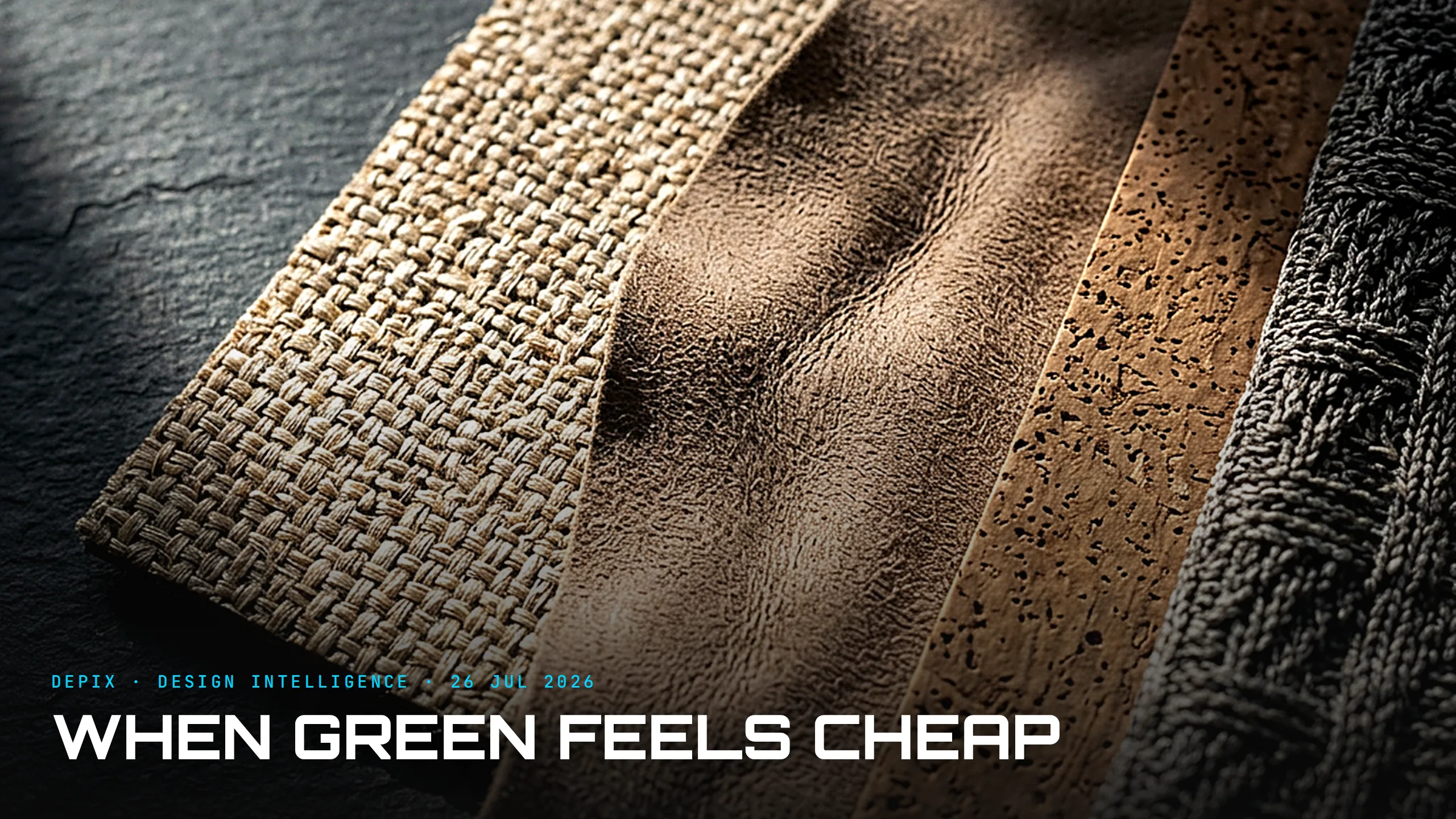
Walk into a car showroom in 2026 and the interior is quietly full of mushrooms, flax, cork, olive leaves and old plastic bottles. Nearly every premium marque is racing to swap leather and virgin plastic for something bio-based or recycled. And a surprising number of buyers experience the result as a downgrade.
The scale of the shift is real. Mercedes, Cadillac and BMW are all designing past leather toward bio-based and lab-grown alternatives. Polestar's cabins now blend flax composites, 3D-knitted yarn from recycled bottles, cork-based vinyl and carpets woven from reclaimed fishing nets. Suppliers pitch lab-grown luxury as the new premium. On paper, the material story has never been better.
The problem is what the words do to the material. As WardsAuto reports, customers are often "turned off by the phrase recycled" — it whispers cheap — even though these compounds are engineered and tested far more rigorously than the virgin material they replace. "Vegan leather" carries the opposite baggage: it sounds premium and ethical, but as CarBuzz and academic researchers point out, it is usually plastic — a polyurethane or PVC skin over a thin plant dusting, sometimes with a lifespan of only a couple of years. One label makes a good material sound cheap; the other makes a cheap material sound good. Both are failures of meaning, not chemistry.
It is worth sitting with how upside-down that is. The recycled compound a buyer flinches from has usually been re-engineered from scratch and validated against tougher abrasion, UV and fade tests than the virgin plastic it replaces — it is frequently the more durable choice, not the compromise. Meanwhile the "premium" animal hide it displaces carries a heavy tanning-and-transport footprint the badge never mentions. And this is no longer optional: tightening end-of-life and recycled-content rules mean bio-based and recycled interiors are becoming the default the whole industry must design around, not a green flourish for the brochure. The perception gap is now the last thing standing between these materials and genuine desire.
Here is the contrarian point. Sustainability has been sold to buyers as sacrifice — you give something up to do the right thing — so any material wearing the "eco" badge inherits the semiotics of less: less luxury, less durability, less desire. That association is not a property of flax or mycelium. It is a design decision that was made, badly, upstream — the material chosen for its footprint and then asked to also feel premium, as an afterthought. Desire cannot be bolted on at the end.
The fix is a concept-phase move, and the best examples prove it works. Bcomp's flax-fibre composites do not hide their nature — they make the woven flax visible, a legible premium-tech surface, and back it with real performance: scaling into series production at roughly 50% lighter than plastic, already shipping in the Volvo EX30 interior and BMW M cars. When a material is engineered to be seen and felt as an upgrade — lighter, more tactile, more honest — the "eco" framing stops being an apology and becomes a flex. Sustainable materials spark desire only when the CMF team designs it in from the first sketch instead of certifying it at the end.
What comes next is the moment the sustainable option becomes the better option outright. Mycelium leather is the clearest signal. MycoWorks grows its Reishi material from fungal roots with less than 1% polymer content and a hand-feel engineered to match animal hide; General Motors took a stake in the company and, with it, unveiled the Cadillac SOLLEI — the first car with a mycelium-leather interior. This is not a substitute pretending to be leather; it is a grown material with its own story, and its Fine Mycelium process is a bet that it can be premium because of how it is made, not in spite of it. When virtue and desire finally point the same way, the "sustainable equals cheap" reflex dies.
The lesson runs deeper than cars. A material's meaning is set at the concept phase — in how it is woven, finished, lit, named and storied — long before a buyer ever touches it. You can pick the greenest material on earth and still make it feel like a penalty, or pick the same material and make it feel like the future. Sustainability is a material-science win. Desire is a design decision. The brands that win the next decade of interiors will be the ones that stop treating those as two separate problems.
Sources:
- ●Trellis — How Mercedes-Benz, Cadillac and BMW are looking past leather
- ●Polestar — Materials (flax, cork, recycled bottles, reclaimed fishing nets)
- ●Clerprem — Lab-grown luxury: sustainable materials & the automotive interior trend
- ●WardsAuto — High-Tech Textiles Finding Ways Into Automotive Interiors
- ●CarBuzz — How Vegan Leather Is Greenwashing The Automotive Industry
- ●The Conversation — 'Vegan leather' isn't as sustainable or eco-friendly as brands might claim
- ●Bcomp — Natural Fibre Composites Transform Automotive Colour and Trim Design
- ●CompositesWorld — Bcomp, SFG Composites to scale up automotive flax fiber
- ●MycoWorks — Reishi (Fine Mycelium leather alternative)
- ●CNN Business — GM takes a stake in mushroom-leather startup MycoWorks
- ●Vegconomist — MycoWorks and GM Unveil Cadillac SOLLEI, first car with mycelium-leather interior
- ●Wikipedia — MycoWorks (Fine Mycelium technology)