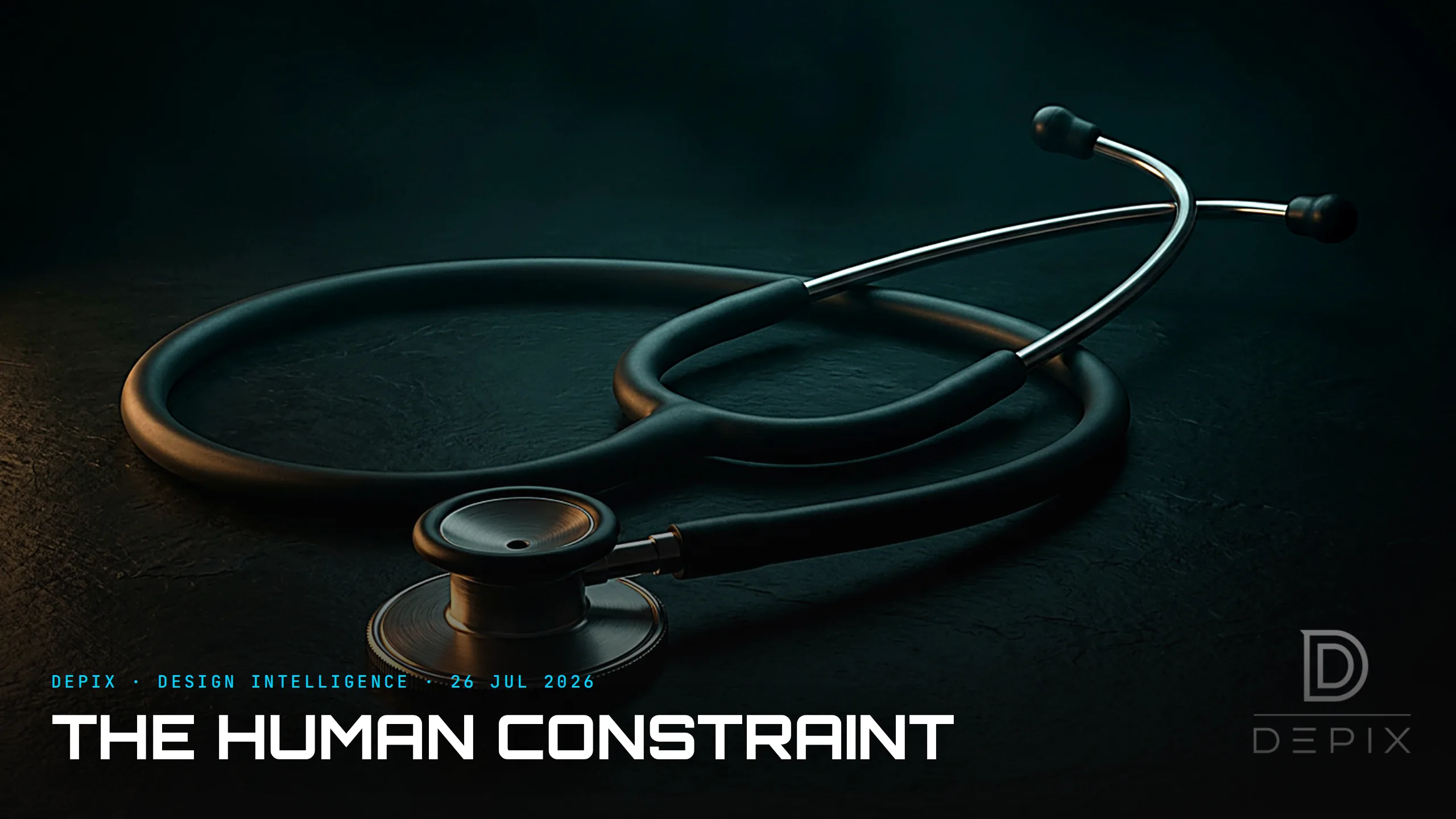
The Stethoscope Was Invented Because a Doctor Felt Awkward
In September 1816, a young French physician faced a small, awkward problem that had nothing to do with medicine. Rene Laennec, 35 and famously modest, needed to examine the heart of a young woman at the Necker Hospital in Paris. The standard method of the day was immediate auscultation - pressing your ear directly against the patient's chest. She was young, and heavy enough that tapping the chest told him nothing. Putting his ear on her chest felt, to him, entirely improper.
Most doctors would have gritted their teeth and done it anyway. Laennec treated the awkwardness as a real problem - and in solving it, invented one of the most important instruments in medicine.
He remembered a piece of childhood physics: scratch one end of a long wooden beam and a friend with an ear to the far end hears it clearly, the sound carried through the solid. So he took a sheaf of paper off a nearby table, rolled it into a tight cylinder, put one end against her ribs and his ear to the other. What happened next is the part that matters. He did not merely preserve everyone's dignity. He heard her heart more clearly than he ever had with an ear directly on a chest. The workaround was better than the thing it replaced.
Laennec spent the next three years refining it - replacing the paper with a hollow wooden cylinder about a foot long, which he first called simply "le cylindre" and later named the stethoscope, from the Greek for "chest" and "to examine." In 1819 he published De l'auscultation mediate - "mediate" because the listening was now mediated by an instrument - cataloguing the sounds of healthy and diseased lungs and hearts with a precision no one had reached before. He had not just built a tube. He had made the interior of the living body audible, and therefore diagnosable, turning diagnosis from guesswork about outward symptoms into direct evidence from inside. It is a straight line from that paper cylinder to every scan and monitor in a modern hospital.
There is a piece of tragic proof of how well it worked. Laennec died in 1826 of tuberculosis - the very disease his instrument had taught physicians to hear in the chests of others. It was not embraced overnight - some doctors disliked putting a wooden tube between themselves and the patient, and it took a generation for listening through an instrument to become routine. But the direction was set: medicine would now attend to the body's interior, not merely read its surface.
For anyone deciding what to build, the lesson is about which constraints you take seriously. We are trained to treat the "real" design problems as technical ones - power, cost, materials, performance - and to regard the human, social and emotional frictions around a product as soft, secondary, someone else's department. The stethoscope is the counter-example. The binding constraint was not acoustic or mechanical; it was a matter of dignity and propriety, a purely human discomfort in a charged social moment. Laennec could have dismissed it as not a design problem at all. Instead he treated it as the problem - and the answer he found to the human issue turned out to be the better technical answer too.
That is not really a coincidence; it is a pattern. Human frictions - embarrassment, distrust, fatigue, fear, the small indignities of a bad interaction - are where real needs hide, precisely because they are uncomfortable to look at directly. A team that treats them as legitimate design constraints, at the concept phase, tends to find solutions competitors optimising a spec sheet never see. The people powering through the awkwardness are enduring a problem; the person who stops and asks "why is this uncomfortable, and what would remove the discomfort?" is the one who invents the cylinder.
The modern stethoscope, with its two earpieces and flexible tubing, arrived decades later. But the founding move was made in a single moment, by a doctor who was too polite to lean in and decided that politeness was worth designing around. The best constraints are often the human ones. They just do not look like engineering until someone treats them as if they were.
Sources:
- ●Stethoscope - Wikipedia
- ●Rene Laennec - Wikipedia
- ●Necker-Enfants Malades Hospital - Wikipedia
- ●Auscultation - Wikipedia
- ●The stethoscope was invented because a doctor felt awkward - History Facts
- ●Rene-Theophile-Hyacinthe Laennec - Linda Hall Library
- ●Early Stethoscope - EMS Museum
- ●Listening to the Heart: The Invention of the Stethoscope - MedBound Times
- ●Medical diagnosis - Wikipedia
- ●Tuberculosis - Wikipedia

The Red Phone Box Was Meant to Be Silver
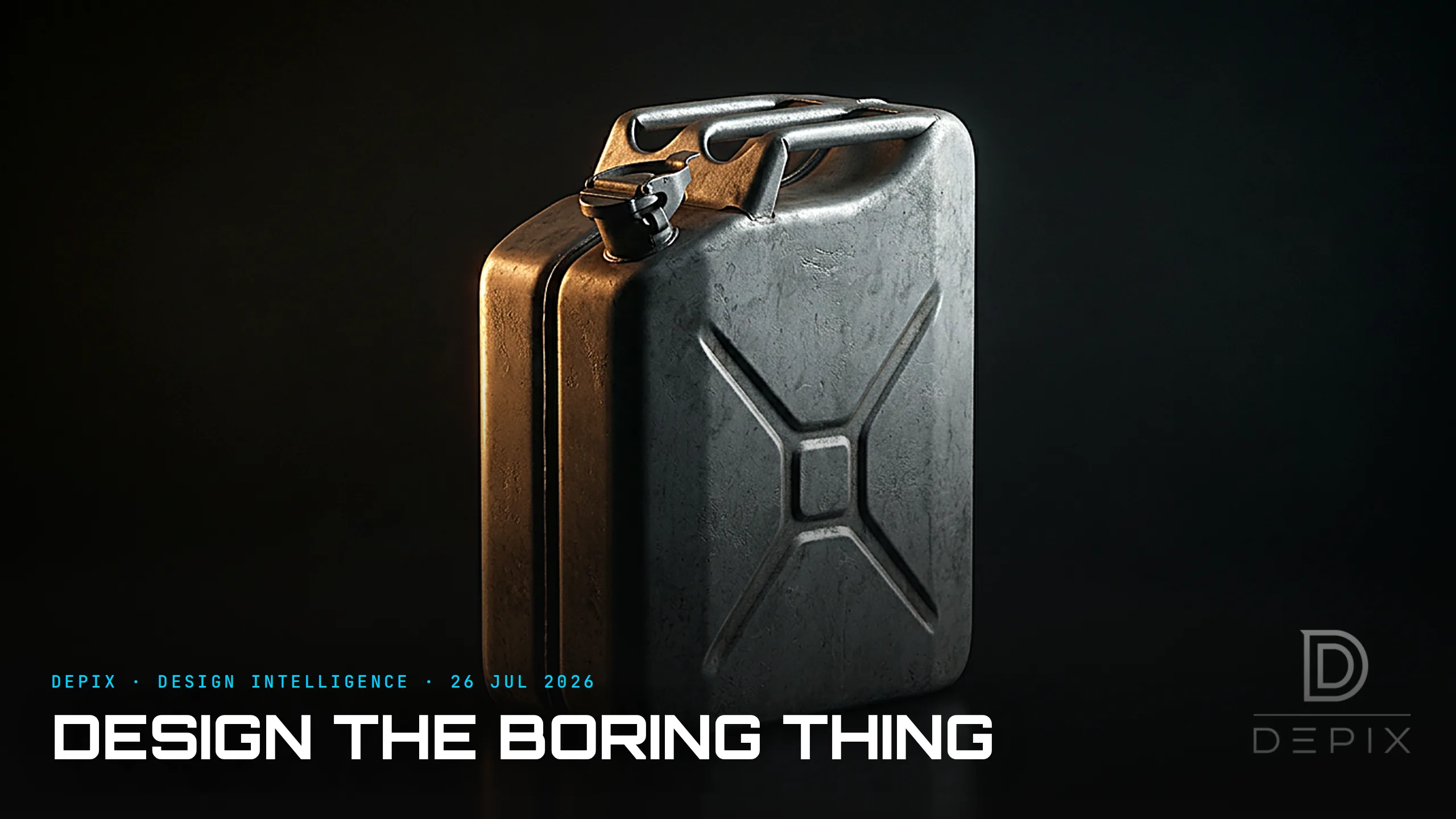
Design the Boring Thing: The Fuel Can That Helped Win a War