The Machine That Refused to Be Furniture
In 1956, a record player was supposed to be a piece of furniture. Hi-fi hid inside wooden cabinets and sideboards, disguised as the kind of respectable object a living room already understood. Then Braun released the SK 4, and it did the unthinkable: it let a machine look like a machine. People were so unsettled they gave it a mocking nickname — Snow White's Coffin — and then, within a decade, every serious product on earth started copying it.
The SK 4 "Phonosuper" was designed by Dieter Rams and Hans Gugelot, a professor at the influential Ulm School of Design, with the turntable by Wilhelm Wagenfeld. What they proposed for Braun) was heresy by the standards of the day: a plain white lacquered-metal box with slim wood side panels, its controls laid out in the open, none of it pretending to be anything but what it was. Against a market of ornate radiograms, it looked almost shockingly plain — an appliance that refused to apologise for being an appliance.
The most radical part, the transparent lid, was not born as a manifesto. It began as a fix for a rattle. Gugelot and Rams originally specified a sheet-metal cover, but the loudspeaker's vibrations set it buzzing at volume. Rams suggested a hood made of the newly available acrylic, Plexiglas, which killed the resonance — and, almost incidentally, made the turntable and controls permanently visible. The honesty that would define the object was pragmatic before it was principled: they were solving an engineering annoyance, and the ideology arrived afterward, once everyone realised how right the clear box looked.
That is what makes the SK 4 more than a pretty artefact. It broke a convention nobody had thought to question. The radiogram-as-cabinet existed because the category had inherited a costume: new technology dressed up as familiar furniture so it could be allowed into the home. The SK 4 departed from the chest-and-cabinet model entirely and made the tonearm, the dial and the mechanism the visual focus. It trusted that a functional object, honestly expressed, could be beautiful on its own terms — the founding bet of the Functionalist school that Ulm was teaching and Braun was about to make world-famous.
History settled the argument emphatically. The mocking nickname became a badge of honour; the SK 4 sits in design collections as a landmark, and the Rams-era Braun language — white surfaces, honest materials, controls that explain themselves, nothing hidden and nothing added — became the direct ancestor of the way almost every considered product looks now, a lineage that runs visibly through to Apple. The thing that got laughed at in 1956 is the thing everything else grew up to imitate. Rams would later distil the method into ten principles — that good design is honest, unobtrusive, and as little design as possible — but the SK 4 had already made the argument in hardware, years before it was written down. When Apple later stripped the computer of its beige-box costume and let aluminium and glass simply be themselves, it was extending a line that starts in that white Braun case: you earn trust by showing what a thing is, not by dressing it as something more familiar.
The concept-phase lesson is about spotting the costume. Almost every product category inherits a disguise convention — an unquestioned rule about what the new thing should pretend to be so people accept it. Early software dressed itself up as paper and green desk-blotters; early electric cars mimicked the grille and burble of engines they no longer had; hi-fi hid inside cabinetry. The costume is comfortable precisely because it asks the user to learn nothing. But the most powerful move available at the concept stage is often to take the costume off — to design the true object, the thing it actually is, honestly expressed, even if it looks strange, even if it earns a cruel nickname for a while. The SK 4's clear lid started as a way to stop a panel rattling. It ended as a permission slip for design to stop lying about what things are. Decide early whether your product will wear a costume or drop it. The ones that drop it tend to be the ones everyone else copies.
Sources:
- ●Braun SK 4 — Wikipedia (DE)
- ●Dieter Rams — Wikipedia
- ●Hans Gugelot — Wikipedia
- ●Wilhelm Wagenfeld — Wikipedia
- ●Braun (company) — Wikipedia)
- ●Ulm School of Design — Wikipedia
- ●Snow White's Coffin SK4 — Braun Audio
- ●The Braun SK Series Radiogramophones — Encyclopedia of Design
- ●Phonosuper 'Schneewittchensarg' SK4 — Radiomuseum
- ●Braun SK4 Turntables (1956): Specs & History — Vintage Technology Archive
- ●Braun SK4 to SK55 (Gugelot & Rams) — Braun Design

Matte Paint Breaks Every Rule of Car Paint (On Purpose)
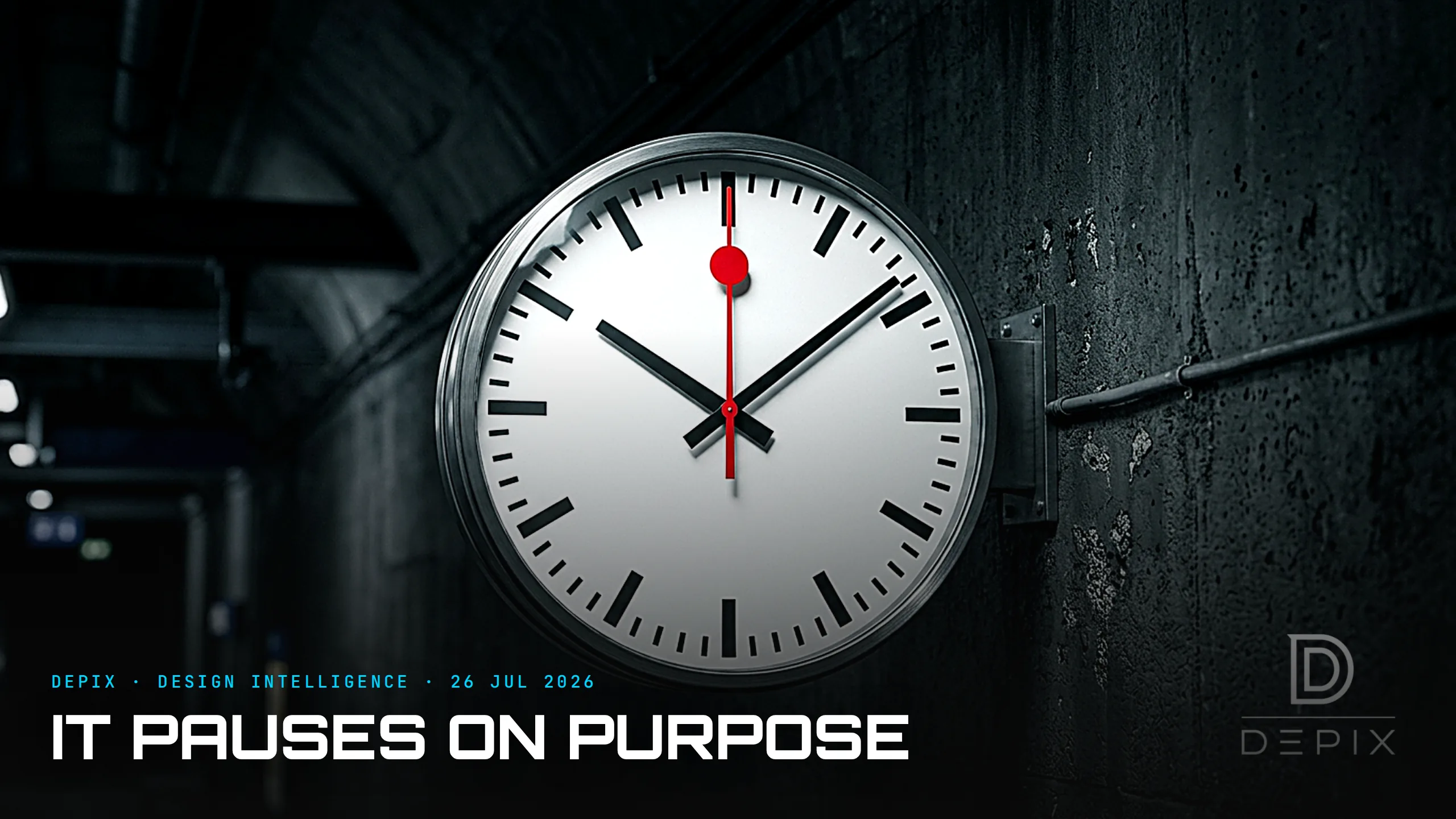
The Clock That Pauses on Purpose