The Fake Suede That Out-Luxuries Leather
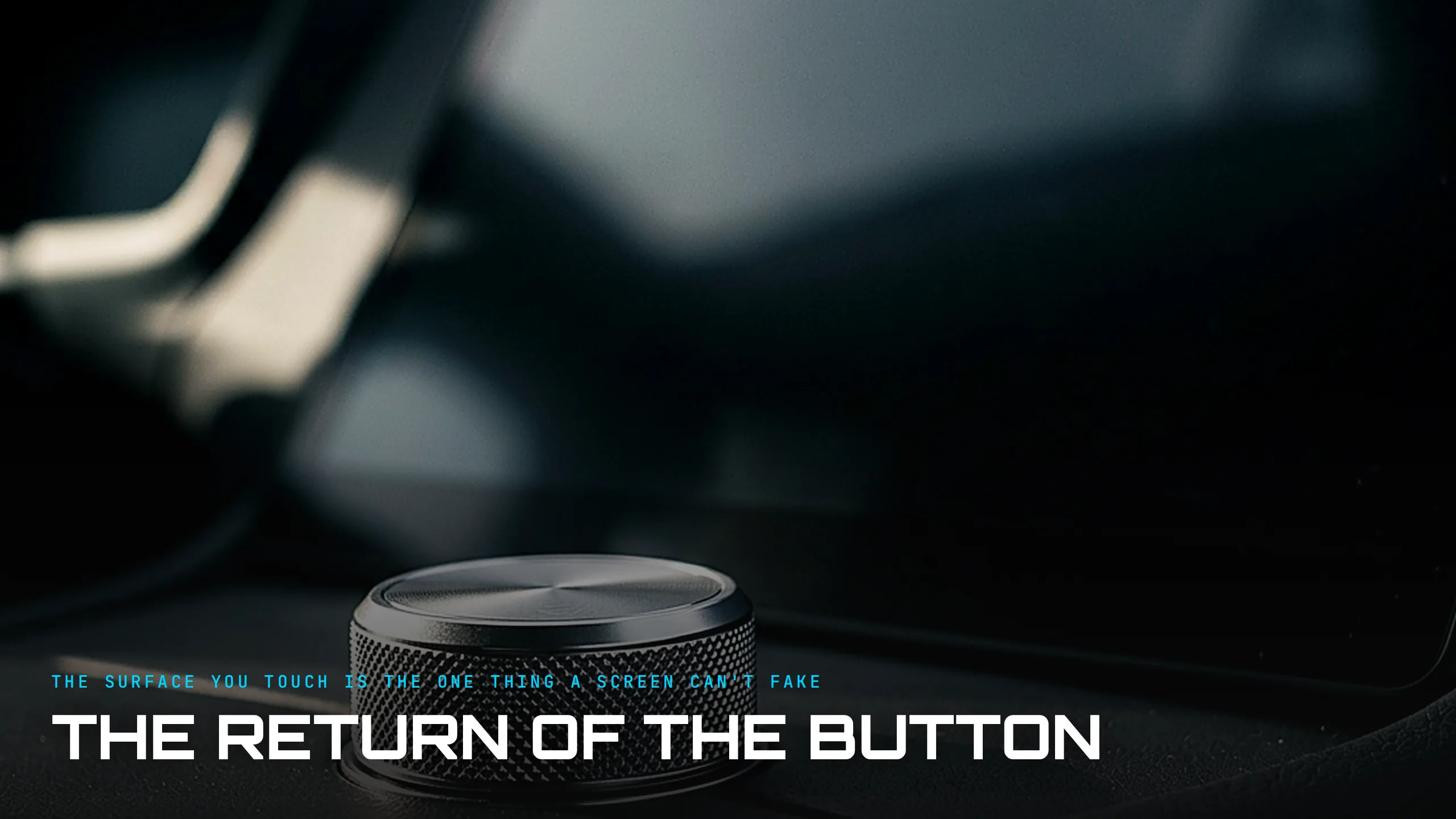
There is a small heresy sitting on the steering wheel of almost every modern supercar. The most prestigious surface in a Ferrari or a Porsche — the part your hands actually touch — is very often not leather, not suede, but a synthetic microfibre that is roughly 68% polyester and 32% polyurethane), a plasticky recipe the manufacturer keeps as a trade secret. It is called Alcantara), it is essentially very sophisticated fake suede, and it has quietly won an argument the whole luxury industry pretends isn't happening: sometimes the artificial material is the premium one.
Alcantara was not born in a fashion house. It came out of a laboratory in the early 1970s, invented by the Japanese scientist Miyoshi Okamoto at Toray — the same fibre research that produced Ultrasuede — and its first serious home was motorsport, where a light, flame-retardant, grippy surface mattered more than provenance. From there it climbed into road cars. Today it wraps the wheels, seats and headliners of Ferrari, Lamborghini, Porsche, Tesla and the fastest BMW M cars, and it covers Formula 1 seats as standard.
The reason is not cost-cutting; good Alcantara is not cheap. It is that in the context that matters — a car being driven hard — the synthetic simply performs better than the natural material it imitates. Leather looks and smells luxurious, but it gets slick: under a sweaty or oily palm, leather's grip can fall by around 40% within minutes, which is exactly the wrong behaviour on a wheel you are holding through a corner. Alcantara keeps its friction. It is also lighter, more stain-resistant and more durable than real suede, doesn't bake as hot as leather in the sun, and — increasingly to the point — uses no animal hide at all. Every property that makes it "fake" is a property engineered to serve the job. That last point is quietly becoming decisive: as EV makers race to drop animal leather for ethical and weight reasons, engineered suedes are inheriting the role leather held for a century — a strong signal that the next generation of "premium" materials will be designed in a lab rather than harvested from an animal.
That inverts the hierarchy the luxury world usually sells. The default story is that natural equals premium and synthetic equals cheap: real leather, real wood, real metal, with plastic as the apology. Alcantara quietly proves the story is context-dependent. As a microfibre built from polyurethane and polyester, it should sit at the bottom of that hierarchy. Instead, in a performance car it sits at the top — because "premium" here isn't defined by where the material came from, but by how well its behaviour matches what the object is for. The material's meaning was engineered, not inherited.
Even its imperfections behave differently from natural ones. Real suede stains, crushes and wears unpredictably; Alcantara is consistent — every panel the same, every batch the same, ageing in a way a designer can actually predict and specify. Consistency is itself a kind of luxury: it means the object still looks intentional years later, not just on delivery day. And unlike a lot of "premium" theatre, it isn't pretending to be something it isn't — nobody thinks Alcantara is animal suede, and it doesn't need you to. It earns its place by feel and function, not by faking a pedigree.
The concept-phase lesson is about where material meaning actually comes from. It is tempting to choose materials by their inherited status — leather because it reads expensive, wood because it reads warm, metal because it reads serious — and to treat synthetics as a downgrade you justify on price. Alcantara is a standing rebuttal: the right material is the one whose real properties (grip, weight, heat, consistency, ethics) best serve what the object has to do, and that material can be wholly engineered. Choose it at the concept stage for how it will behave over years of real use, not for the story it tells on a spec sheet. The most premium thing you can put under a driver's hands turned out to be a 1970s industrial fibre — because it does the job better, and doing the job better is, in the end, what luxury quietly is. The natural material was never automatically the superior one; it was just the default.
Sources:
- ●Alcantara (material) — Wikipedia)
- ●Toray Industries — Wikipedia
- ●Ultrasuede — Wikipedia
- ●What Is Alcantara and Why Is It Used in Sports Cars? — CarBuzz
- ●Is Alcantara Better Than Leather in Cars? — MotorBiscuit
- ●Leather vs Rubber vs Suede vs Alcantara for Sim Racing — Fanatec
- ●Suede — Wikipedia
- ●Alcantara, Dinamica & Ultrasuede — Dr. Beasley's
- ●Suede vs Alcantara Differences — SewingTrip
- ●Microfiber — Wikipedia
- ●Polyurethane — Wikipedia
The Paint That Adds Depth That Isn't There
Matte Paint Breaks Every Rule of Car Paint (On Purpose)