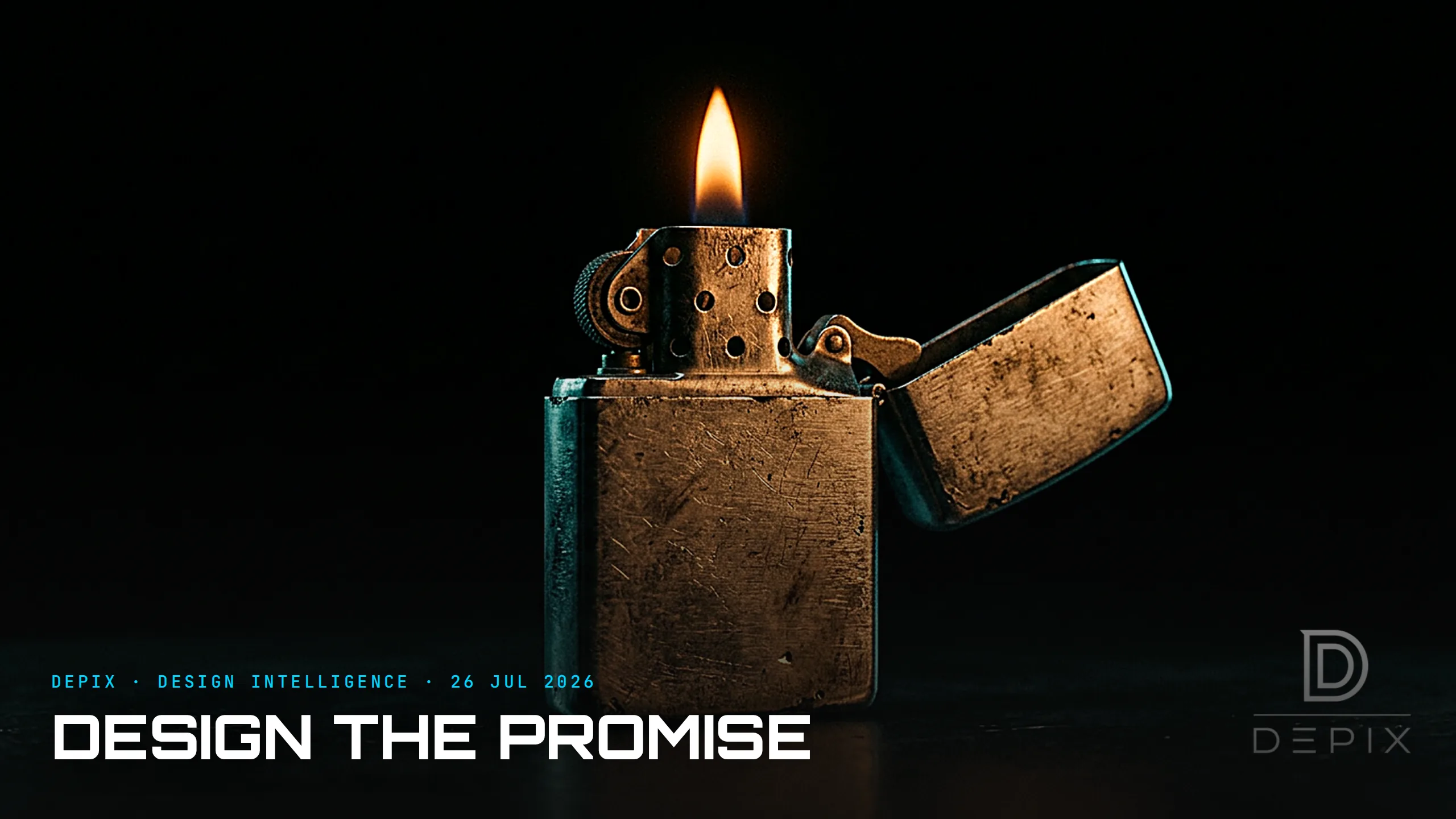
Zippo Designed the Promise First, the Lighter Second
Every Zippo lighter carries the same four-word guarantee it has carried since the 1930s: "It works or we fix it free." It sounds like a marketing slogan, and it is a marvel of one — the company claims that in the better part of a century, no one has ever paid a cent to have a Zippo mechanically repaired, regardless of the lighter's age or condition. But the more interesting way to read that sentence is as a design brief. The guarantee is not a promise bolted onto a finished object; it is the specification the object was built to satisfy, and almost everything distinctive about a Zippo follows from it.
Start with the origin. In 1932 George Blaisdell took a clumsy Austrian windproof lighter and reworked it in Bradford, Pennsylvania into something simpler and more elegant — a rectangular brass case with a hinged lid and a chimney-like windscreen, pierced with holes, that let the flame survive a stiff breeze. He liked the sound of the newish word "zipper" and coined "Zippo." The windproof trick is the famous part. But the decision that shaped the business, and the product, was the guarantee — and once you commit to fixing anything free, forever, you are forced to design an object that is cheap and easy to fix.
So a Zippo is, deliberately, almost aggressively repairable. It is refillable with lighter fluid rather than sealed and thrown away. Every wear part — the flint, the wick, the packing that holds the fuel — is a replaceable consumable. The whole mechanism lifts out of the case as a serviceable insert. The company's own line is blunt: all parts of the lighter are replaceable. None of that is an accident of good engineering; it is the direct consequence of a promise that only makes economic sense if repair is trivial. A disposable lighter and a Zippo answer completely different briefs, and you can read the brief in every part.
Consider what the guarantee rules out. It makes planned obsolescence — the deliberate design of a product to fail or age out so you buy another — not merely distasteful but financially suicidal, because every failure becomes the company's cost, not the customer's. A brand that must repair its own product for free is powerfully incentivised to make it last. The guarantee quietly aligns the maker's interest with the owner's: both now want the same lighter to work for fifty years. That is a rare and valuable thing to design into a business, and Zippo designed it in at the very start, in a sentence.
The results compound in ways a spec sheet cannot capture. Because a Zippo can always be fixed, it gets kept; because it gets kept, it accumulates meaning — the durable object a grandfather carried, engraved, dented, still lighting. The company has made more than 600 million of them and even trademarked the sound of the lid — the "clink" open, the "clunk" shut — because the whole object, including its repairability and its permanence, had become an identity worth protecting. In the Second World War, GIs carried them until the correspondent Ernie Pyle called the Zippo "probably the most important element on the front." You do not get that kind of attachment to something you expect to throw away.
The concept-phase lesson is one most product teams skip, because it does not feel like design at all. Before you decide what a thing looks like or how it works, decide what relationship you want with the person who owns it — a single transaction, or a lifetime — because that decision silently authors the physical object. Commit to a lifetime and you are committing to replaceable parts, a serviceable architecture, materials that age well, and a business model that profits from longevity rather than churn. Commit to the transaction and you get the opposite object, however beautifully styled. The right-to-repair movement is, in a sense, the rest of the world catching up to a decision Zippo made in 1932.
That is why it is fair to say Zippo designed the promise first and the lighter second. The four words on the guarantee card are not describing the product; they are the reason the product is shaped the way it is — a reminder, for anyone doing industrial design, that the most powerful decisions are sometimes made in a sentence, long before anyone draws a line.
Sources:
- ●Zippo — the lighter and its lifetime guarantee
- ●Warranty — the guarantee as a design constraint
- ●Lighter — the object Blaisdell reworked
- ●Bradford, Pennsylvania — where Zippo is made
- ●Repairability — the trait the guarantee forces
- ●Naphtha — the lighter fluid it refills with
- ●Planned obsolescence — the opposite brief
- ●Durable good — designed to be kept
- ●Sound trademark — Zippo trademarked its lid click (2018)
- ●Trademark — protecting the whole identity
- ●Right to repair
- ●Industrial design

The Juicy Salif Barely Works. That Was Always the Point.
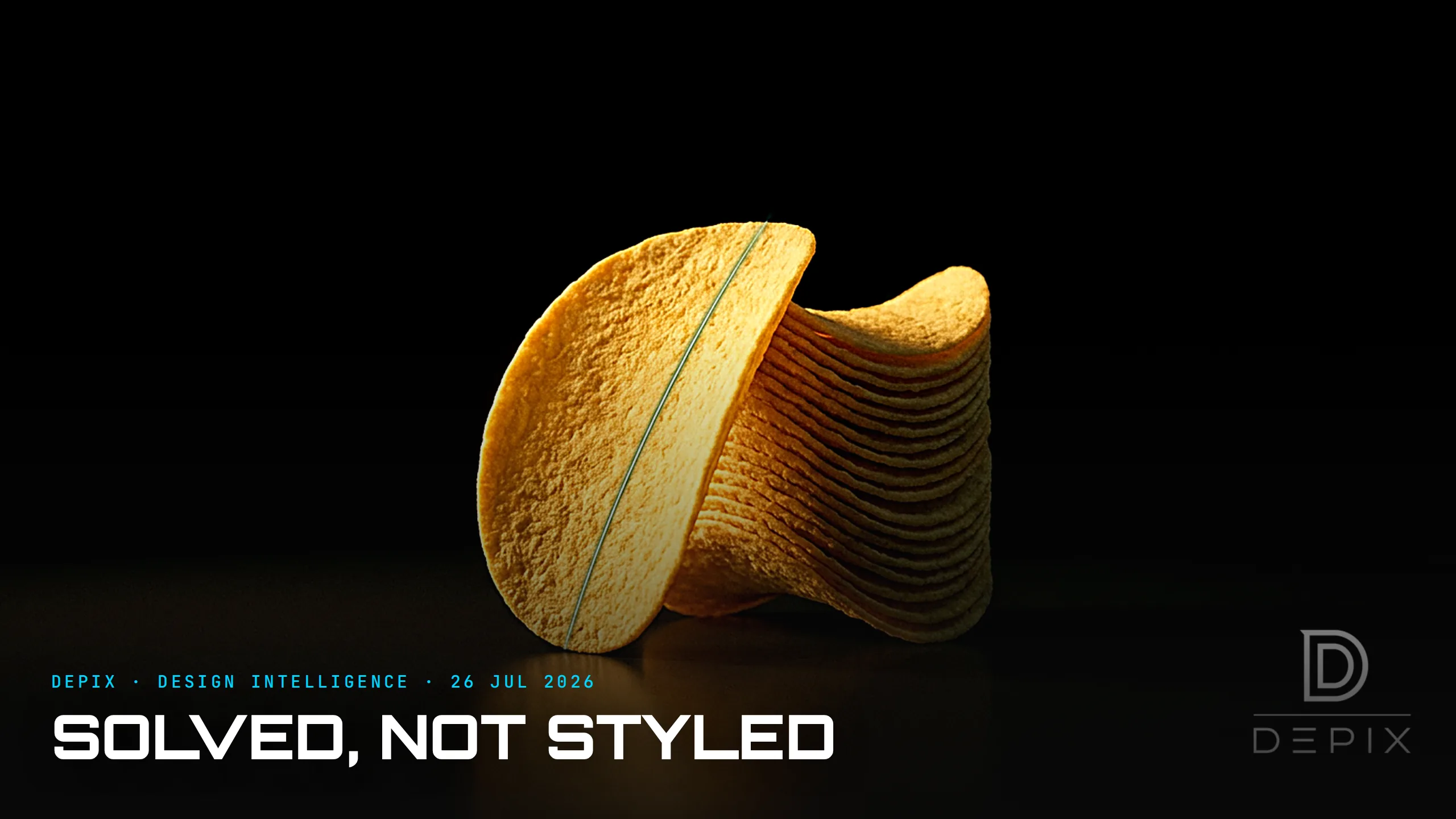
The Pringle's Shape Was Solved, Not Styled