Everything Points Upstream
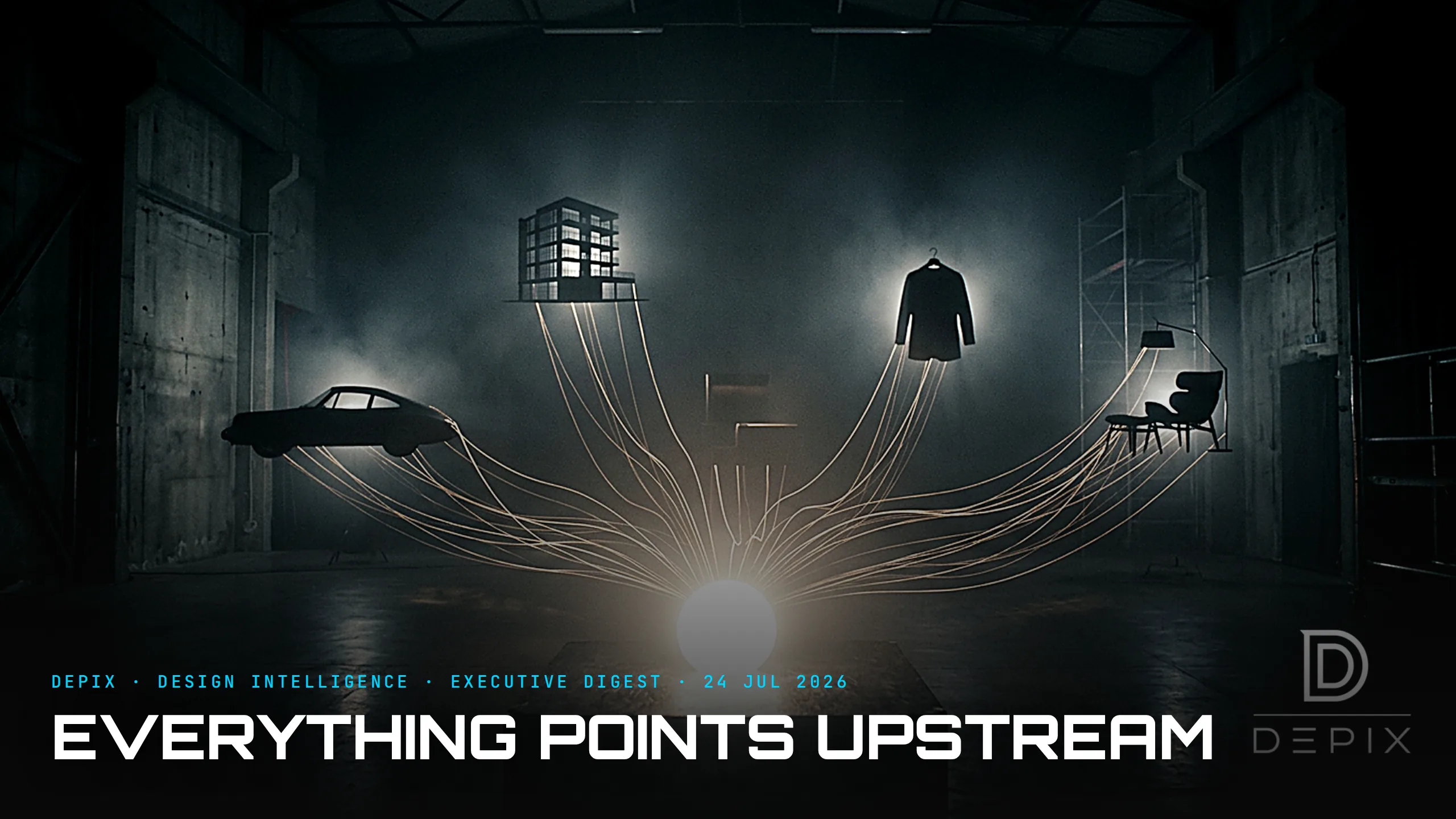
DEPIX published fourteen design-intelligence pieces today, across cars, interiors, products, fashion, materials and branding. They were written independently, on unrelated subjects. And yet they kept arriving at the same place - upstream, at the concept phase: the moment a design commits to what it is before the evidence is in.
The pattern is worth naming because it is not obvious. Most of the year's design conversation is about downstream tools - real-time rendering, generative AI, CMF libraries, digital twins. Today's reports suggest those tools have quietly done something none of them advertised: they have made execution cheap, and in doing so they have moved the entire scarce value of design back to the one decision the tools cannot make for you.
Three threads say it most clearly. In Seeing Isn't Deciding, real-time rendering collapsed the gap between changing a design and seeing it - but deciding whether it is right still runs at human speed, and always will. In The Cheapest Decisions Cost the Most, the numbers are blunt: 70 to 80 percent of a product's whole-life cost is locked in during the concept phase, the one most organisations staff thinnest. And in When Generation Is Free, Taste Is the Whole Job, the argument generalises: once anyone can generate anything, choosing - not making - becomes the entire visible craft.
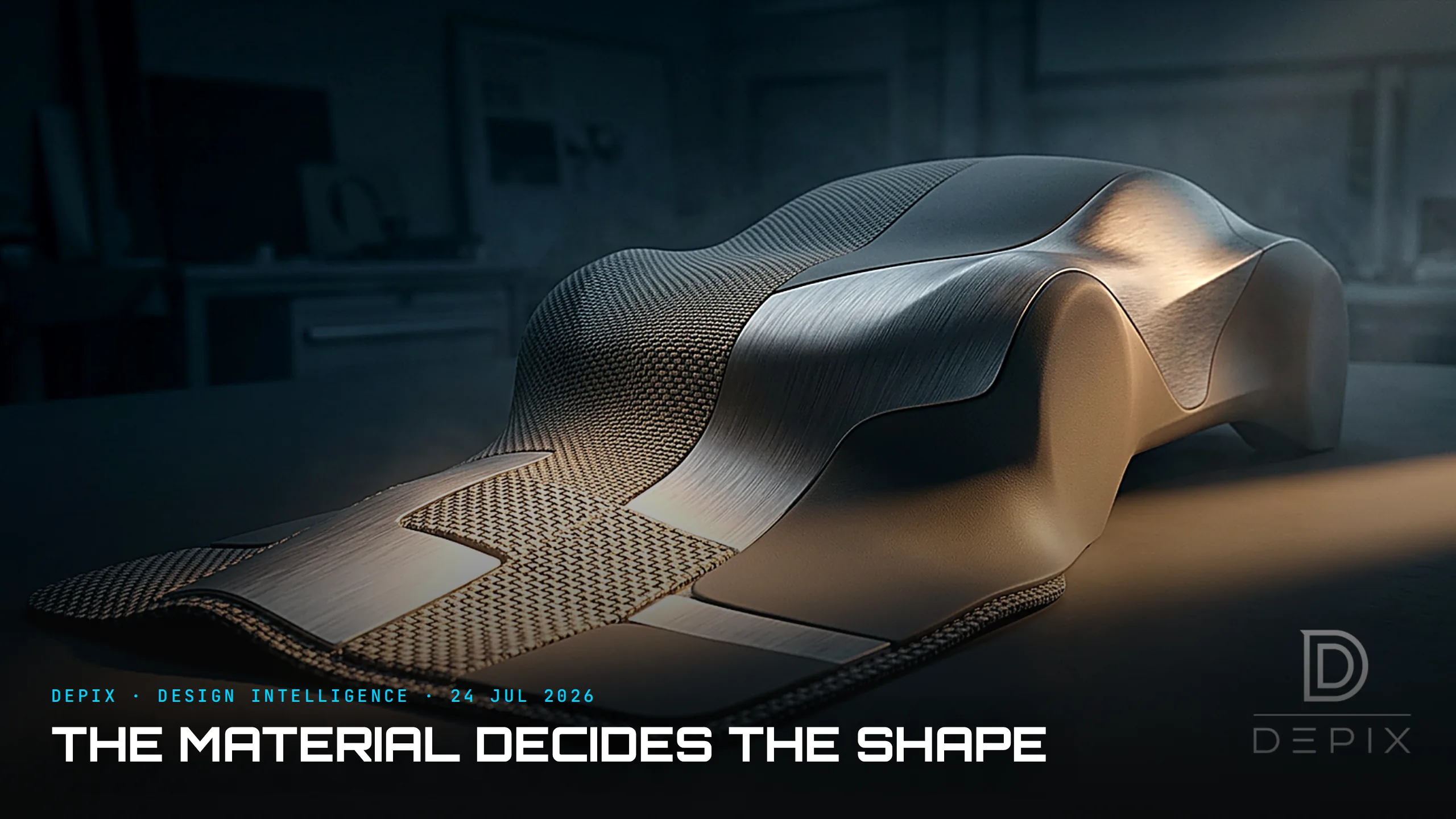
The same shape appears everywhere else today. Copy the Logic, Not the Costume shows heritage revivals succeeding or failing on a single concept-phase call - what is this car actually for? The Material Decides the Shape finds CMF, long treated as a finishing layer, is really an upstream decision that determines the form. Execution Went In-House traces authorship to the same room. Even Sameness Is a Choice locates the cure for convergence not in a studio's rendering power but in the courage of its early commitments.
The executive takeaway is simple and slightly uncomfortable. The parts of design that are getting cheaper - rendering, generating, prototyping, finishing - are exactly the parts most teams still budget and staff for. The part that is getting more valuable - the early, ambiguous, high-leverage decision about what the thing is - is the part most teams under-resource, precisely because it is cheap to do and hard to measure.
If there is one thing to move in 2026, it is attention: upstream, to the concept phase, where the decisions are still free to make and worth the most. Everything today pointed there. It usually does.
Sources:
- ●DEPIX - Seeing Isn't Deciding (real-time rendering)
- ●DEPIX - The Cheapest Decisions Cost the Most (concept-phase leverage)
- ●DEPIX - When Generation Is Free, Taste Is the Whole Job
- ●DEPIX - Copy the Logic, Not the Costume (heritage revivals)
- ●DEPIX - The Material Decides the Shape (CMF)
- ●DEPIX - Execution Went In-House. Authorship Didn't.
- ●DEPIX - Sameness Is a Choice, Not a Law (convergence)