Sameness Is a Choice, Not a Law
Ask why every new car looks the same and you get a confident, physics-shaped answer. Range depends on drag, and the cheapest way to a low drag coefficient is a long roofline, a clean nose and a tucked tail - the industry now hovers around 0.25 Cd, down from 0.45 in the 1970s. Pedestrian-safety rules rounded off every front end. Skateboard battery packs fixed the stance - long wheelbase, short overhangs, high hip-point. Shared platforms spread the same hard points across a dozen models. The conclusion writes itself: the jellybean is physics, not laziness, and designers are innocent.
It's a good alibi. It's also only about 70% true.
Aerodynamics and regulation genuinely dictate the big silhouette. But the silhouette is not the car. Look at what actually makes two efficient EVs feel identical: the same closed-off face, the same full-width light bar, the same single character line, the same slab-grey palette, the same minimalist screen-on-a-shelf interior. None of those is demanded by drag. A light signature is not aerodynamic. A colour is not aerodynamic. The interior sameness that reviewers keep flagging - especially across the fast-moving Chinese EV field - has nothing to do with the wind tunnel and everything to do with copying whatever tested well last season.
That is the distinction the physics story hides. Aero sets the envelope; everything inside the envelope is a choice. And when a hard constraint dictates the overall form, that is precisely the moment the small decisions carry all the identity - because they are the only variables left. Defaulting there isn't neutral. It is a decision to be invisible, made quietly, usually in the concept phase, by nobody in particular.
You can see the alternative in the brands that refuse it. Polestar shares the Geely SEA platform with corporate siblings, yet its design leadership treats distinctiveness as the whole job, leaning on a rigorous Scandinavian language and material honesty rather than unique hardware. Its CEO is explicit that design and sustainability, not engineering, are what separate it from Volvo and Zeekr on the same bones. Its design boss is out arguing for colour in a market drowning in grey. Same physics, same platform, different choices - and the cars read as a different brand from twenty metres.
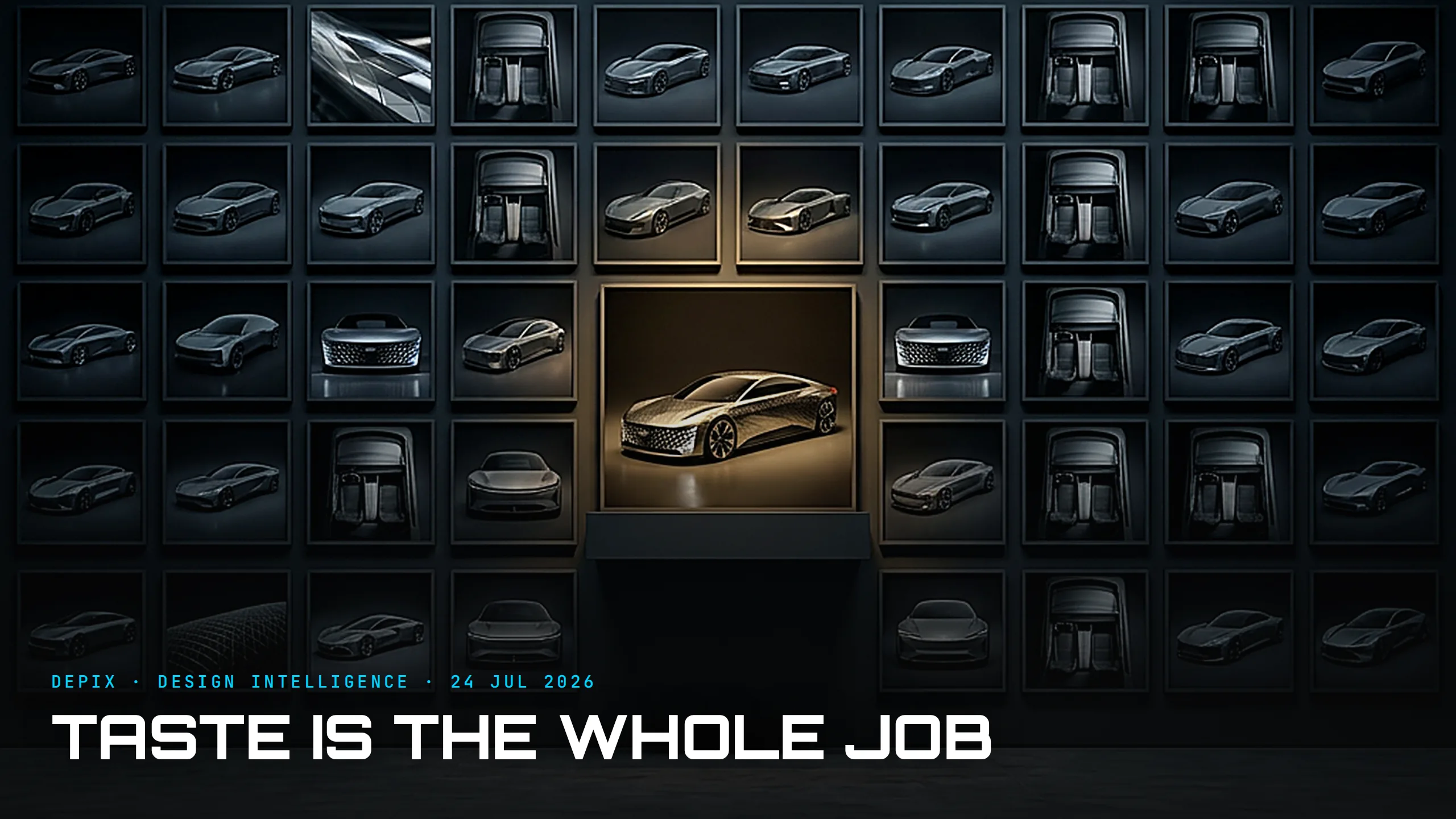
The uncomfortable part for the industry is that convergence is not really an accident; it is the sum of a thousand safe defaults, each individually defensible. Match the segment leader's proportions. Adopt the light bar because it signals "new." Keep the palette neutral for resale. Use the reference interior because it de-risks the review. Every one of those is a rational call. Together they manufacture a car that could wear any badge, which is the differentiation problem every EV maker now quietly worries about - and which even enthusiast press has stopped being polite about, asking the question outright.
The concept-phase lesson is not "ignore physics." It is the opposite. Take the aerodynamic and regulatory envelope as fixed, early, without argument - and then spend all your fight on the surfacing, the light, the stance details, the material and colour story, the one gesture that a wind tunnel does not touch. Those choices are cheaper to make well at the concept stage than at any point after, and they are the only ones that survive being seen next to a competitor. The safety and aero constraints are the same for everyone; that is exactly why they cannot be your excuse.
Physics loves a blob. Fine. The blob is where the conversation starts, not where a brand is allowed to stop. Sameness feels like a law because it arrives disguised as one - but every car that escapes it proves the same quiet thing: the constraint was never the reason. The default was.
Sources:
- ●Wikipedia - Automobile drag coefficient
- ●Wikipedia - Pedestrian safety through vehicle design
- ●Autoblog - Why all EVs look the same now (and who breaks the mold)
- ●Fortune - China's EVs are starting to look the same
- ●Autocar - Polestar committed to premium appeal as it adds models
- ●EV.com - Polestar CEO: design and sustainability differentiate from Volvo, Zeekr
- ●AOL - Polestar's design boss wants more exciting colours
- ●Unbuilt Garage - Modern cars all look the same, and it's not an accident
- ●The Truth About Cars - Design differentiation and EVs
- ●Brown Car Guy - Why do all new cars look the same?
- ●Endego - Aerodynamics: key aspects of automotive exterior design