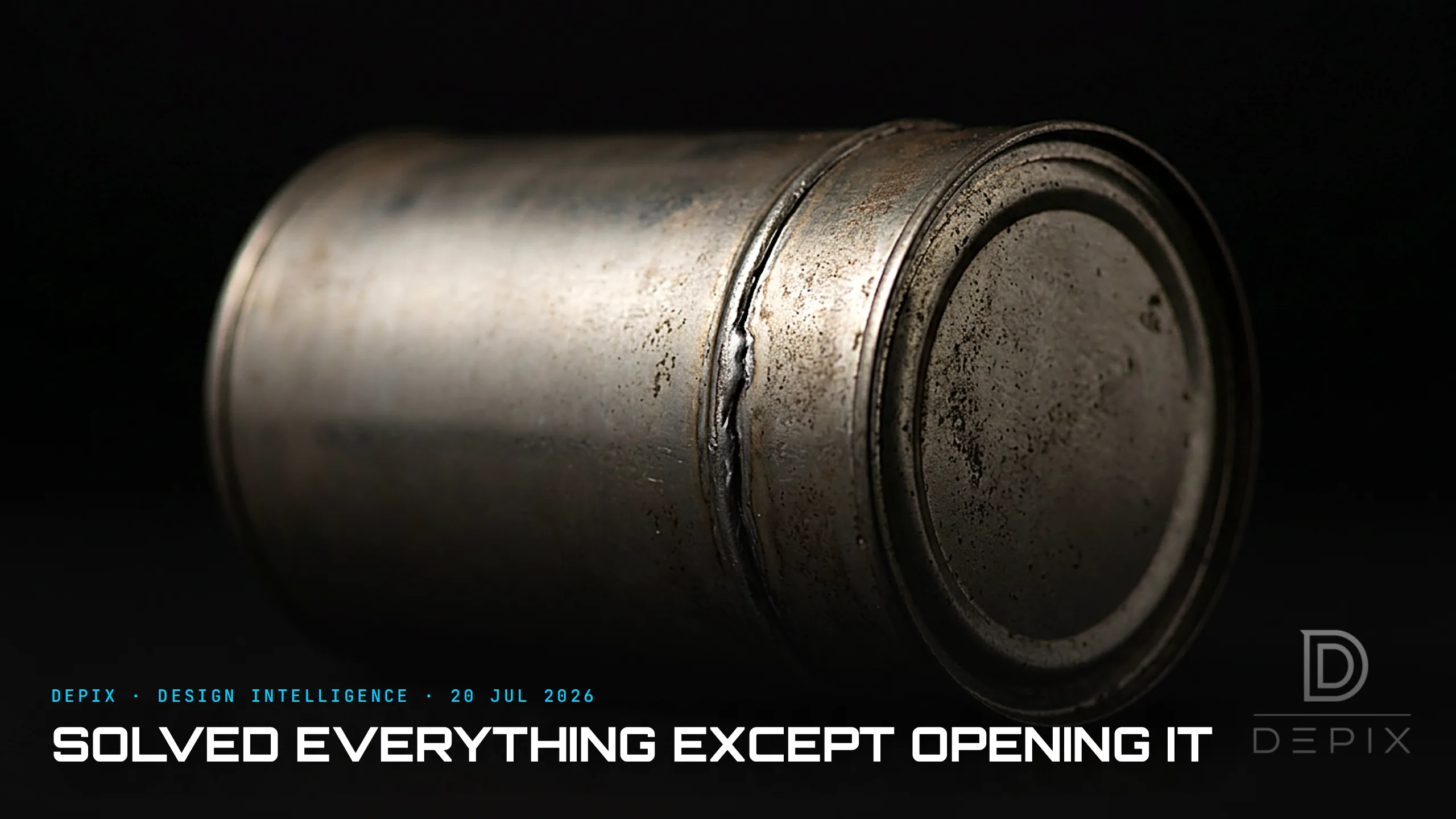
The Tin Can: Solved Everything Except Opening It
In 1810 the British merchant Peter Durand received a patent from King George III for a way to preserve food almost indefinitely: seal it inside a vessel of tin-plated iron. It built on Nicolas Appert's breakthrough in canning a year earlier, and it worked spectacularly. Food sealed in a tin can could survive years, oceans and armies. It is one of the most consequential preservation technologies ever made.
There was only one problem, and it is the reason we are writing about a can. For roughly the next fifty years, almost nobody could easily open one.
The first practical can opener was not patented until 1858 — by Ezra Warner, nearly half a century after the container it was meant to open. Canned food genuinely predated the can opener by that entire span. In the meantime, the instructions printed on the cans were not a joke: "Cut round the top near the outer edge with a chisel and hammer." The early cans were wrought iron up to three-sixteenths of an inch thick — closer to light armour than packaging. The design had brilliantly solved how to keep food in, and said almost nothing about how a human was meant to get it out.
It is tempting to call that an oversight, but it was not stupidity. The tin can was born for armies, navies and polar expeditions — contexts where a soldier had a bayonet, an explorer had a rock, and nobody expected elegance. Canned food was institutional and expensive, not something in a domestic pantry. Judged against its actual first users, the can was complete. The gap only became visible — and absurd — when canned goods moved into ordinary kitchens, where "hit it with a chisel" is not an acceptable user experience.
And here is the part that should worry any designer. The "trivial" afterthought, the opener, turned out to be genuinely hard. Ezra Warner's 1858 device was a bent blade like a bayonet with a guard, so awkward and dangerous it was mostly wielded by grocers and army cooks, not families. It took William Lyman's) 1870 rotary design — a cutting wheel pivoting on a hole punched in the centre of the lid — to point at the modern answer, and even that had to be re-set for every can size. The device only really arrived in 1925, when the Star Can Opener Company added a second serrated "feed wheel" that grips the rim and drives the cut. From patent to pleasant took about 115 years — for the "simple" part.
This is the concept-phase lesson, and it is unglamorous on purpose. A design can completely, triumphantly solve its headline problem and still fail the user at the exact moment of use, because the moment of use got scoped out as somebody else's job. Preservation was the interesting engineering; access was "details." So access was deferred — and the deferral cost fifty years of chisels and a further half-century of refinement. Nobody decided the user should struggle; they simply never decided that the user's struggle was part of the design at all — and a problem that no one owns is a problem that no one solves.
At Depix we watch this pattern constantly, because it is the one that hides behind a successful demo. The core capability works, the hard technical problem is cracked, everyone celebrates — and the actual human still cannot get in without specialist tools and a little blood. The unglamorous "last inch" — how you open it, install it, learn it, recover from a mistake, get through the first five minutes — is almost never where the intellectual excitement is, which is precisely why it gets left for later, or for someone else. And "later" has a way of becoming 1858.
The discipline the can teaches is to define the problem as the whole use-cycle at the very start: not "preserve the food," but "preserve the food and get a person into it without a hammer." The container and the opener were always one design problem pretending to be two. The most sophisticated part of a system is often finished decades before the simplest — because the team mistook "simple" for "unimportant." They are not the same word, and the tin can spent half a century proving it.
Sources:
- ●Wikipedia — Peter Durand (tin can patent, 1810)
- ●Wikipedia — Nicolas Appert (the canning process)
- ●Wikipedia — Canning
- ●Wikipedia — Tin can
- ●Wikipedia — Can opener
- ●The Inventors — History of Tin Cans and Can Openers (Warner 1858)
- ●Interesting Facts — Canned food predates the can opener by almost 50 years
- ●Family Tree Magazine — History of the can opener ("chisel and hammer")
- ●Industrial Physics — History of the can: a timeline
- ●Wikipedia — Ezra Warner
- ●Wikipedia — William Lyman (rotary can opener, 1870))
- ●Invention & Technology — The Can Opener (Star Can Opener Co., 1925)

The Ballpoint Pen: The Idea Was Easy. The Tolerance Wasn't.
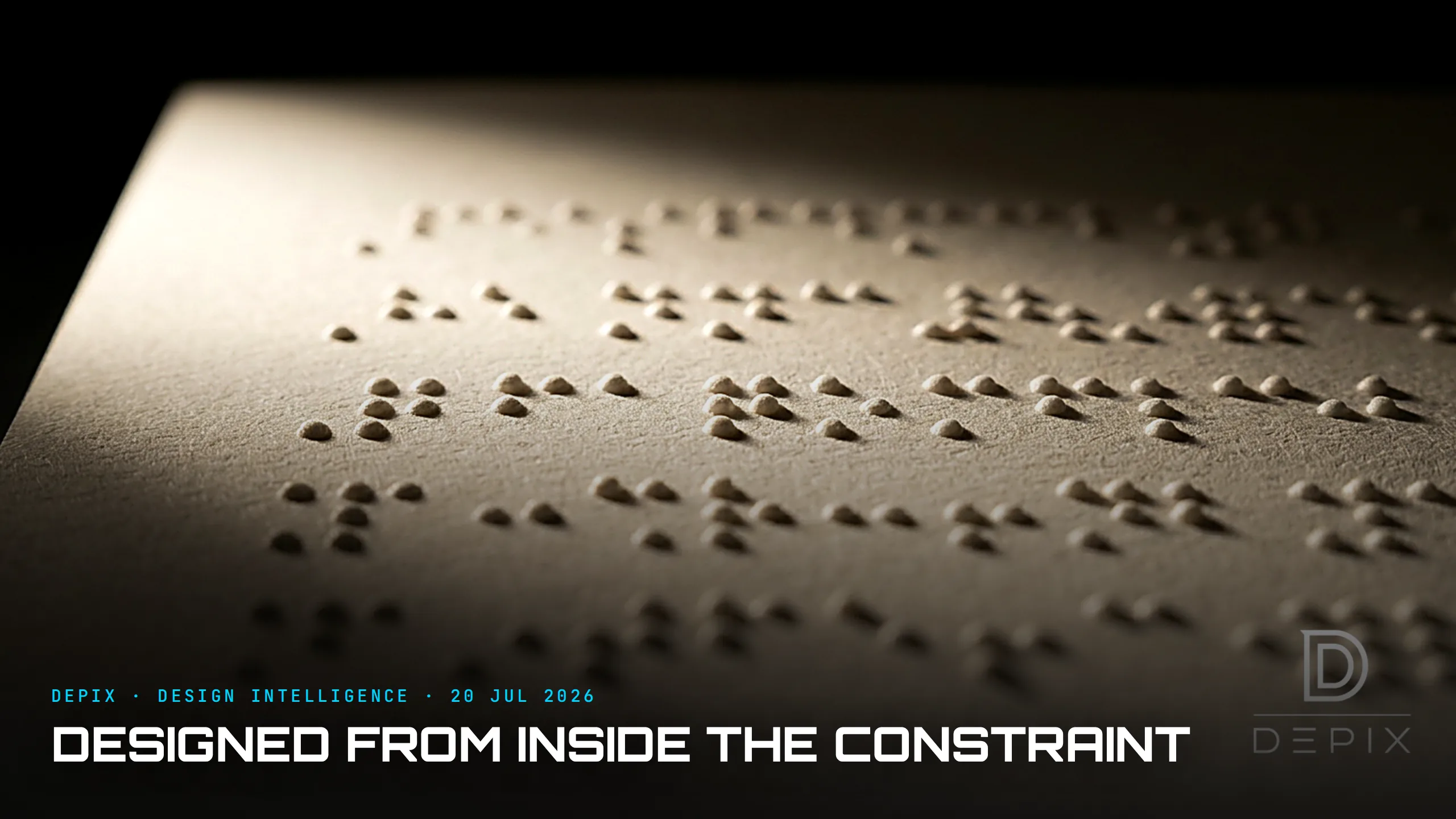
Braille: Designed From Inside the Constraint