The One Line That Does All the Work
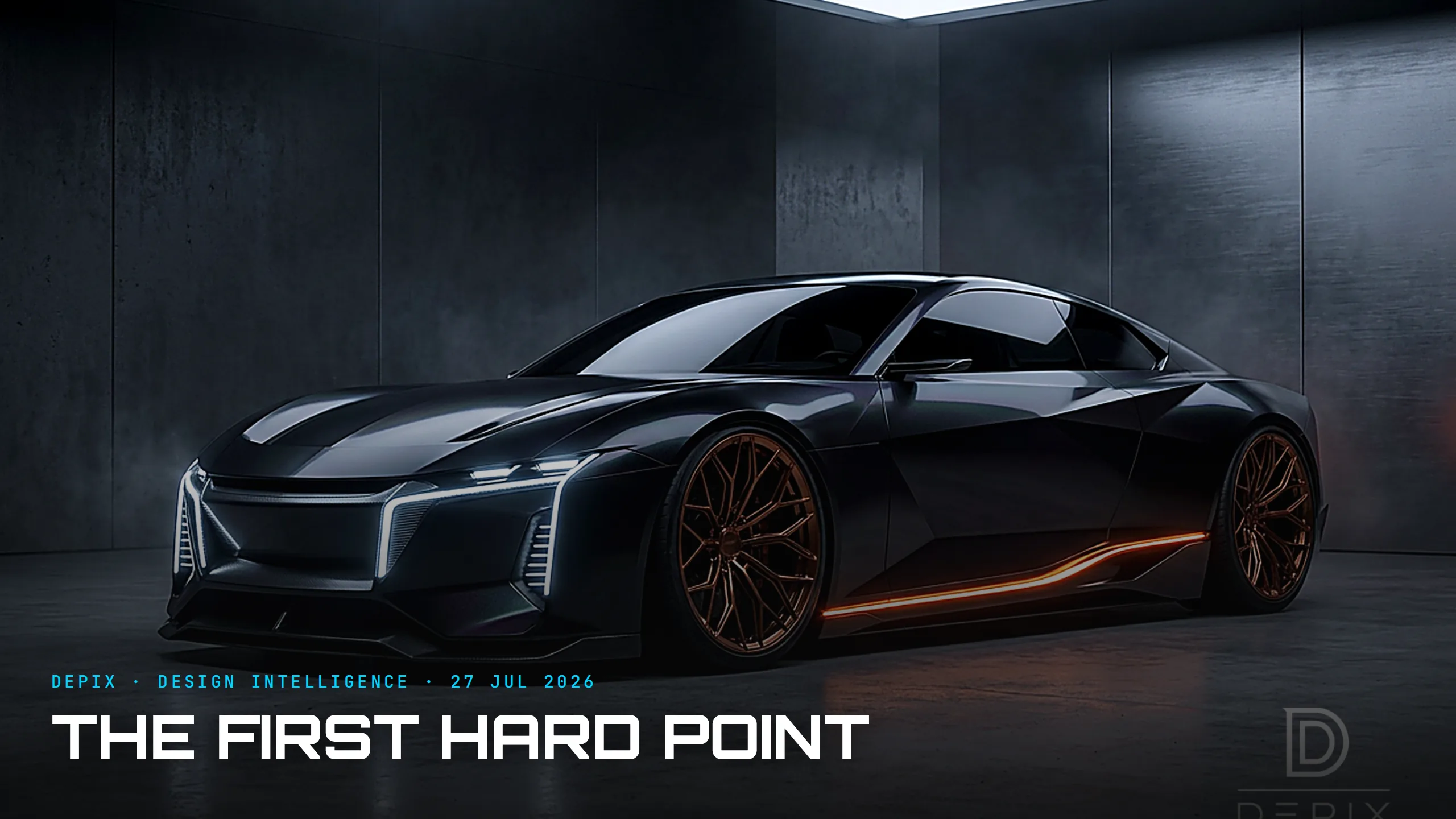
Strip a modern electric car of everything the engineering no longer needs and you are left with astonishingly little to design. There is no grille to compose because there is no engine to cool, no tailpipe to frame, and the pursuit of range pushes every surface toward the same smooth, sealed, aerodynamically slippery envelope. Flush handles, low-profile mirrors, closed-off undertrays — the vocabulary a designer once had to work with is being quietly deleted. And yet cars still have to look like something, and be recognisable as a particular brand. So the whole burden of identity falls onto the few marks that remain. Chief among them: the character line.
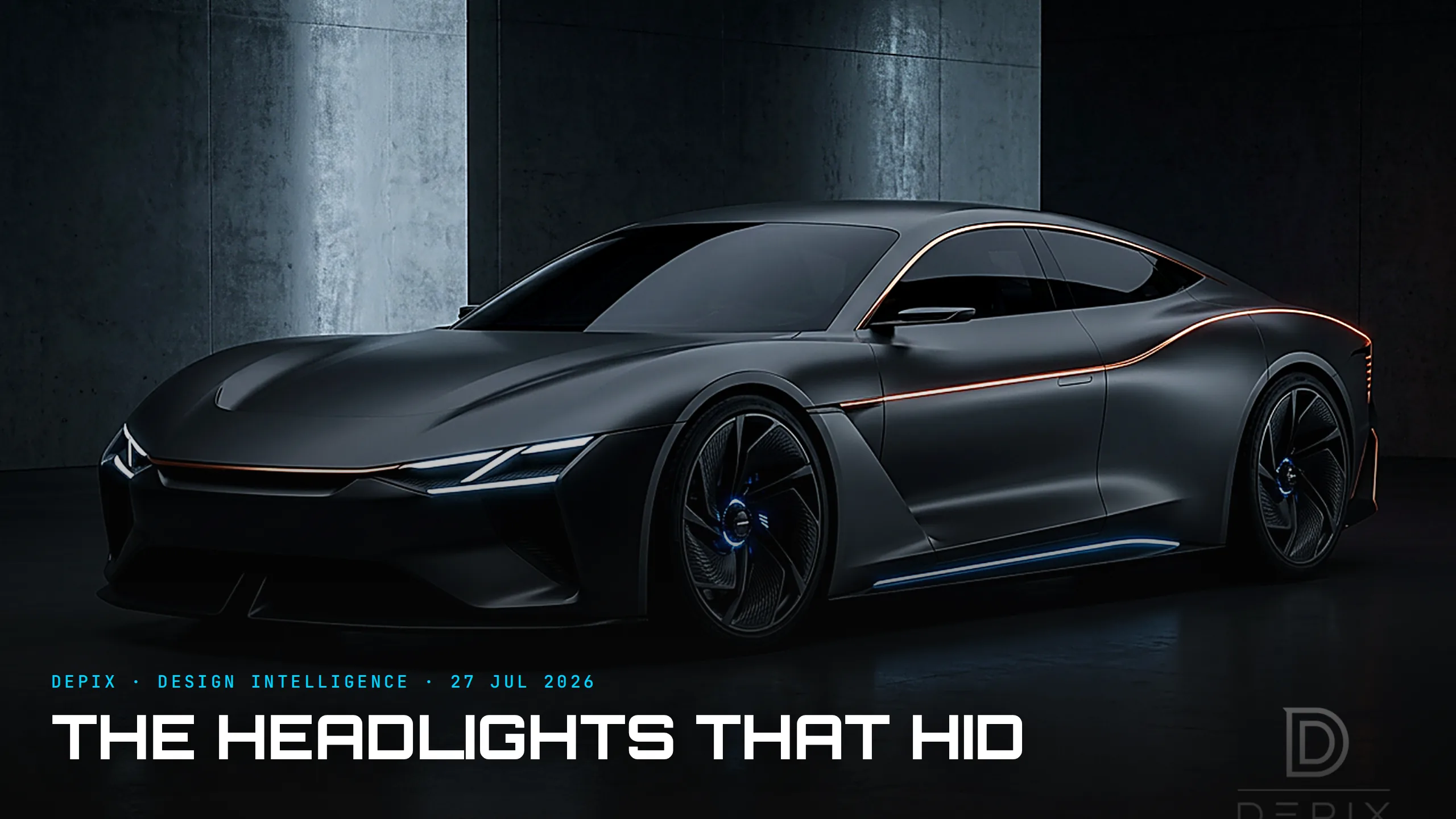
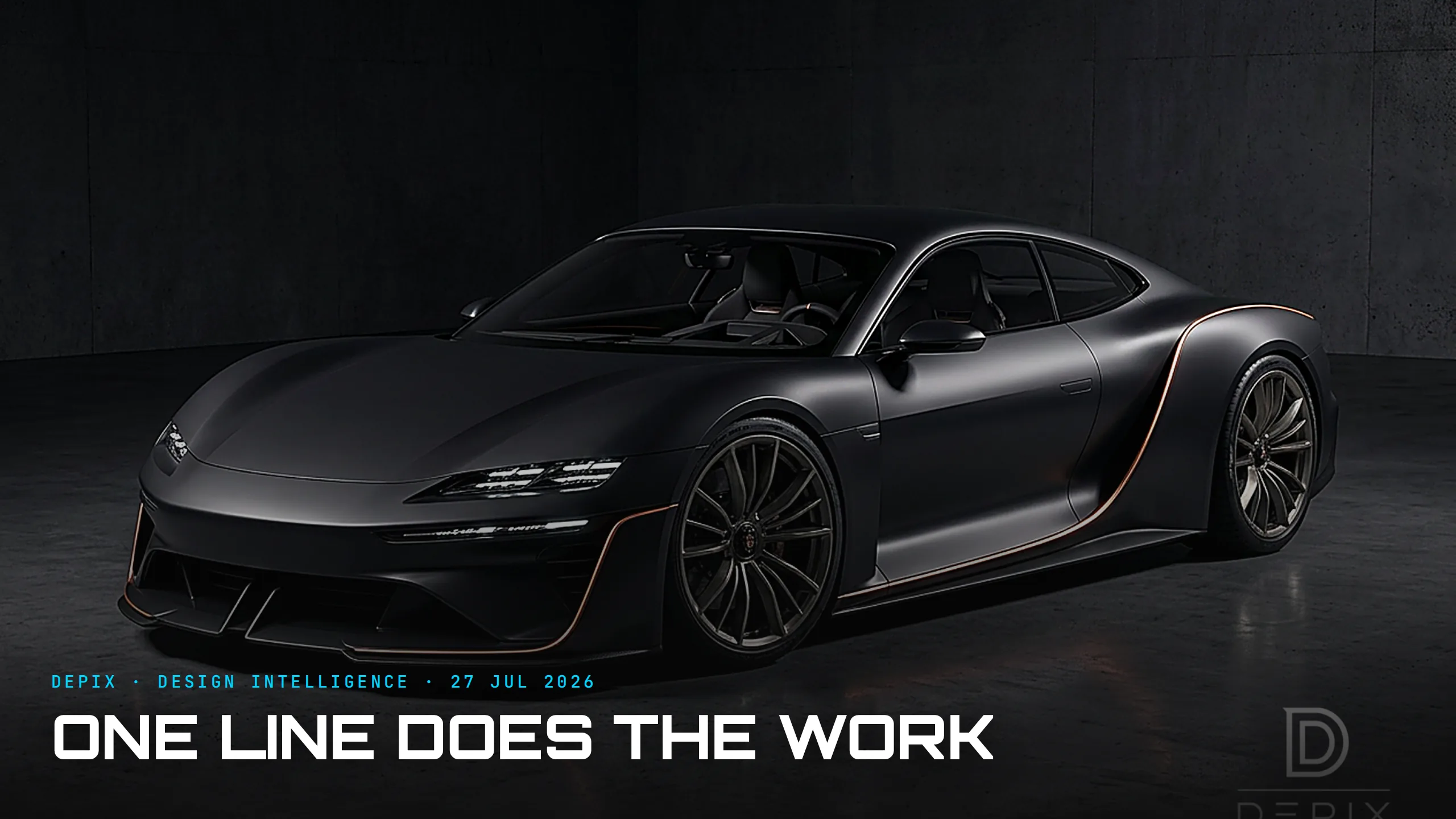
A character line is deceptively humble — a projecting ridge formed where two surfaces of a body panel meet, a crease that runs down the flank and catches the light. In a profile, the roofline matters most, then the beltline, then the overhangs; the feature line is the one the eye reads as the car's signature gesture. It does something no rendering trick can fake: it describes the three-dimensional volume of a whole surface from a single edge, telling you where the metal swells and where it tucks, long before you have walked around the car.
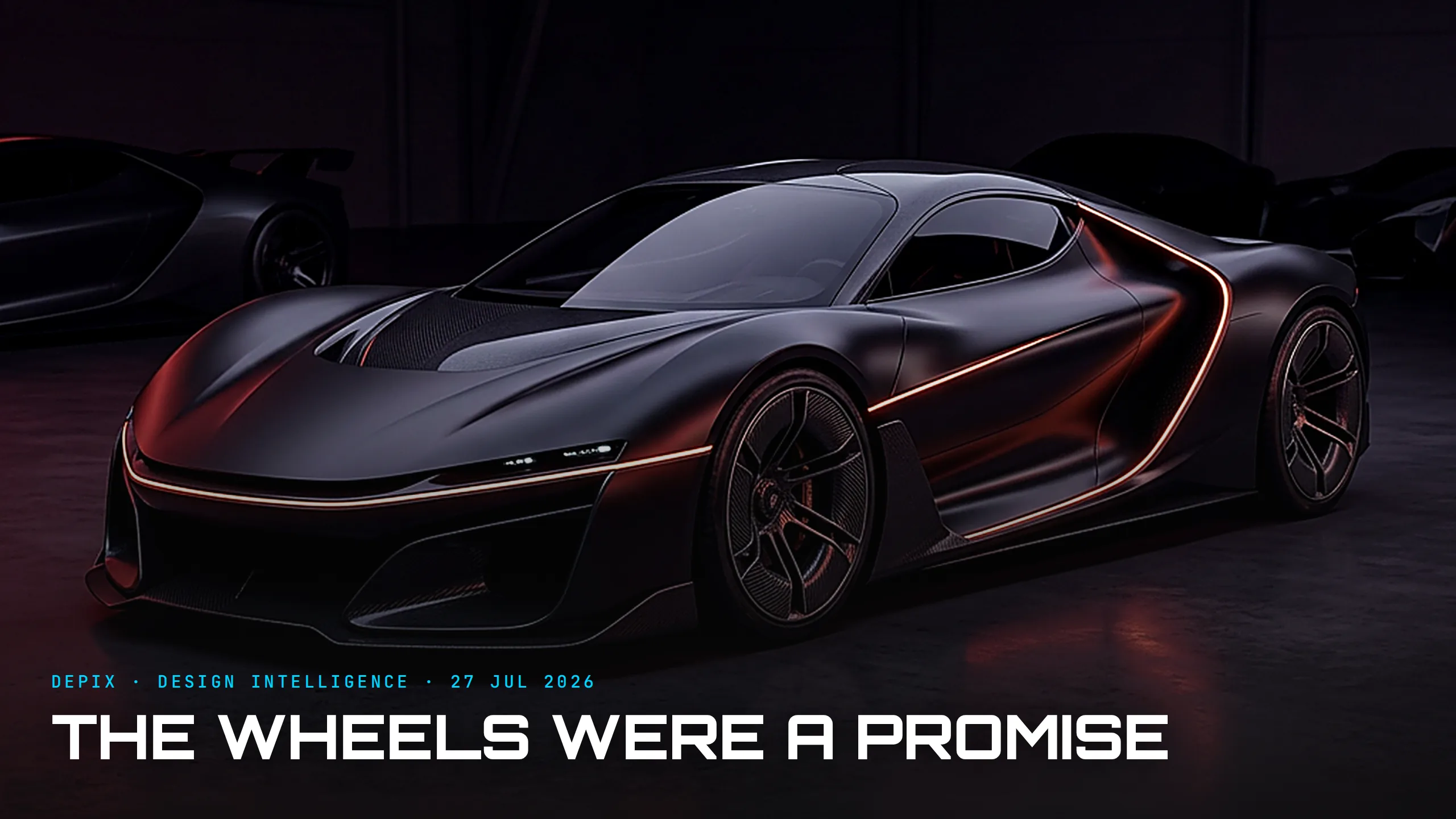
Here is the contrarian part, and it is the part studios keep re-learning. Fewer elements do not make design easier — they make every surviving decision heavier. When a face had a grille, badges, vents, fog lamps and a splitter, no single element had to carry the identity; the composition spread the risk. Delete all of that and one line is suddenly doing the work a dozen features used to share. There is nowhere to hide a weak decision. This is the real reason so many EVs are accused of looking alike: not because designers got lazy, but because the surviving margin for differentiation shrank to a handful of lines, and a handful of lines is a brutally exposed place to compete.
Which is why the character line is, above almost anything else on the body, a concept-phase decision. A sharp feature line is in effect a 3D sketch of the final shape — the blending radii and manufacturing tolerances that make it buildable are added later, at the functional-design stage, but the intent, the exact path and tautness of that line, is authored right at the start. AI-assisted, real-time 3D surfacing tools and modern power-surfacing software now let a team see the line under moving light within hours instead of weeks — but they do not make the taste call. They only make the wrong line visible faster. Get the line wrong at concept and every downstream surface inherits the error; get it right and the manufacturing stage is merely honouring a decision already made.
The discipline this demands is subtraction, not addition. The instinct, when a shape looks bland, is to add another crease, a second swage, a bit of drama near the wheel arch. The harder, better move is usually to make the one line perfect and delete the rest. It is worth remembering that the opposite vocabulary works too: the Land Rover Defender defines itself with hard, boxy, almost brutal lines rather than a single sensuous curve — proof that the principle is not "one soft line" but "the line, whatever its character, is the identity decision." Even brands leaning hardest into aerodynamic smoothness still fight for distinction in the shoulders and the flanks, because that is where the last legible line lives.
So the smallest mark on the car turns out to be the highest-leverage one. A grille can be restyled in a facelift; a character line is baked into the tooling of every panel and cannot be meaningfully changed without redesigning the whole side. It is the cheapest thing to move while it is still a stroke on a screen and the most expensive thing to move once it is steel. That asymmetry is the entire argument for resolving it at the concept phase — the one moment when a line is still free.
At Depix, this is exactly the kind of decision we exist to make visible early: not how many lines a surface has, but whether the one that matters is right. Delete everything you can. Then spend all your judgement on what is left.
Sources:
- ●A feature-line-based descriptive model of automobile styling — Car Body Design
- ●Character lines in a car (diagram) — ResearchGate
- ●Design differentiation and the EV sameness problem — The Truth About Cars
- ●EV design: aerodynamics vs. style balance — Alibaba buying guide
- ●Flexible 3D surfacing system for car design using AI — Car Design TV
- ●Power Surfacing for automotive applications — SolidWorks blog
- ●Unpacking the future: EV design trends — Skyrye Design
- ●The 2021 Defender: one of the best boxy cars — MotorBiscuit
- ●Kia EV5 — official media (a smooth-surfaced EV example)
- ●Method and apparatus for producing outer panel having character line — USPTO