The End of the Black Cave
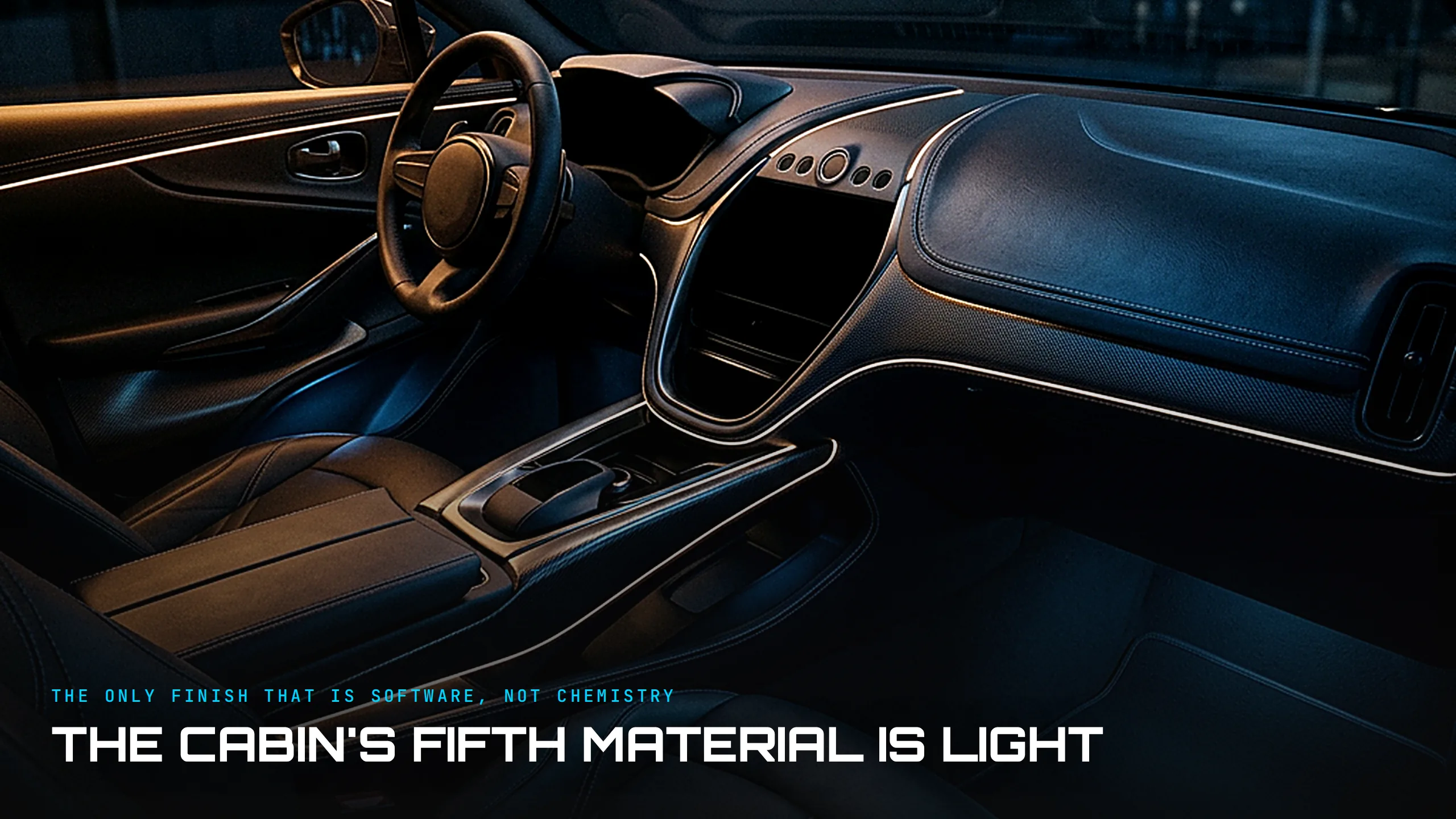
Climb into almost any car and you climb into a cave. Black seats, black dashboard, black headliner, black everything — the default cabin for two decades. It photographs sporty in the brochure and reads premium under showroom lights. It is also, quietly, a design mistake you live inside every single day.
Black won for reasons that had nothing to do with how good it is to sit in. It hides dirt and wear, which families love; it de-risks resale the way a grey exterior does, a safe neutral that never scares a future buyer; it reads sporty and premium; and it is cheap to standardise across every trim. So it became the default, and it still dominates in North America and Europe — chosen, mostly, by inertia.
Here is the part the brochure never mentions: black is not a neutral choice, it is an active one with physical consequences. A dark interior runs 25 to 30 degrees hotter than a lighter one, pushing the dashboard, the wheel and the seat you are about to sit on well past 150°F in the sun. And the colour and material inside the car affect your comfort more than the paint outside ever will. In a combustion car that was merely discomfort. In an electric one it is range — the air-conditioning fighting to cool a solar-heated black cave draws its energy straight from the battery, so the choice between a dark cabin and a light one is now a choice about how far you can drive. The black cabin is a solar oven that costs miles.
Then there is the part you feel rather than measure. A dark, cave-like interior sits smaller, heavier and more oppressive around you; lighter cabins feel more open, and brighter tones help people feel more awake and calm — colour psychology that the wellness turn in design has finally dragged onto the agenda. As the cabin becomes a third space you actually live in — the commute, the charging stop, the eventual autonomous hour with your hands off the wheel — how the space feels starts to matter as much as how it looks in a press shot. And the stakes only rise: as driving becomes optional and the car turns into a room you inhabit rather than a machine you operate, the gap between a bright, calm lounge and a hot black box stops being a detail and becomes most of the product.
So the industry is, at last, switching the lights on. Tesla popularised the bright white EV interior with its vegan seats and everyone followed; Kia's 2026 electric cabins are designed as "nature-inspired lounges" in light palettes, recycled materials and sixty-four colours of ambient light; Nordic warm greys, soft beiges and cream-and-sand are the new premium signal. Even beige — long declared dead and disappearing — is quietly returning in luxury and hot-climate markets, precisely because a lighter interior reflects heat and brightens the space. Interior colour is turning back into a wellness-and-energy decision instead of a resale hedge.
This is the concept-phase lesson hiding inside a black dashboard. An interior palette is a decision about how a space feels to live in and how it performs thermally — made years before launch, and defended for a decade afterward. Defaulting to black to play it safe quietly imposes a hotter, heavier, more tiring room on the owner for the entire life of the car, in exchange for hiding fingerprints and protecting a resale number. That trade looked free only because nobody was counting the cost — the extra load on the air-conditioning, the fatigue of a dark box, the miles quietly lost. The makers winning the electric cabin are the ones who stopped treating interior colour as a used-lot hedge and started treating it as what it is: the single biggest lever on how it feels to spend an hour inside.
Black hides the dirt, and it hides the problem. The cabin you actually live in should be designed for living rather than for the second-hand forecourt — lighter, cooler, calmer, more human. Design intelligence is knowing that the safest colour is almost never the best one, and that "it doesn't show the dirt" was never the same thing as "it is good to be inside.\"
Sources:
- ●Alibaba Insights — Yes, a Black Car Gets Hotter in the Sun
- ●One 4 Leather — What Is the Most Popular Colour for Leather Car Interiors?
- ●ShunAuto — Dark Cars, Hotter Temps: The Color-Heat Connection
- ●ShunAuto — How Car Color Affects Interior Temperature
- ●NewsPoint — Black vs White Cars: Which Stays Cooler?
- ●Bespoke Master — 2025 Car Interior Color Trends
- ●Carsfrenzy — 2026 Kia EV Colors: Exterior and Interior
- ●Bespoke Master — Car Interior Color Matching: Choosing the Right Tone
- ●VW Vortex — Beige/Tan Interiors Are Disappearing (owner thread)
- ●ShunAuto — Exterior Colors to Complement a Beige Interior