Stop upskilling. Start unlearning.
The conversation around enterprise AI has become a training conversation. How do we upskill the workforce. Which courses. Which certifications. Which prompt frameworks.
Wrong question.
Nobody adopts a transformative tool by getting better at the old job. They adopt it by letting go of what the old job told them they were allowed to do.
That's the real work. And no training program teaches it.
The chair you were hired to sit in
You were hired for a function. A scope. A box on an org chart. Your job — explicit or implied — was to perform that function well and not stray. Stay in your lane. Hit your number. Hand it off.
That worked. For a long time.
Now there's a tool sitting next to you that can think across functions. Across departments. Across disciplines you were never trained in and weren't supposed to touch.
And most career people are flinching. Not because the technology is hard. Because it asks them to stop being the version of themselves they were rewarded for being.
The threat is in the framing
The instinct to read AI as a replacement risk is reasonable. The conclusion is wrong.
The replacement isn't happening to the person. It's happening to the constraint. The constraint that said your value lives inside one function. That you don't go past your lane. That output has to come through your hands and only your hands.
AI doesn't replace you. It dissolves the wall around your role. What's on the other side is the reason you got into the field in the first place.
It's a partner, not a productivity hack
Most enterprise AI training treats the technology as a faster typewriter. Write your email quicker. Summarise the deck. Generate a draft.
That's the bottom one percent of what's actually sitting in front of you.
The tool can hold context across an entire project. Tie disconnected questions together. Pressure-test a strategy you've already half-committed to. Coach you through a discipline you don't have a degree in. Challenge a decision the way a senior colleague would, if you had one with infinite time and no ego.
It's a mentor on demand. A business partner who never gets tired. A second brain that thinks alongside you instead of for you.
If you use it to write emails faster, you bought a Ferrari to drive to the mailbox.
The 180
Here's the shift no course teaches.
You stop asking — _how do I do my job faster with AI._
You start asking — _what am I actually trying to accomplish, and what's the largest version of that I can pursue now that resourcing isn't the bottleneck._
That's the 180. That's the whole thing.
Most of what you produce today can be improved with this tool. Some of what you produce today shouldn't exist at all once you have it. And some of what you'll produce next year you couldn't have touched without it.
The people who absorb that thinking become the most valuable people in the building. Not because they learned a tool. Because they stopped operating like a function and started operating like a thinker with leverage.
Why enterprise adoption stalls
The companies struggling with AI rollout aren't struggling with the technology. They're struggling with the operating system underneath it.
The org chart. The role definitions. The performance reviews that still measure output inside the old constraints. The middle management layer whose job description is to police the lanes.
You can't bolt AI onto a workforce that's been trained for fifteen years to stay narrow and expect transformation. You get faster lanes. Same lanes.
The work isn't training. The work is permission.
Permission for people to think wider than their role. Permission to fail at things they weren't hired to do. Permission to ask the question — _what could I build now that I couldn't yesterday._
That's a leadership problem. Not a learning and development problem.
The choice
You can reject this. Plenty of people will. They'll be right that something is being taken from them — just wrong about what.
What's being taken is the comfort of a narrow scope. What's being offered is range you've never had access to.
The career people who win the next decade aren't the ones who learned AI the fastest. They're the ones who let it expand them.
Where this lands for design
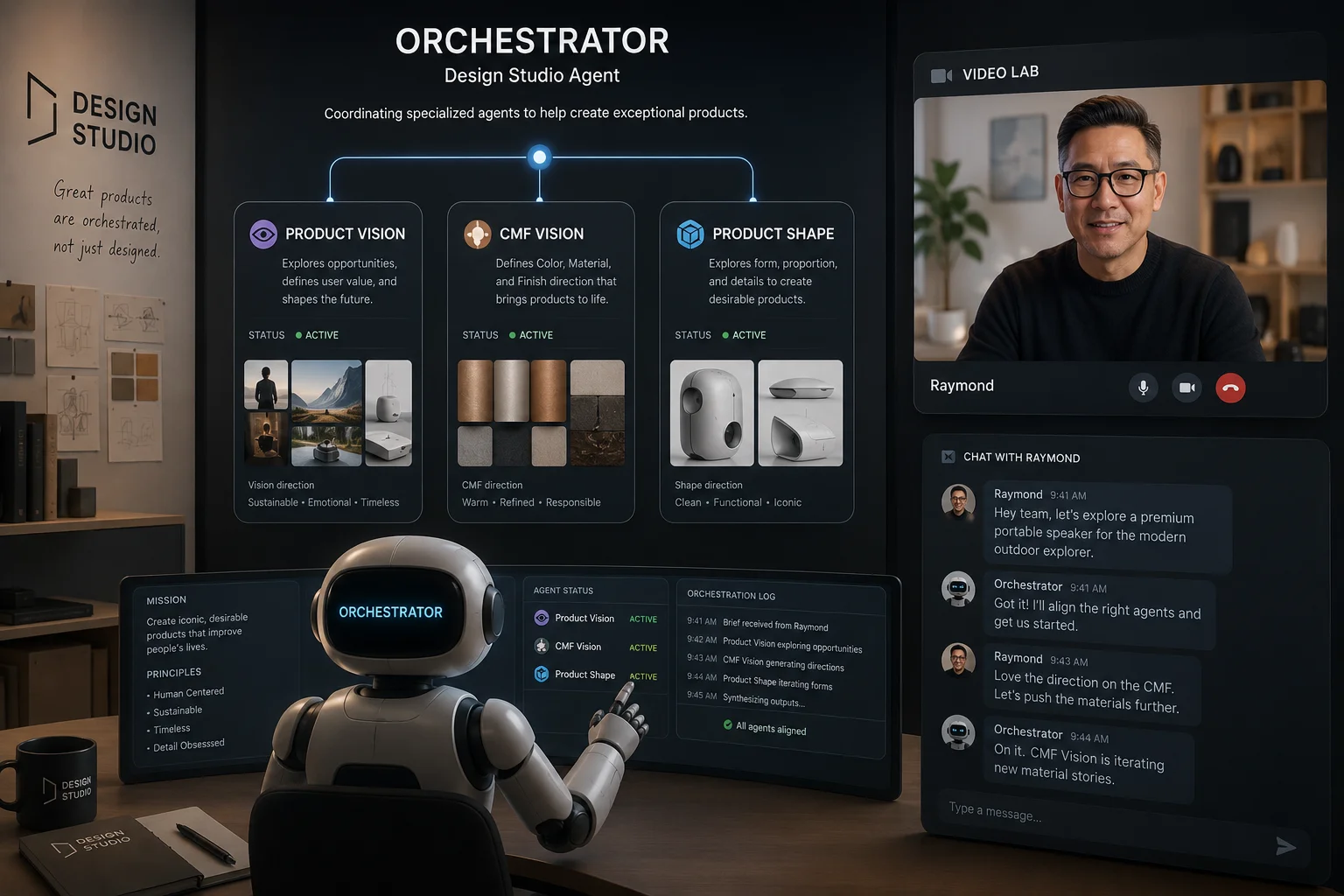
We built Depix around exactly this idea, applied to one discipline.
Design leaders shouldn't have to wait three weeks for a render to validate a direction. CMF decisions shouldn't bottleneck on sketch cycles. The vision in your head should land in front of leadership the same day you have it.
We removed the resourcing constraint from design. The next constraint is the one designers carry into the chair — the belief that the work has to happen the way it's always happened.
Drop that one too. Then we can talk about what design leadership actually looks like.