China Designs Cars Three Times Faster Than the West — and It Has Nothing to Do With Factories
The uncomfortable truth every Western design studio is quietly living with — and the one lever that actually closes the gap.
Here is the sentence no one in a Western design studio wants to say out loud: a Chinese EV programme can go from blank page to launch in as little as 18 months, while the traditional Western development cycle still runs close to four years.
For a decade, the comfortable explanation was manufacturing. Cheaper labour. Vertical integration. A supply chain that bends to the OEM instead of the other way round. All true — and all beside the point.
Because the factory was never the bottleneck. The studio was.
The part of the car nobody automated
Walk the timeline of any vehicle programme backwards and you find the same quiet truth: the engineering pipeline has been optimised to death. Simulation, generative structures, digital twins, validated CAD — the back half of the process is faster than it has ever been.
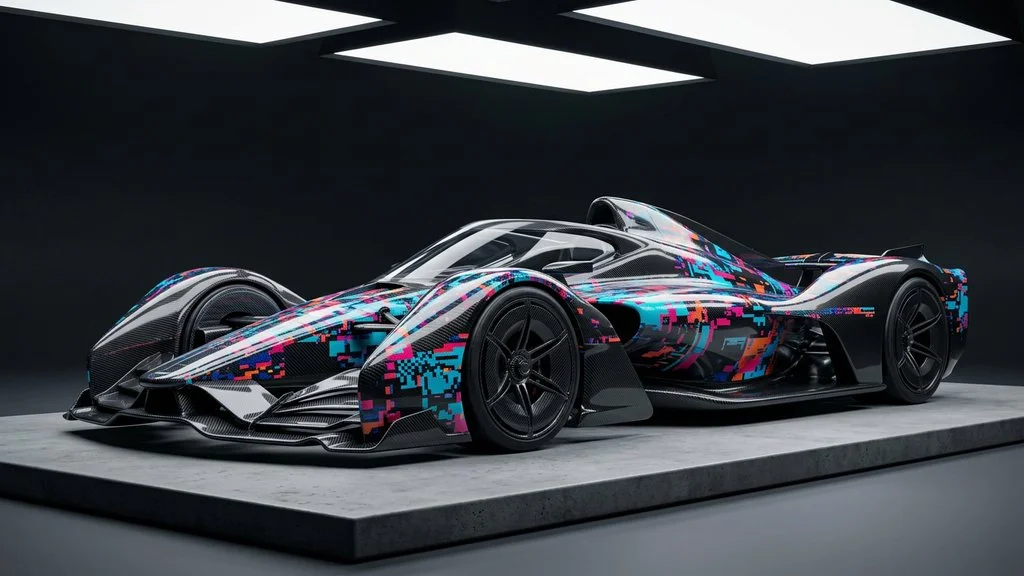
The front half — the part where intent becomes form, where a sketch becomes a photoreal proposal, where colour, material and finish get explored — still moves at the speed it did twenty years ago. A single restyle direction can take weeks. A full CMF exploration across a brand portfolio can swallow a quarter.
So when a competitor compresses the whole car to 18 months, they are not out-manufacturing you. They are out-iterating you at the concept stage — running ten design loops in the time a traditional studio runs three.
You cannot out-hire an 18-month cadence
The instinctive Western answer is headcount: more designers, more visualisers, a bigger studio. It doesn’t work, and the maths is brutal. Doubling a studio does not double its throughput — it doubles its coordination cost. Meanwhile the people you want are the same fifty senior designers every premium brand is fighting over, and a growing number of them are being hired into studios on European soil that answer to Shanghai.
Hiring is linear. The cadence problem is exponential. Linear never catches exponential.
The lever that actually moves
The studios closing the gap are not the ones with the most people. They are the ones who stopped treating the front-end loop as a craft that can only run at human speed — and started treating it as a loop that can be compressed.
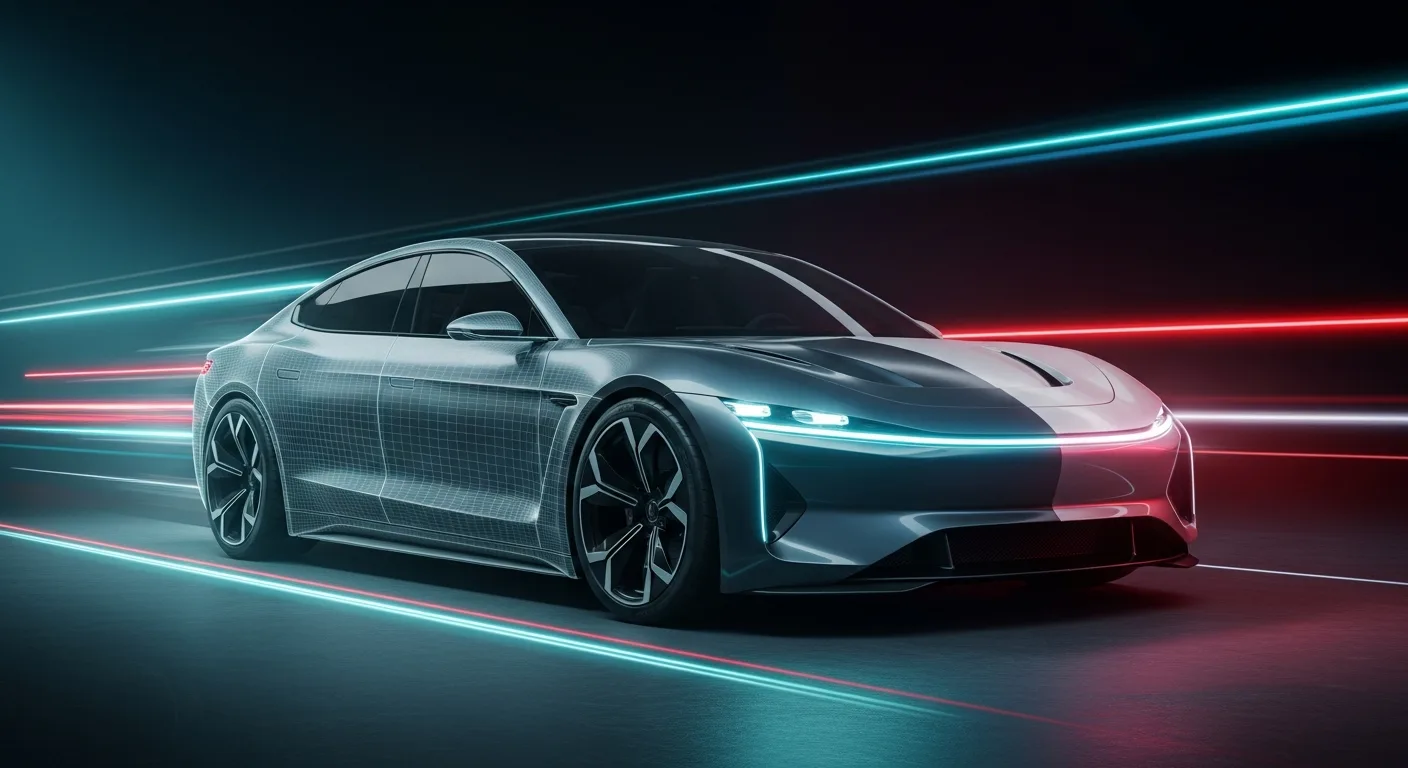
Concept to photoreal in hours, not weeks. Thirty on-brand CMF directions explored in an afternoon, not a quarter. Restyle proposals a design leader can react to the same day the brief lands — held distinct across every brand in the portfolio.
This is not “replace the designer.” The designer is the one thing that does not scale and should not. It is removing everything between the designer’s intent and a decision-ready image — the wait, the handoffs, the weeks — so a small team of exceptional people can run at the cadence the market now demands.
That is the whole game. Not more hands. Faster loops.
The choice every design leader is now making
Quietly, on a spreadsheet no one circulates, every Chief Design Officer in the West is doing the same calculation: our process was built for a four-year world, and the world is no longer four years.
You can answer that with a hiring requisition that won’t clear procurement until next year. Or you can compress the loop you already own.
One of those is available this quarter.
See what a same-day design loop looks like. A fifteen-minute walkthrough — your brief, your brand, generated in front of you: book a call.
Depix — the pre-CAD design studio. Where intent becomes product.
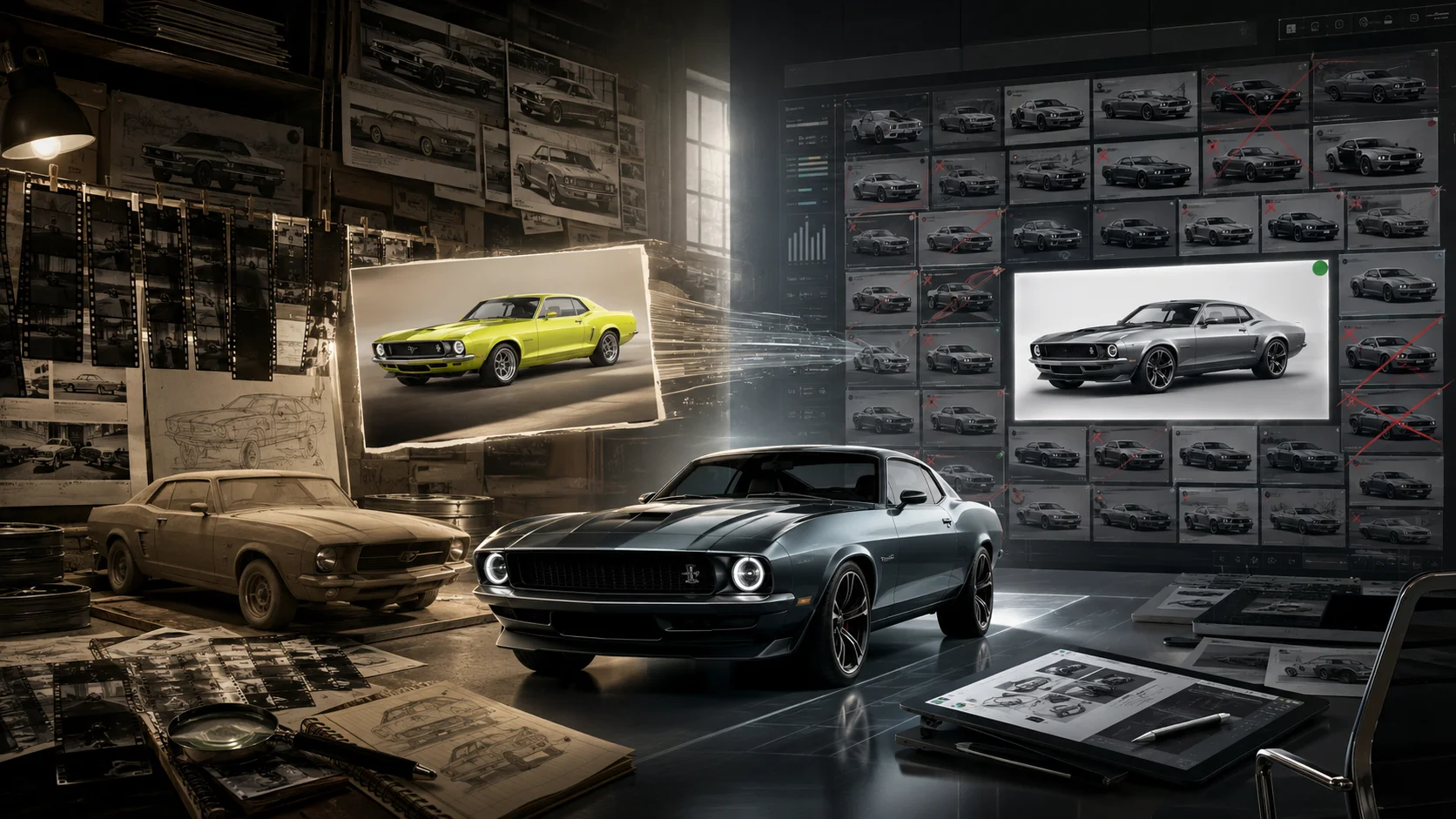
You Kept One. You Killed Forty. Ford Just Proved the Forty Were Worth Something — Sixty Years Later.
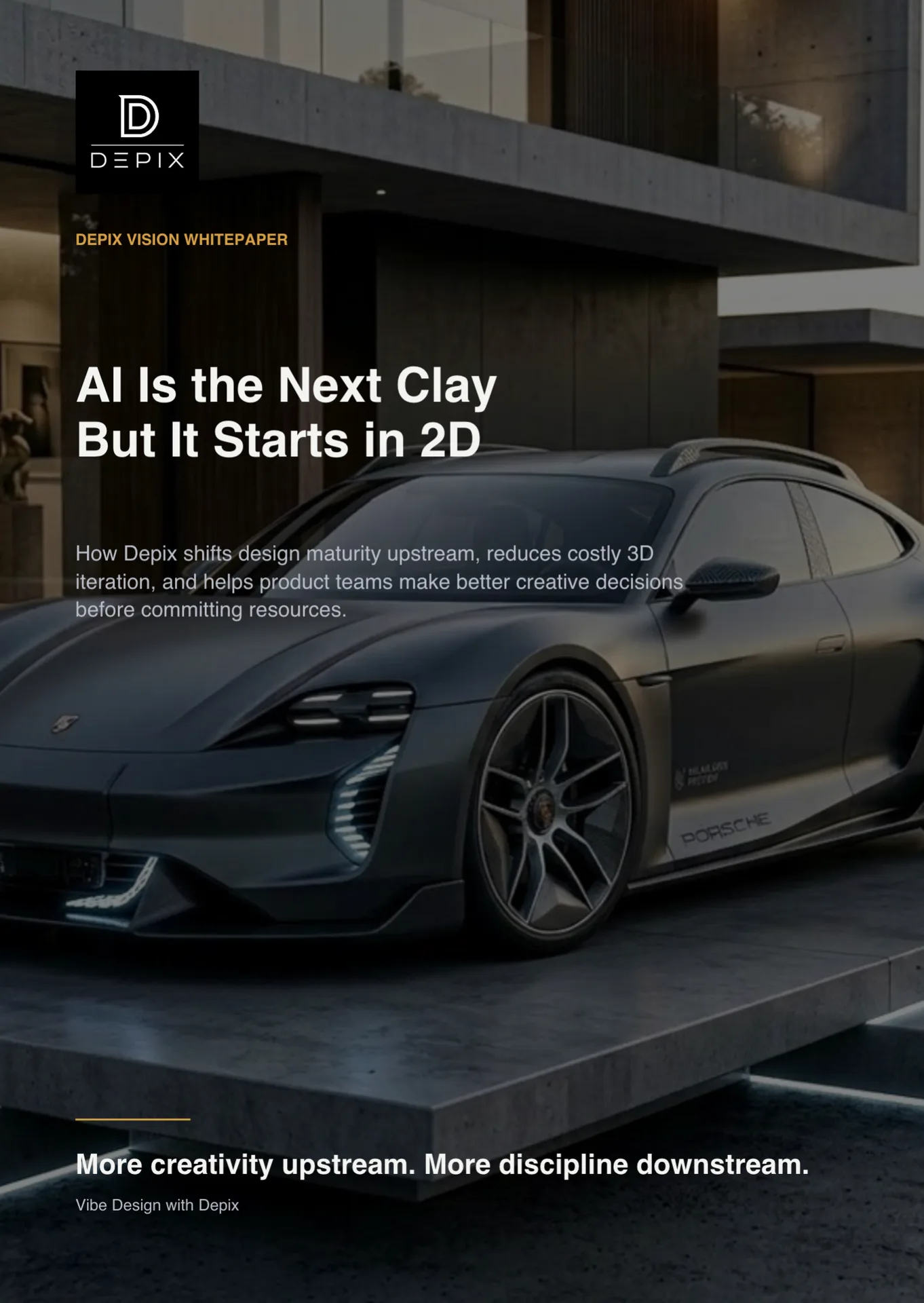
AI Is the Next Clay — But It Starts in 2D