0.0233 seconds.
That was the gap. Felix Rosenqvist over David Malukas. One hundred and ten years of Indy 500 history rewritten in less time than it takes to blink twice.
The previous closest finish stood since 1992 — Al Unser Jr. over Scott Goodyear by 0.043 seconds. Sunday's margin cut that nearly in half.
The 110th running wasn't a race. It was a fight.
Seventy lead changes — a new record. Fourteen drivers up front at one point or another. A red flag with eight laps left after Caio Collet hit the wall in flames. A yellow with five to go when Mick Schumacher tagged the concrete. Then a one-lap shootout into history.
Rosenqvist found the high line out of Turn 4 in the No. 60 Meyer Shank Honda. Pinned it against the wall. Came off the corner with everything left in the car. Malukas was right there — half a car length back when they crossed the Yard of Bricks.
Twenty-three thousandths of a second.
0.0233s — Margin of victory, a new record.
70 — Lead changes, also a new record.
14 — Different drivers held the lead.
200 — Laps. One shootout. One lap.
Malukas sat on the pit wall afterward. Marco Andretti — beaten the same way by Sam Hornish Jr. in 2006 — came over and held him. The crowd cheered. He said he'd give one hundred and sixty percent next time.
Pole-sitter Alex Palou led 59 laps and finished seventh. Scott Dixon led 32 and finished fifteenth. Leading the Indy 500 has never meant less. Winning it has never meant more.
Raymond's homage
Raymond saw the finish and went to the lab.
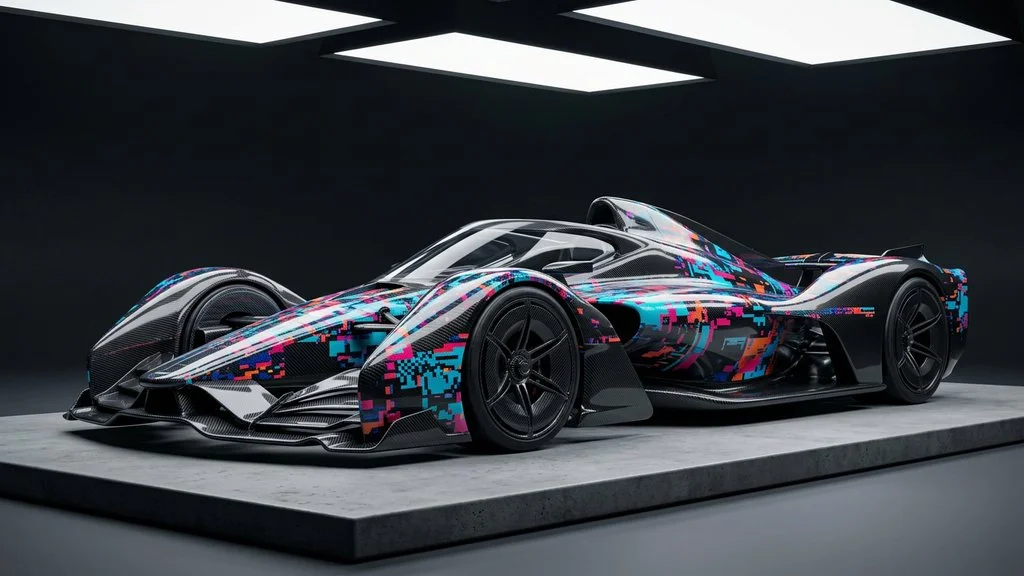
What came out isn't a race car. It's a concept — a homage rendered in his own language. Carbon weave under a glitched digital camo. Crimson, electric blue, magenta — fragments of a pixel field laid across the bodywork like a corrupted memory of a finishing photo.
The livery reads as speed pulling itself apart. Two cars side by side at two hundred miles an hour, and the eye can't hold them in place. That's what 0.0233 seconds looks like.
Low-slung. Matte stealth in the negatives. Dramatic studio light. A car that exists nowhere except in the idea of a victory that almost wasn't.
A note on surprise winners
Palou started on pole. Won last year. Led 59 of 200 laps. Ganassi had three cars in the running. Penske had Malukas dialled in all afternoon.
None of them won.
A Swede in his second-ever IndyCar victory, driving for a team that isn't Penske and isn't Ganassi, found the high line in the last corner and rode it into history.
That happens more than people admit. In racing. In any fierce competition where the obvious winner stops being obvious in the last lap.
There's a bigger name in our category. Louder marketing. The expected story.
We're not trying to be them.
We're the team in the No. 60 — finding the line no one's watching, riding it hard, betting the race on the corner exit.
The new pace
A finish like Sunday's used to be a generational event. Now the records fall every few years. Margins compress. Speeds tighten. Technology pulls the gap between first and second into something the human eye can't resolve.
Design is going the same way.
What separates winners in the next decade won't be resources. It'll be cycle time. The ability to think a thing and see it the same afternoon. To put a livery, a stance, a colourway on the table before the meeting ends.
Raymond's car is a small example. One person. One idea. One afternoon. Showroom-ready.
Twenty-three thousandths of a second. That's the new gap — in racing, and in everything else.
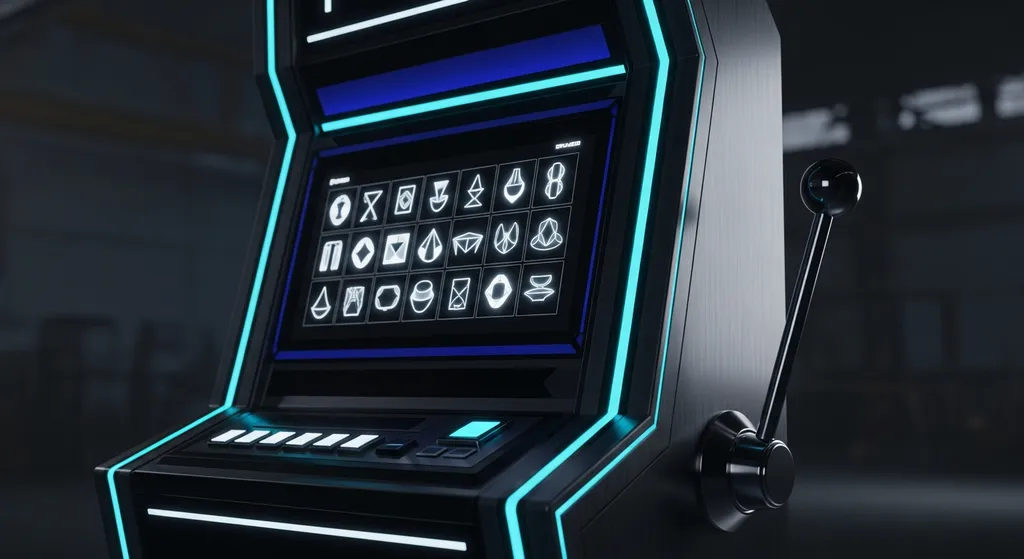
Your best designers are still sketching. Your competitors are running the slot machine.
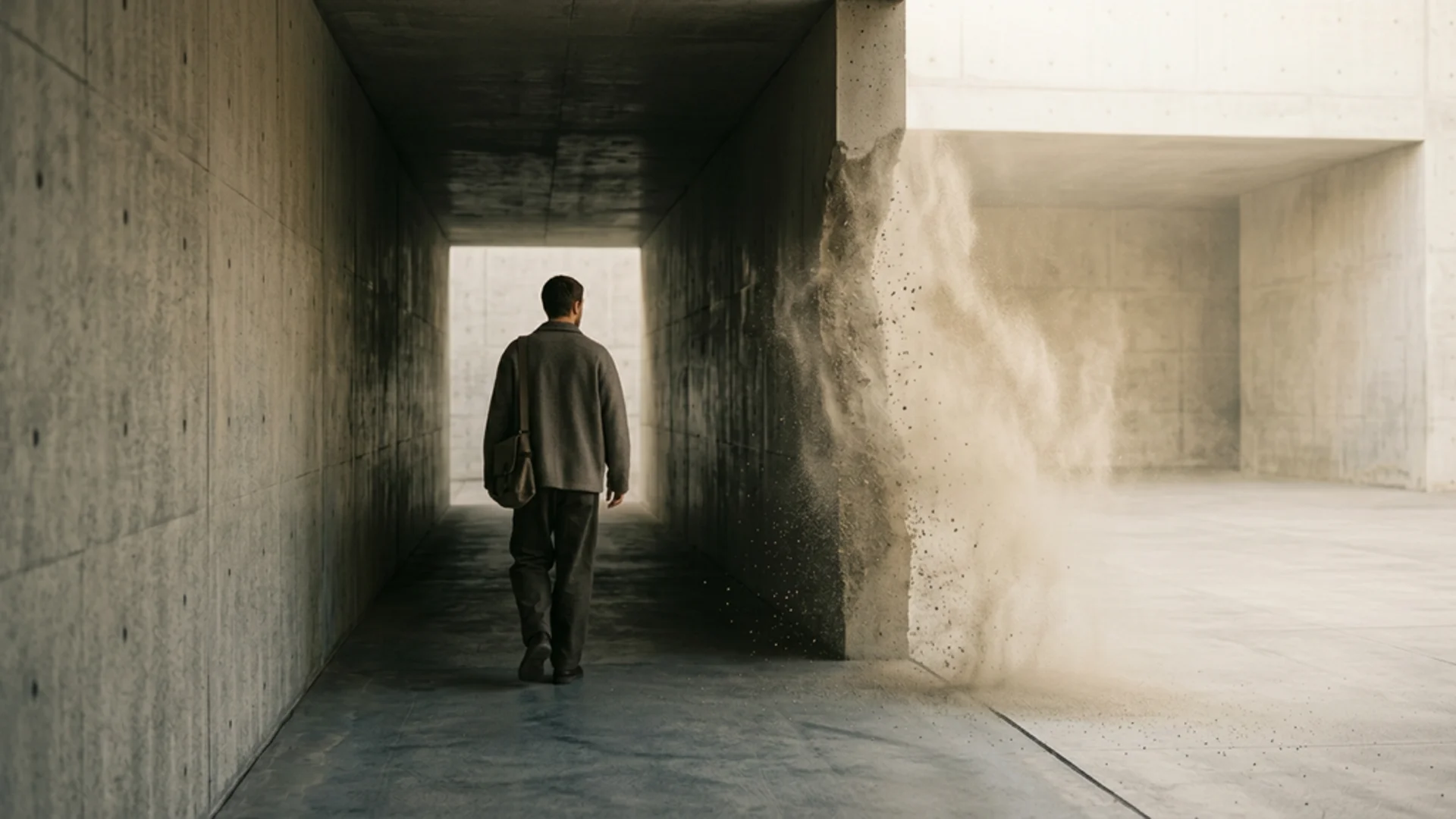
Stop upskilling. Start unlearning.