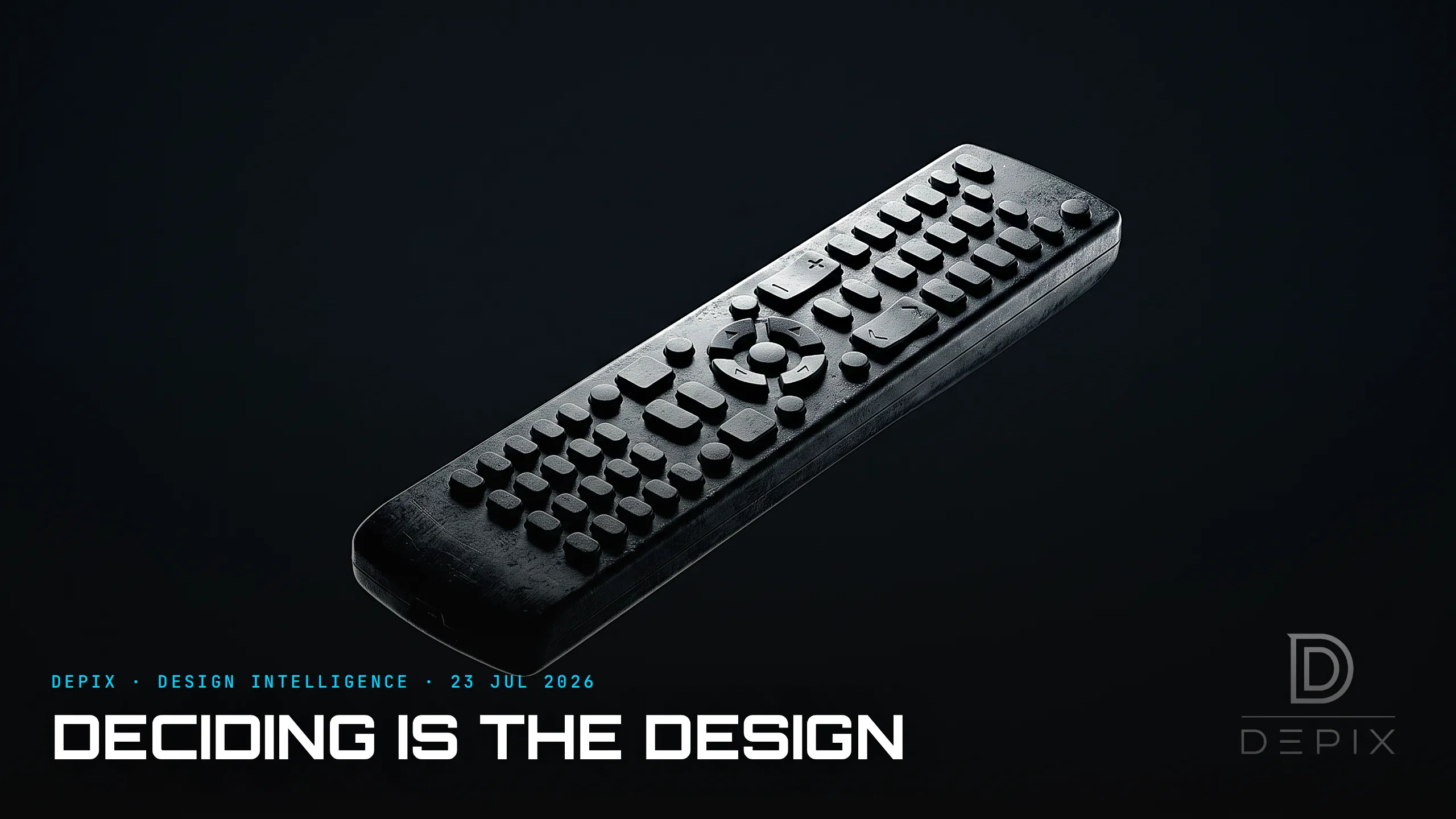
The Remote Control Is a Monument to Not Deciding: The Real Discipline Is Editing
Pick up the remote nearest you and count the buttons. Forty is common; some cable remotes pass fifty. Now count the ones you actually use: volume, channel, power, mute, play. Five, maybe seven. The rest — PIP, SAP, ASPECT, INPUT-4, a grid of coloured keys nobody has ever knowingly pressed — sit there for years, worn smooth by nothing. The television remote is the most widely owned monument to feature creep on earth, and it got that way one reasonable decision at a time.
Because adding a button is always the easy, defensible move. A feature ships that needs a control; someone asks "where does the user access this?"; and the cheapest answer is another button. No single addition feels wrong. But "just add a button" has no natural stopping point, and a hundred locally-reasonable additions compound into a device that is genuinely hard to use — so overcrowded that finding the right key in a dim room becomes a small daily defeat. More controls, past a point, reduce engagement rather than raise it.
The obvious fix is subtraction, and Apple tried the purest version of it. The Siri Remote stripped the thing almost to nothing: a blank touch surface and a handful of buttons, radical minimalism. It is also widely regarded as one of the worst remotes ever made. Stripping the buttons stripped the affordances — the physical cues that let you feel which control is which without looking — and handed the burden to the user's memory instead. By 2021, after years of a touch-first design, Apple had quietly reversed course and put the buttons back, with a proper directional pad and clear, findable keys.
So the lesson is not "fewer buttons." That is the trap. The forty-button cable remote and the zero-button glass slab are the same mistake wearing opposite costumes: both are what happens when nobody decides what the device is actually for. One never says no to anything; the other says no to everything and calls it courage. Neither did the real work.
The real work is editing — and editing is harder than either adding or minimising, because it requires a point of view. TiVo's famous peanut remote is remembered fondly precisely because someone did that work: its designers fought to keep the layout simple while honestly accommodating what a DVR genuinely needed, shaping and sizing the few buttons that mattered so your thumb could find play and pause by feel. It has plenty of buttons. It just has the right ones, in the right hierarchy — a designed opinion about what you do most.
Here is the design-intelligence point, and it reaches far past remotes. Feature creep is not an engineering failure; it is a decision failure, and specifically a concept-phase one. The question — "what is this product for, and what are the few things a person must be able to do with it instantly, without thinking?" — has to be answered at the very start, by someone willing to own both the yeses and the nos. Defer it, and every later feature request resolves the only way an undecided product can: by accretion, one more button, one more menu item, one more toggle, until the thing collapses under the weight of everything it never chose not to be.
You can see the same monument everywhere once you know its shape: the app with nine tabs, the settings screen that scrolls forever, the car dashboard sprouting switches, the enterprise tool with a ribbon of icons nobody can name. Each is a product where the concept-phase question went unanswered and addition became the default. And you can see the opposite failure too — the minimalist redesign that hid so much it made simple things impossible.
The remote on your coffee table is quietly asking the only question that matters at the beginning of anything: are you willing to decide what this is, and to shape the few things that matter so well that a person never has to hunt? Adding is easy. Hiding is easy. Deciding is the design.
Sources:
- ●Feature creep — Wikipedia
- ●The TiVo Remote — Coding Horror
- ●Why is the Apple TV remote the worst thing ever designed? — MacRumors Forums
- ●Feature richness and user engagement — Nielsen Norman Group
- ●Apple TV Siri Remote critique — Jennifer Kaplan (Medium)
- ●How to use the Siri Remote — iPhone Life
- ●The Apple TV Remote sucks: a product tear-down — Ubiquity Ventures (Medium)
- ●A touch-friendly Apple TV remote redesign — Fox News
- ●Review: the new Apple TV remote makes everyone happy — 9to5Mac
- ●Story of a Peanut: the TiVo remote — Gizmodo
- ●TiVo remote changes — Prime Electronics

The Hinge Carries the Whole Product: Why the Overlooked Joint Decides Its Reputation
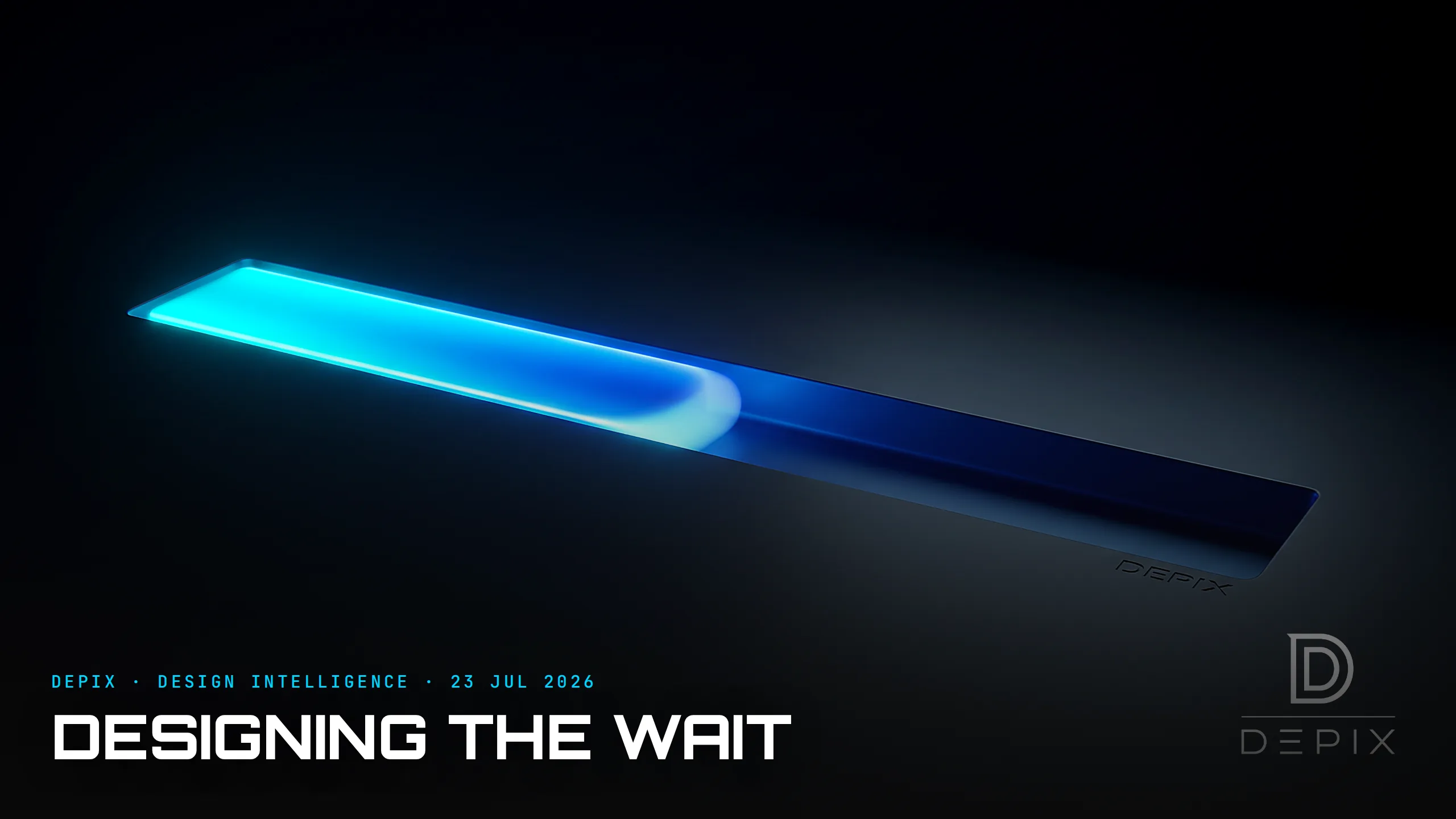
The Progress Bar Isn't About Progress: How Design Shapes the Feeling of Time