
Volkswagen's ID. Cross Bet That 'Normal' Is the Bravest Design Decision Left
For ten years the electric car has been a competition in looking different. Closed-off faces, smooth teardrop bodies, hidden door handles, screens where switches used to be — the unspoken rule was that an EV had to announce itself as a clean break from everything that came before. So it is genuinely surprising that one of the most talked-about electric reveals of the summer is a small SUV whose entire design argument is that it looks normal.
Volkswagen began advance sales of the ID. Cross in Germany on 15 July 2026, positioning it as the brand's electric-SUV entry model. Auto&Design called the result "positive design", and the phrase is almost literal: VW's design language for the car is officially named "Pure Positive." What is striking is not any single feature but the deliberate ordinariness of the whole — and, crucially, that this ordinariness was the plan from the very first sketch, carried from the Munich concept into a near-unchanged production car.
VW's head of design, Andreas Mindt, has described Pure Positive as resting on three cornerstones: stability, likeability, and a "secret sauce" of surprising details. Read that list again through a concept-phase lens. Two of the three pillars — stability and likeability — are explicit instructions to look calm, planted and familiar rather than novel. The car has an upright profile, short overhangs, straight window lines and strong C-pillars, with deliberate nods to the Golf and the original Bus; the lighting signature is even tuned to read as a "smile". None of this is accidental styling, and none of it is radical for its own sake — the whole car is pitched on clarity and likeability. It is a decision, made before the surfacing began, that the safest-looking option was the right one.
That decision is braver than it sounds. The default reflex in a design review is to reward the boldest sketch on the wall — the one that looks most unlike the competition, that photographs most dramatically, that lets everyone say the brand is "moving forward." Choosing the quiet, upright, familiar form over the spaceship is the harder argument to win in the room, precisely because it looks like you did less. VW's bet is that most people shopping for a first electric car do not want a manifesto in the driveway; they want something that looks like it will start every morning and survive the school run. Built on the updated MEB+ platform and bringing the 2025 concept to production almost unchanged, and slotting in as an affordable, high-volume compact SUV, the ID. Cross is engineered to make "reassuringly normal" its entire value proposition — right down to proportions that read as bigger and more solid than the footprint really is.
This is where the industry's decade of differentiation starts to look like a strategic error rather than progress. When every rival optimises for looking radical, radical becomes the new conformity — a field of interchangeable smooth blobs, each convinced it is the future. The genuinely contrarian move, the one almost nobody else is making, is to look trustworthy. VW's own recent history shows how costly the opposite instinct was: the first ID. cars buried physical controls in menus and were widely criticised for it. Pure Positive is, in part, a correction — a return to honesty and legibility as design values, decided at the top of the process rather than bolted on later to fix bad reviews.
The concept-phase lesson generalises far past Wolfsburg. "Different" is not a strategy; it is a reflex, and it is an easy one. The hard question a design team should ask at the very start is not "how do we make this look new?" but "what does this object need to make people feel — and is that feeling novelty, or trust?" For a halo supercar the answer may genuinely be shock. For the car that has to convince a sceptical mainstream to go electric at all, the answer is almost certainly reassurance — and if you know that on day one, it changes every proportion, every line and every material choice that follows. Get that brief wrong and no amount of surface drama rescues it; get it right and a "boring" small SUV becomes the most quietly radical thing at the show.
Volkswagen has essentially wagered that after a decade of everyone shouting "look how different we are," the market is ready for a car confident enough to just look like a car. Whether the ID. Cross sells is a question for the autumn. But as a concept-phase decision — choosing, on purpose and from the first line, to be liked rather than to be startling — it is one of the sharper design bets of the year.
Sources:
- ●ID. Cross to become Volkswagen's electric SUV entry model — electrive
- ●Volkswagen ID. Cross, Positive Design — Auto&Design
- ●The all-new ID. Cross world premiere (in brief) — Volkswagen Newsroom
- ●Volkswagen ID.Cross has 'secret sauce' as an affordable EV — Electrek
- ●Volkswagen reveals ID. Cross Concept — an EV for everyone — ArenaEV
- ●Volkswagen unveils ID. Cross electric SUV ('smiling' light signature) — The EV Report
- ●Volkswagen ID. Cross: What We Know So Far — Jurni
- ●2027 Volkswagen ID.Cross — specs, MEB+, concept to production — autoevolution
- ●Volkswagen ID.Cross debuts in Europe as a compact electric SUV — EVSpecifications
- ●Volkswagen ID.Cross (2027) — pictures, information & specs — NetCarShow
- ●Volkswagen ID. Cross sneak peek (the ID. controls backlash) — Gateway2Lease

The Smartwatch's Original Sin Was Deciding It Was a Computer
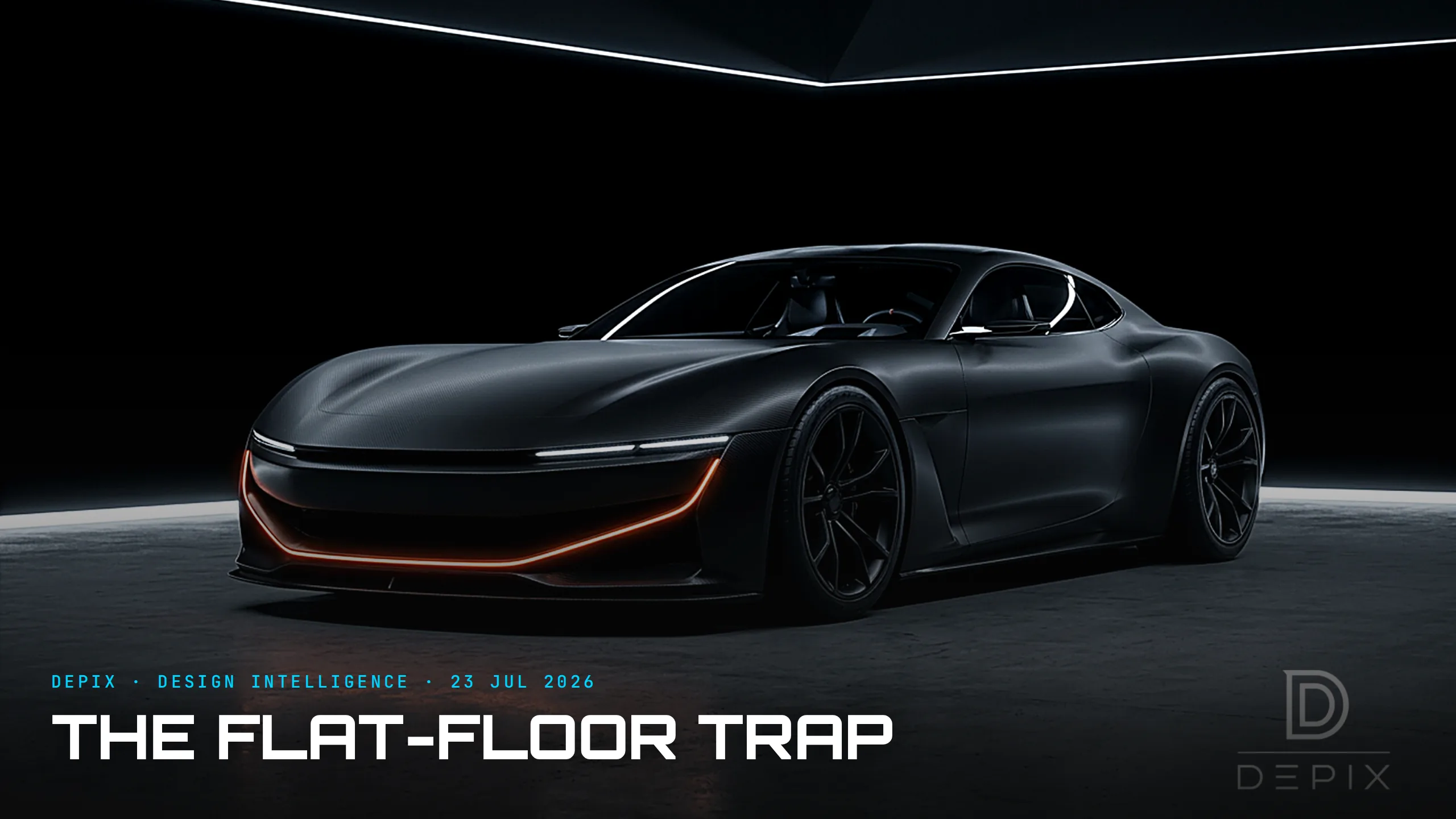
The Skateboard Promised Total Design Freedom. The Flat Floor Delivered Sameness.

