Neither Cow nor Plastic
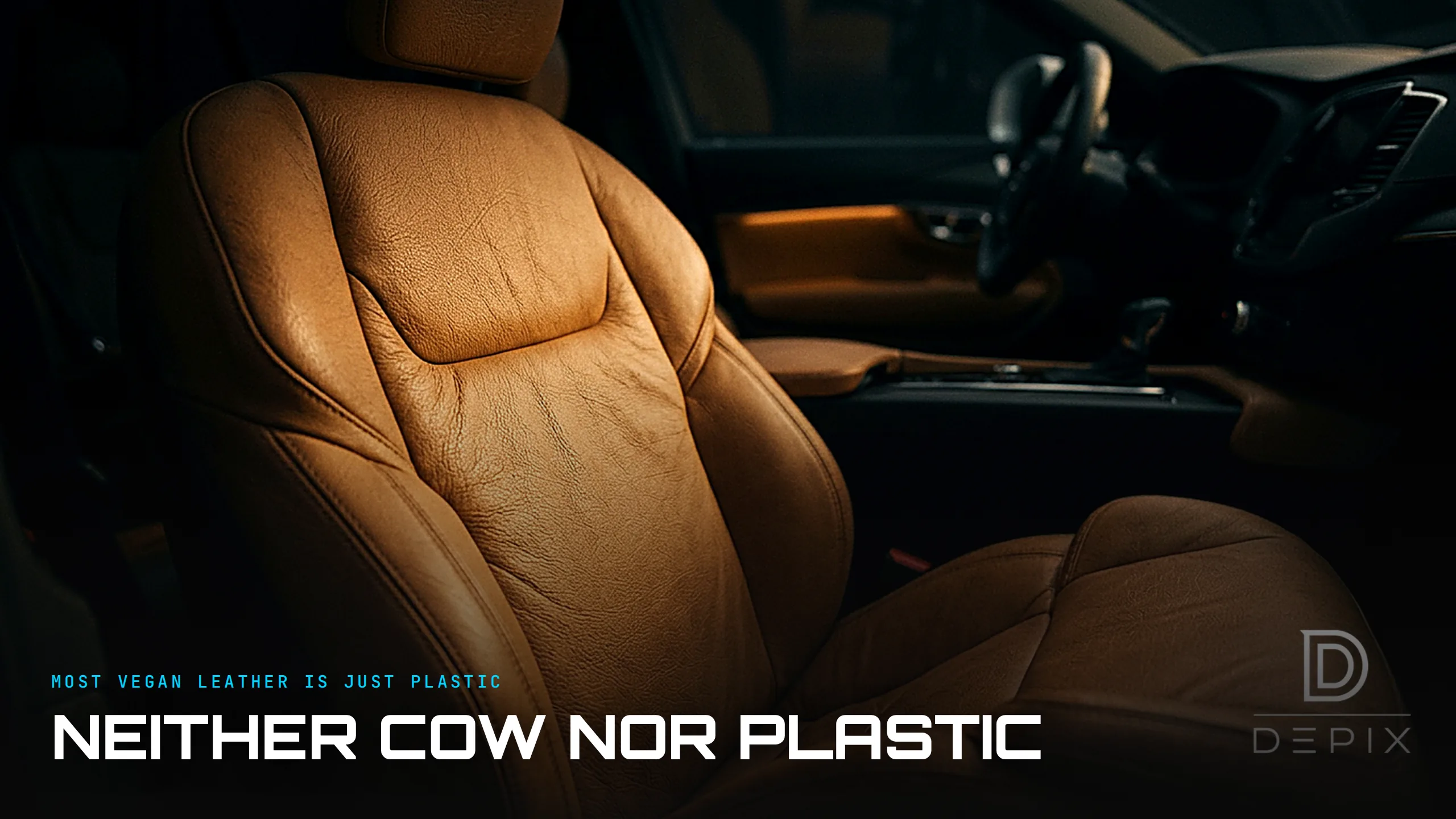
Of every material in a car, none carries more meaning than leather. It is the smell of a new luxury cabin, the surface that says "expensive" before you have touched a single button. And it is under pressure from two sides at once — the ethics of animal hide and the chemistry of tanning — so the industry reached for the obvious fix and called it "vegan leather." Real hide is not blameless here — it carries the methane of cattle and the chromium of the tanning yard — which is exactly why the pressure to replace it feels so righteous. The trouble is that most vegan leather is not the green solution the name implies.
The term hides its chemistry. Most "vegan leather" is polyurethane or PVC — petroleum-derived plastic coatings bonded to a fabric backing. Being plastic, it sheds microplastics as it cracks and peels, and it does not biodegrade; worse, it does not last, with standard synthetic leather surviving two to five years against ten to thirty for real hide. So the "sustainable" swap can quietly hand you a cabin made of fast-wearing plastic that pollutes as it dies — in some ways a worse deal than the cow it replaced.
Enter the plant alternatives, and here the story gets genuinely interesting — and genuinely slippery. Leather is now being made from pineapple, mushroom, apple, grape and even cactus, and the pitch is irresistible. But the catch the marketing tends to skip is that those plant fibres are usually held together with plastic resins to make the material durable enough to use. Cactus "leather," for instance, is pulverised cactus fibre carried in a bio-based polyurethane matrix. The plastic keeps sneaking back in — thinner, greener-sounding, but still there.
The real breakthrough is not a plant coated in plastic; it is a material grown to be leather in the first place. Mycelium — the root-like network beneath a mushroom — can be cultivated into a material with leather's structure and feel, grown to shape rather than sliced from an animal — which means it can be cultivated to the exact size of a seat panel, with almost none of the offcut waste a cowhide's awkward outline forces. Ananas Anam turns pineapple-leaf waste into a textile that would otherwise be burned, a by-product upgraded into an upholstery. These grown materials chase leather's hand and dignity without the hide and, at their best, without the petroleum binder either — a third path between cow and plastic.
And this is no longer laboratory theory sitting in a design library. Mercedes-Benz built the cabin of its VISION EQXX concept out of exactly these materials: Mylo mushroom-mycelium leather in the seat cushions and Deserttex cactus leather across the seats, console and steering wheel, with door pulls wrapped in Biosteel bio-based vegan silk and carpets woven from bamboo fibre. It was presented as a benchmark showing bio-based materials can deliver real luxury without leather — the most emotionally loaded surface in the car, reinvented from the cell up.
That is the concept-phase lesson, and it is a demanding one. "Sustainable" is not a badge you stick on a finished seat; it is a materials decision taken at the very start, and an honest version of it is far harder than it looks. Swapping cow for plastic is cheap and mostly cosmetic — it trades one problem for microplastics and a five-year lifespan. The genuinely new path, growing a material rather than coating a fabric, has to be committed to at the concept phase, when the seat, the binder, the durability target and the end-of-life are all specified together, because you cannot retrofit any of them later. And the bar is brutal: a car seat endures a decade of sun, sweat, denim abrasion and slammed entries — the harshest wear any leather faces — so a grown material has to survive all of that, age gracefully into a patina rather than crack, and do it while feeling worth the money. The material that shouts "luxury" loudest turns out to be the hardest to reinvent, precisely because it has to feel every bit as good as it did and finally mean what it says. Neither cow nor plastic is the destination — and reaching it is a design decision, made long before anyone sits down.
Sources:
- ●The Conversation — 'Vegan leather' isn't as sustainable or eco-friendly as brands might claim
- ●Alonso Mercader — What is 'vegan leather' really made of? (PU vs PVC vs bio-based)
- ●Science Insights — Is vegan leather plastic? PVC, microplastics & alternatives
- ●Is It Leather — Are car makers hiding the truth about interior materials?
- ●C&EN (ACS) — Mercedes interior uses cactus and mushroom leather, biotech silk
- ●MycoWorks — Reishi, fine mycelium material grown to be leather
- ●Ananas Anam — Piñatex, textile from pineapple-leaf waste
- ●VegNews — Why Mercedes' new concept EV is made with cactus leather and vegan silk
- ●Species Unite — Mercedes-Benz's new electric car is fitted with mushroom leather and vegan silk
- ●eMercedesBenz — Mercedes-Benz VISION EQXX: a look inside
- ●Living Tomorrow — Mercedes-Benz VISION EQXX: the new benchmark of efficiency