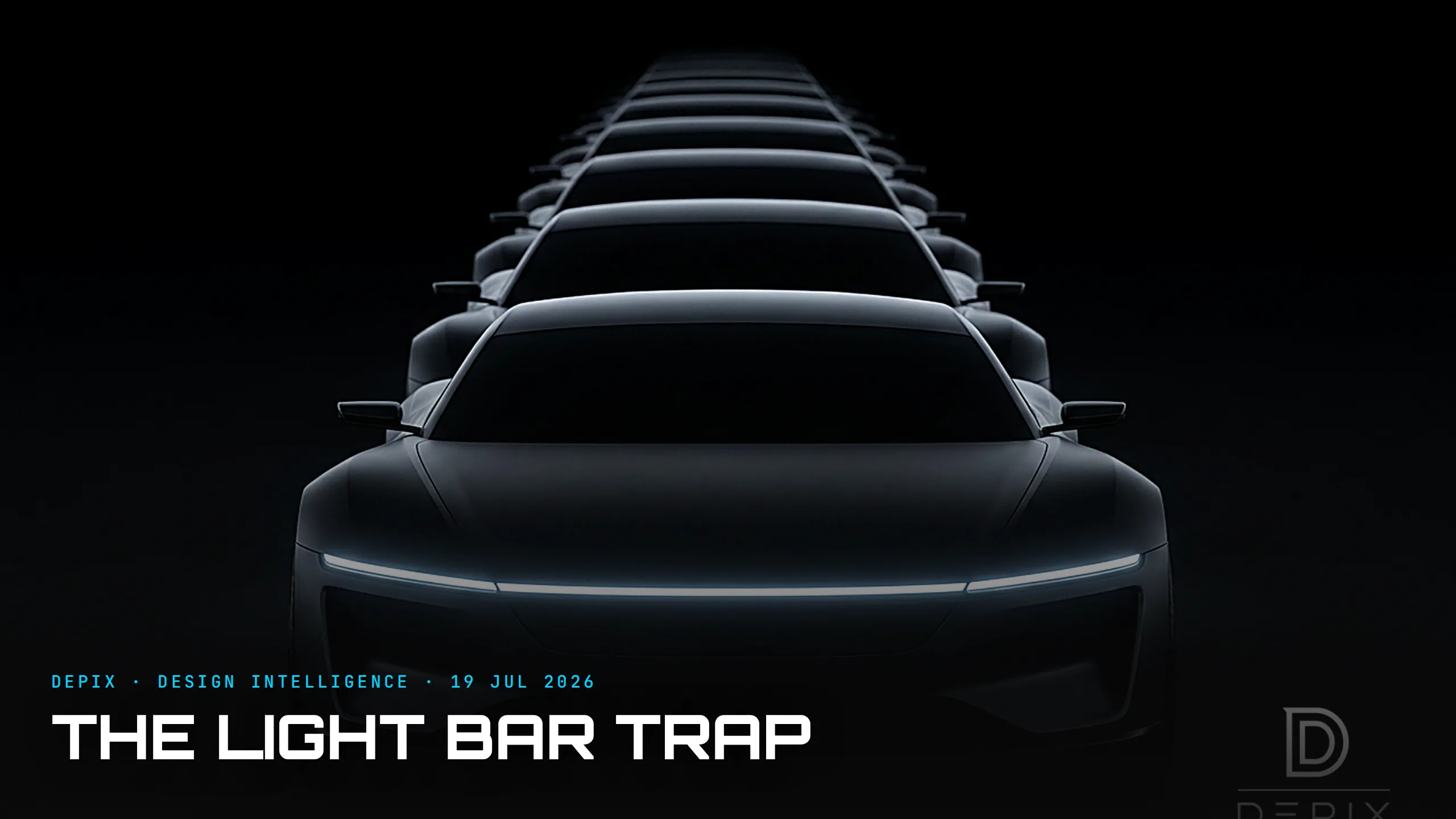
The Light Bar Trap: How the EV Era's Signature Move Made Every Car Look the Same
Walk through a car park at night and try to tell the new cars apart. You will struggle — because almost every one of them now wears the same glowing horizontal line across its face. The full-width LED light bar is the defining styling move of the electric era, and it is a perfect case study in how a brilliant design idea becomes a trap.
Start with why it won. A light bar is one of the most efficient signals in modern design. A single illuminated line stretched across the nose does three jobs at once: it reads instantly as "new and electric," it makes a car look wider and more planted, and it hands the brand a clean canvas for a signature. As bodies get squeezed by aerodynamic and pedestrian-safety rules into increasingly similar silhouettes, lighting became one of the few places left to differentiate — and LED technology made it cheap and endlessly shapeable. The flexibility of LEDs let designers turn a running light into a brand's "signature," an idea Audi pioneered years ago and everyone else refined.
The problem is exactly that it worked so well and was so easy. When a move is that effective and that cheap, everyone makes it. The light bar spread from premium EVs to mainstream cars, petrol and electric alike, until it stopped being a signature and became a uniform. The thing meant to make cars distinctive is now the thing that makes them interchangeable. It is the status symbol that everyone owns — which is a contradiction in terms.
This is a pattern every designer should recognise, because it repeats everywhere: a genuinely good idea gets copied until it inverts its own purpose. The signature becomes the sameness. And the real design intelligence isn't inventing the winning move — it is having the judgement to see when the move has been won to death, and the confidence to walk away from it while everyone else is still adopting it.
The most telling signal comes from inside the industry. Hyundai's design boss has said the full-width light bar is "almost at the end of its journey", and Hyundai's Concept Three deliberately dropped the continuous bar for a distinct "pixel" lighting language. That is not a technical decision; it is a brand deciding to stop looking like everyone else. When the people who helped popularise a trend start publicly retiring it, the trend is already over for anyone paying attention — the followers just haven't noticed yet.
Here is why this is a concept-phase decision, not a styling flourish applied at the end. A light signature isn't a lamp you choose late; it dictates the entire architecture of the front end — where the sensors sit, how the bumper is split, how the DRL, headlamp and grille relate, the whole graphic of the face. A car's lighting signature is one of the first things that makes it recognisable, and it has to be committed to before the surfaces are frozen. So the choice between "wear the same bar as everyone else" and "commit to a signature nobody can copy" is made at the very start, and it is very hard to reverse. Getting it wrong doesn't cost you a detail; it costs you a generation of looking generic.
None of this means the light bar was a mistake. Regulation still shapes what is possible, and a well-executed light signature remains one of the strongest identity tools a designer has — the next wave of lighting tech is more capable, not less. The lesson is about timing and courage. The bar was the right answer in 2018 and a cliche by 2025, and the brands that will own the next decade of night-time recognition are the ones deciding now — at the concept phase — what their face looks like when the glowing line finally switches off. The most striking light signatures were never the ones that followed the trend. They were the ones brave enough to be legible as themselves.
So the next time you can't tell two cars apart in the dark, don't blame the designers who ran out of ideas. Blame the one great idea everybody had at once — and watch for the brands quietly deciding to have a different one.
Sources:
- ●How the light bar became EVs' most unlikely status symbol — Inverse
- ●Hyundai wants to kill off this popular EV design trend — Electrek
- ●EV lighting design trends 2025 — The Complete Design Lab
- ●Daytime running lights: a fusion of safety and design — DRLs Direct
- ●What is a DRL on a headlight? (signature & style) — NextTools
- ●Trends in lighting in electric vehicles — American Bright LED
- ●Daytime running light solutions for automotive — ams OSRAM
- ●Daytime running lights — Kelley Blue Book
- ●Daytime running lamp — Wikipedia
- ●The future of LED modules in automotive lighting — AD LED Lights
- ●Cars with the coolest light bar designs — Jalopnik
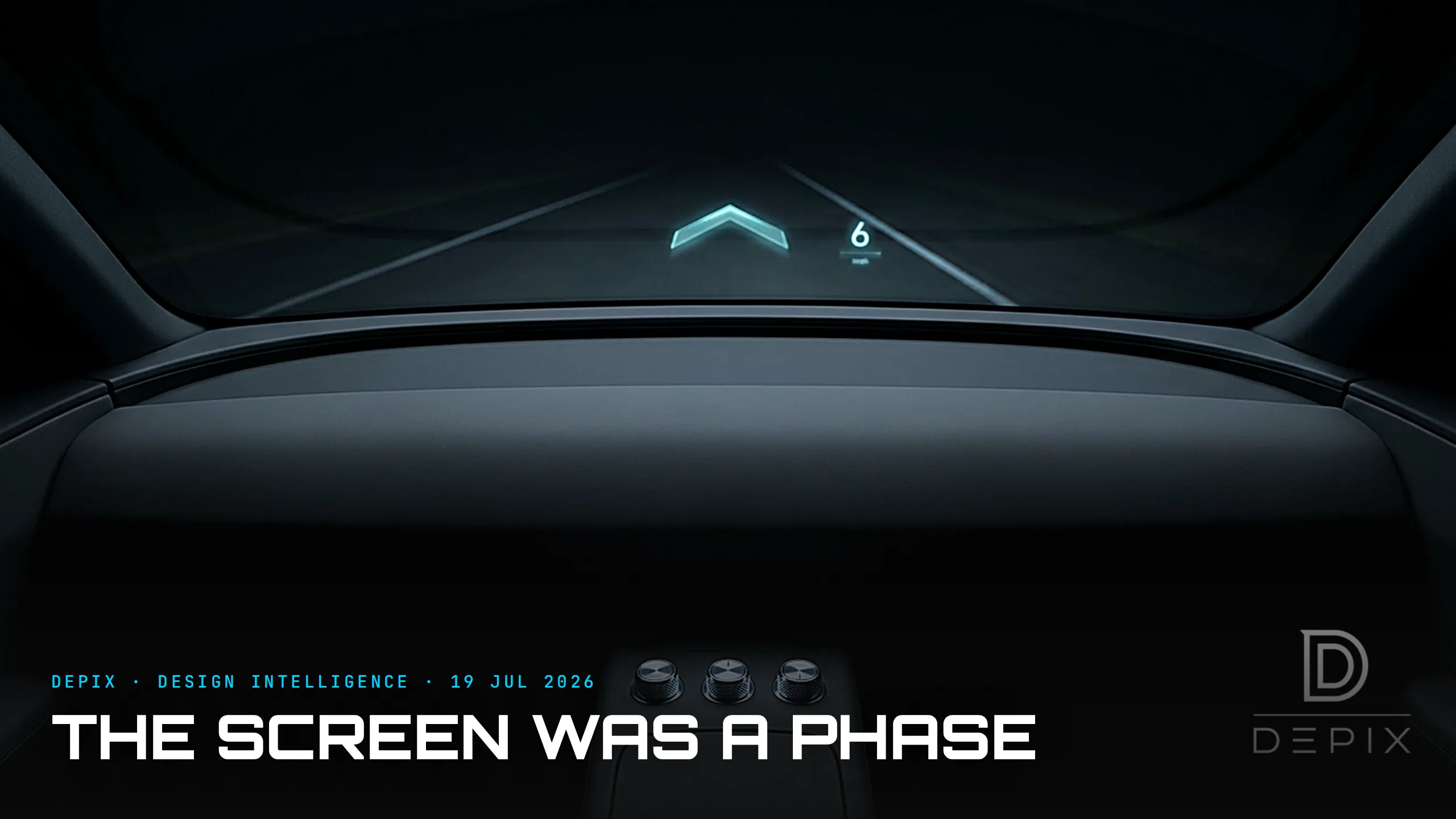
The Screen Was a Phase: Why the Car's Dashboard Is Disappearing in Two Directions
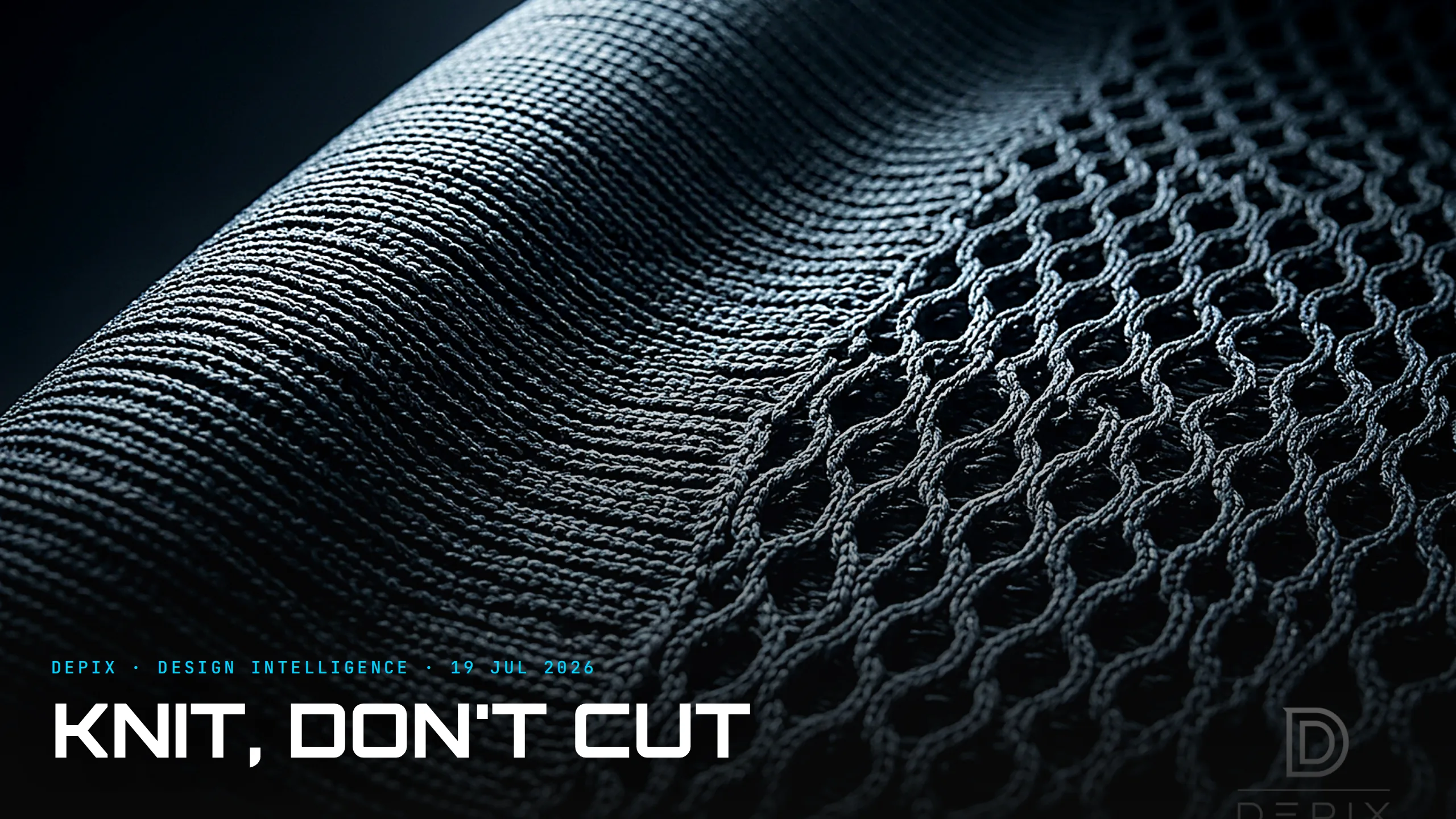
Knit, Don't Cut: How Digital Knitting Is Quietly Rewriting the Car Interior


