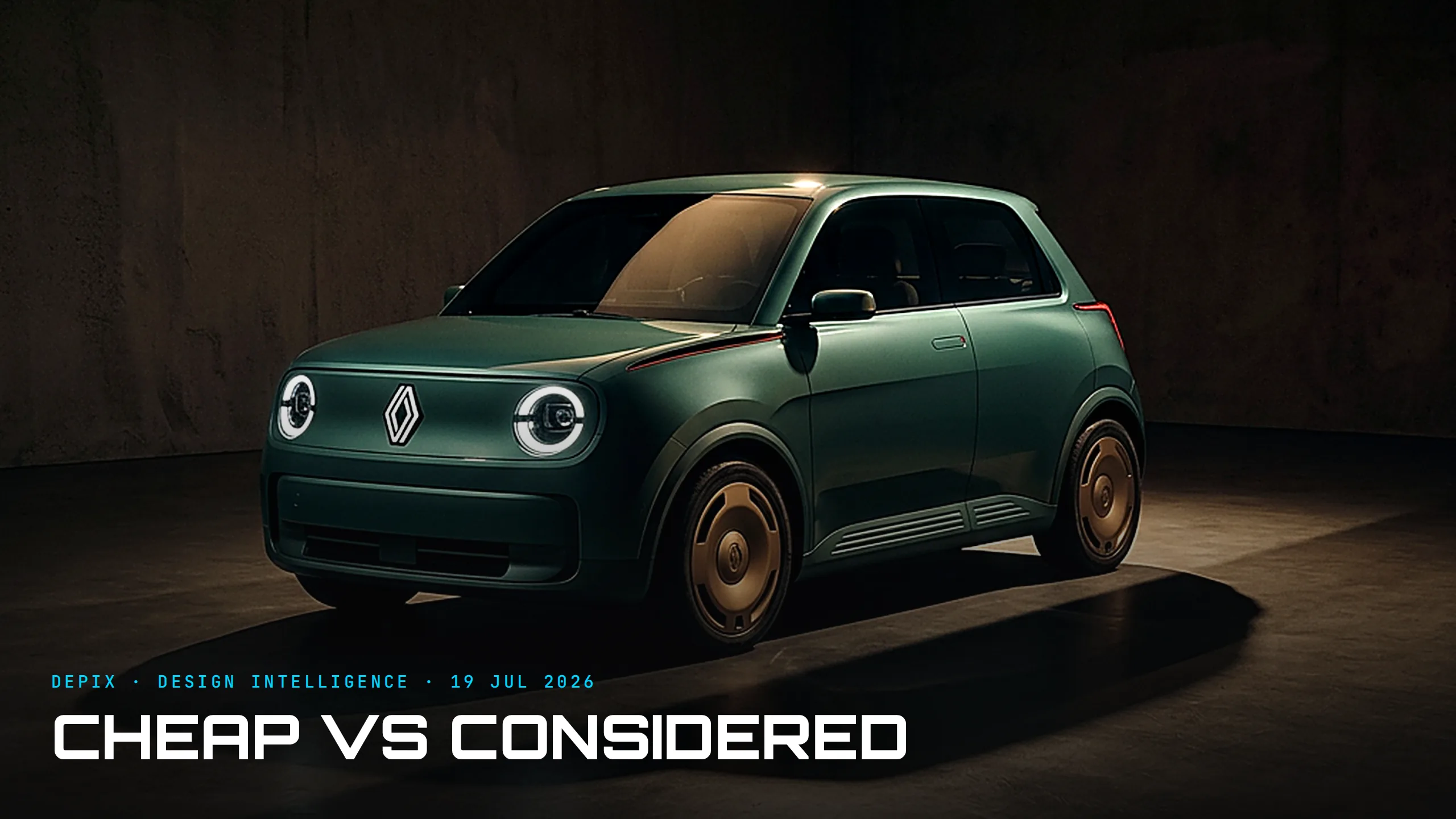
The Cabin Becomes a Room: When the Car Stops Being a Cockpit
For a century the car interior has been a cockpit. Everything — the wheel, the pedals, the instrument binnacle, the angle of the seats, the very geometry of the dashboard — was organised around a single occupant performing a single continuous task: driving. The cockpit is not a style; it is a consequence. Put a human in charge of two tonnes at speed and the room arranges itself around their hands, feet and eyes. Every other passenger is, in layout terms, an afterthought.
That century-old logic is now being quietly torn up. Walk the concept halls and the language has changed completely: the cabin is a "third living space", a "digital living room", a lounge. Designers describe building the car from the inside out, making the passenger compartment the main volume rather than the leftover space around the mechanicals. The moves are consistent everywhere: swivelling seats, retractable steering wheels, movable screens and expanded floor space that shift a cabin, as one analysis puts it, "away from cockpit logic and toward room logic." NIO's EVE shows face-to-face seating and a fold-out table; Sony Honda Mobility calls the car a "creative entertainment space"; Mercedes' VLE lounge concept offers a modular "Roll and Go" system where seats slide, rotate, fold and even leave the car. The 2026 industry-award interiors are explicitly about redefining the in-cabin experience, and the trade press has settled on a single verb for it: reimagining.
Here is the contrarian point, and it is a concept-phase one. This reorientation is presented as a downstream consequence of autonomy — when the car drives itself, of course the cockpit dissolves into a room. But almost none of these cars can actually drive themselves yet, and won't for years. The room is being designed now, ahead of the capability that is supposed to justify it. That makes it not an inevitability but a bet — a decision taken at the concept phase about a future that has not arrived. And bets can be wrong in a specific, expensive way.
The cockpit had one great virtue: it was honest. Its layout told the truth about what the car was and who was responsible. The danger of the room is the in-between state — a cabin styled as a lounge that still, legally and physically, needs an attentive human driver. A reclining seat and a fold-out table are a promise the drivetrain cannot yet keep. Volvo, interestingly, has been careful here: it explored lie-flat seats and lounge consoles precisely as a company not built around driver focus, treating the room as something to earn rather than assume. BMW's i7, by contrast, keeps the driver's cockpit fully intact and adds a theatre to the back — a room bolted behind a cockpit, honest about being both.
The discipline, then, is to decide truthfully at the concept phase what the car actually is across its real duty cycle — not what it aspires to be in a render. A car that will be driven by a human 99% of the time is a cockpit with lounge touches, and pretending otherwise designs ergonomic traps: seats that face the wrong way for the emergency you must still handle, controls placed for a passenger who is legally a driver. A car genuinely engineered to relinquish control can be a room — but only if the capability is real, not implied by the upholstery. The failure mode is designing the aspiration and shipping the reality underneath it.
This is the concept-phase judgement we keep returning to at Depix. The interior reveals, more nakedly than any exterior surface, what a company actually believes its product is for. "Cockpit" and "room" are not two styling directions to choose between on aesthetics; they are two different answers to the question of who the car serves and when. Get that answer right — honestly, at the start, matched to what the machine can truly do — and the layout follows inevitably. Get it wrong, and you have built a beautiful living room around a job that still needs doing.
Sources:
- ●Autobody News — CES 2026: the car as a smart living space
- ●Star Insights — Autonomous vehicle cabin: from driver space to experience space
- ●Warrington Worldwide — Why car interiors are becoming digital living spaces
- ●DesignWanted — Designing cars from the inside out
- ●Autofreak — Automakers explore interior layouts for autonomous readiness
- ●WardsAuto — 2026 Wards 10 Best Interiors & UX
- ●Just Auto — Reimagining car interiors
- ●PedalCommander — 2028 Mercedes-Benz VLE electric lounge
- ●Autocar — Volvo targets lead in autonomous cabin design
- ●SlashGear — Volvo EX30 interior interview
- ●EV Magazine — Top luxury EV interior designs (BMW i7)
- ●CBT News — Next-gen vehicle interiors

The Texture of Touch: The One Thing a Screen Can't Fake
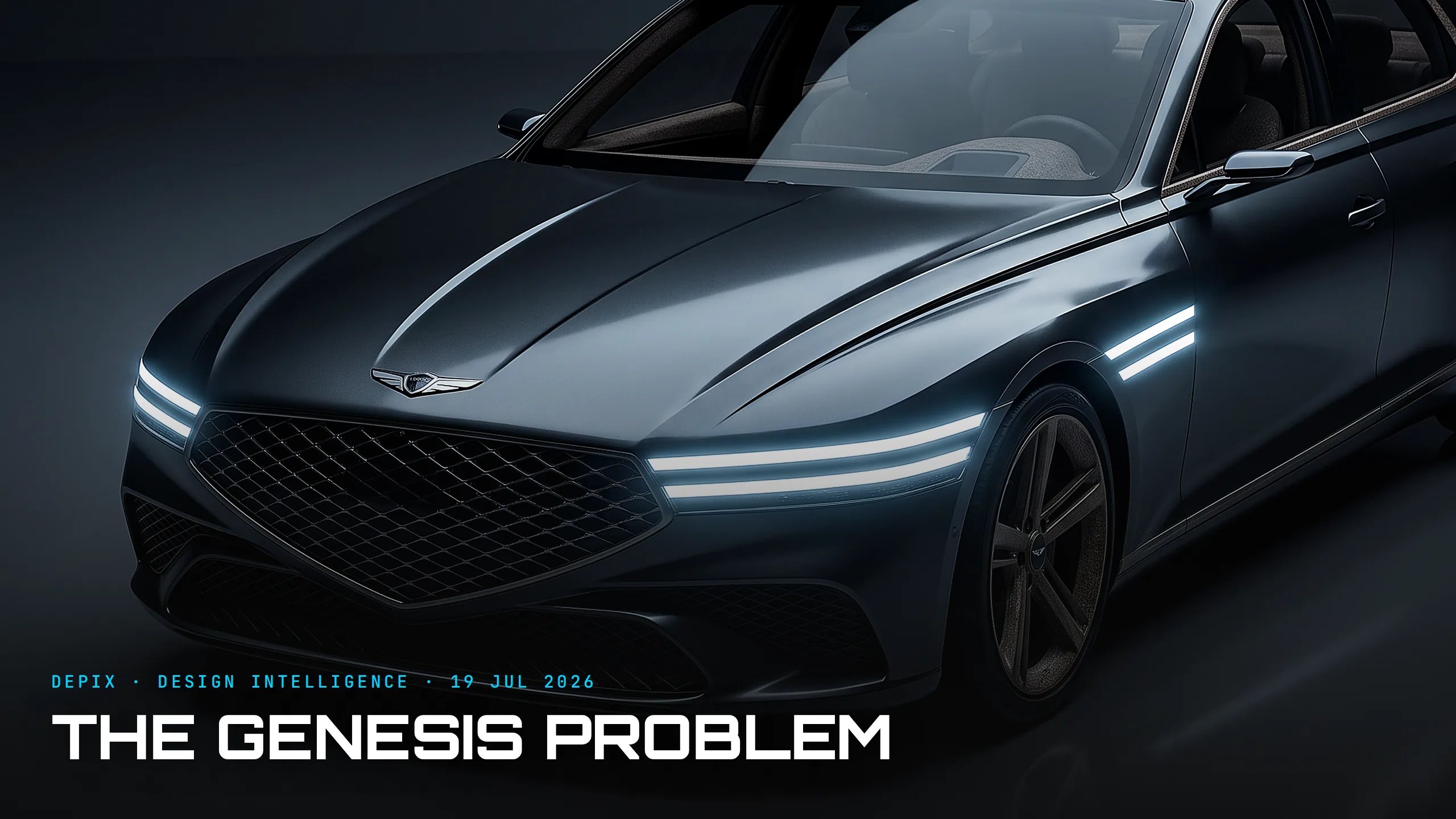
The Genesis Problem: How You Build a Design Language From Scratch