
The Jewel in the Wheel Was Always a Lie. Now It's on a Regulator's Clock.
There is one part of a car that the design studio paints to be seen, the brake engineer sizes to be ignored, the counterfeiter fakes in plastic, and the regulator has just put on a deadline — and it is the same forty square centimetres of metal glimpsed through the spokes. The brake caliper is the most over-designed and least honest object on the modern car. For forty years the industry has been selling it as jewellery. This year three different forces are calling the bluff at once.
The day a brake became a brand
It started, as these things do, with a supplier looking at a part nobody was supposed to look at. Brembo's chief marketing officer Mauro Piccoli tells the origin story plainly: "We were supplying calipers to Porsche, and the intuition was, why not paint the caliper to make it more visual?" The year was 1992. Red was chosen on purpose — "Red was very associated with motorsport and racing" — and a hidden hydraulic clamp became, in Piccoli's words, "not just something to hide, but a true ingredient of branding." (TopSpeed, Nicole Wakelin, 2 July 2025)
Three decades later the trajectory is complete: Brembo offers calipers in over 190 colours, has shown them as standalone sculptures at Milan Design Week, and built an entire premium-paint product line around the idea that a brake can carry "control," "grit," and "passion" the way a watch face carries a maker's mark. The caliper became a logo you bolt behind a wheel. The enthusiast's first modification is to paint it; the OEM's options list charges for it. A clamp that exists to convert motion into heat now does double duty as the cheapest visible upgrade a brand can sell.
That is the part the studio loves. Note what the studio is loving: not the brake. The colour of the brake. The surface. The jewel.
The fake jewel — and the people who went to jail over it
Where there is a status object, there is a counterfeit of it. The most revealing artefact of the whole caliper-as-jewellery era is the thing that finally exposes the trick: the fake caliper cover. A plastic shell, often moulded with a famous brake-maker's wordmark, that clips over a small, ordinary, sometimes drum-adjacent brake to fake the look of an oversized performance clamp.
The maker of the most-faked name is unambiguous about it: Brembo does not make caliper covers at all — every plastic "Brembo cover" is a counterfeit, and worse than cosmetic, the covers "limit the dissipation of heat simply because they are made out of plastic," trapping warmth around the very component whose entire job is to shed it. The counterfeit looks like more brake while making the real brake worse. (Torque News, "Beware of Fake Brembo Brake Covers")
This is not a hypothetical fad. In Japan, the Aichi prefectural police arrested eight people for selling 87 plastic covers manufactured in China and stamped with the Brembo logo — a prosecution over non-functional trim shaped to deceive (Brembo, "Prison brake: 8 people end up in jail"). Read that again: a justice system spent real effort on fake brakes that aren't brakes. The object had become so purely a symbol that the symbol alone was worth counterfeiting, worth buying, and worth prosecuting — while the function it pantomimed got quietly cooked.
The fake cover is the honest tell of the entire category. It admits, in injection-moulded plastic, that for a large part of the market the caliper was never about stopping the car. It was about being seen behind the spokes.
Meanwhile, the real brake is shrinking and rusting
Now turn the wheel and look at what is actually happening to the hardware on the cars selling fastest in 2026.
On an electric car, regenerative braking does most of the slowing, and the friction brakes are barely used. The consequence is not a sportier brake — it is a neglected one. Because EV friction brakes "stay cooler and are used less, corrosion can become a bigger problem than wear"; moisture and road salt sit on rotors that rarely get hot enough to clean themselves, and the result is "rusted calipers, contaminated brake fluid, and seized hardware." The recommended fix is almost comic: do "a few firm stops from moderate speed using the brake pedal rather than just regen" every week or two, to scrub the rust off and keep the caliper mechanism from sticking (Recharged, "Electric Vehicle Brakes," 2025).
So the studio is specifying a larger wheel to look planted and premium, and behind it sits a brake that is — by the physics of the drivetrain it serves — getting smaller, doing less, and visibly corroding. The jewel in the wheel, on a real electric car in a salty winter, is increasingly a small rusty disc the marketing camera was never pointed at. The flattering image and the actual object have come apart.
The regulator just made the whole assembly the point
Here is the part nobody in the studio is rendering. As tailpipes go to zero, the dirtiest thing left on a car is increasingly its brakes and tyres — non-exhaust particulate. The world's standards bodies have noticed.
In July 2023 the UNECE adopted UN Global Technical Regulation No. 24, the first internationally harmonised laboratory method to measure brake particle (PM10) emissions — a brake dynamometer, a real-world brake cycle, and the complete assembly of disc, pad and caliper tested together in a sealed chamber. "As vehicles become cleaner at the tailpipe, we must also tackle non-exhaust emissions to continue improving air quality," said Per Ohlund, chair of the UNECE working party that wrote it (UNECE, July 2023).
Europe turned the method into a limit. Under Euro 7, brake PM10 is capped at 7 mg/km for combustion, hybrid and fuel-cell cars and at just 3 mg/km for pure battery-electric vehicles — applying from 29 November 2026 to new vehicle types and 29 November 2027 to all new vehicles (European Parliament, Euro 7 deal, 7 December 2023; figures and dates per Automotive World / AVL). The compliance gap is real: AVL measures current systems emitting anywhere from 6 mg/km to more than 20 mg/km — many of them nowhere near the new ceiling, with the deadline now months away.
So the same forty square centimetres the studio paints red is, as of late this year, a measured, capped, certifiable emissions source whose disc material, pad chemistry, caliper design and how much work regen offloads from it all change the legal number. The brake is no longer a styling afterthought or a colour swatch. It is a homologation object — and one whose appearance (big wheel, painted jewel, the look of a serious clamp) is now in open tension with what passes the chamber test.
Four rooms, one caliper, and nobody in all of them
Stand back and count the rooms this part is decided in. The exterior designer wants a painted jewel filling the wheel — colour, size, presence through the spokes. The brake engineer wants thermal mass, swept area and pad chemistry sized for stopping and fade, not for show, and on an EV is fighting corrosion from disuse. The CMF and accessory team prices the colour as an options-list margin and watches counterfeiters fake the look in heat-trapping plastic. And now a fourth room has the loudest vote of all — the homologation engineer staring at a 3-or-7 mg/km PM10 number that the disc-pad-caliper assembly must hit by November 2026, with regen share, materials and geometry all in play.
No single one of those people can sign the caliper. The designer's red jewel can be a non-compliant emitter. The engineer's compliant low-dust assembly can look like nothing through the wheel. The accessory team's premium colour can be the exact look a counterfeiter clips a plastic shell over. And the regulator's number is indifferent to all of it except the physics. The decision lives in the intersection of four rooms — and the only artefact most of them ever see is the flattering three-quarter render, shot at the one angle where a brake is pure jewellery and the heat, the rust, the fake, and the milligrams are all invisible.
That is the gap. Not a lack of taste, and not a lack of engineering. A lack of a single place where the look of the caliper, the physics of the caliper, and the legal milligrams of the caliper can be put in front of the people who actually sign the car — before the wheel size is locked, the brake supplier chosen, and the homologation test booked.
Where DEPIX comes in
This is Design Intelligence's natural home: the decision that four disciplines half-own and nobody can adjudicate from a glamour shot. DEPIX stages the caliper as a real decision, not a colour swatch — the painted jewel the designer wants and the compliant low-dust assembly the homologation engineer needs, shown in the same light, at the same wheel, photoreal, so a CEO and a design chief can see the trade as a picture instead of discovering it in a test chamber after tooling. The bold call — how big the wheel, how visible the brake, how much the look fights the milligrams — is exactly the kind of conviction decision that should be pressure-tested against photoreal evidence before it becomes a purchase order. The render is the evidence. The decision is the product.
The jewel in the wheel was always partly a lie. The studio painted it, the counterfeiter faked it, the EV is rusting it, and the regulator just put it on a clock. The only thing missing is a room where all four of those truths are visible at once, before the part is real.
Sources
- ●TopSpeed — "How Brembo Turned Hidden Brake Calipers Into Bold Design Icons," Nicole Wakelin, 2 July 2025 — Brembo CMO Mauro Piccoli: 1992 Porsche red caliper, "why not paint the caliper to make it more visual," "a true ingredient of branding," 190+ colours, Milan Design Week.
- ●Torque News — "Beware of Fake Brembo Brake Covers" — Brembo makes no caliper covers; plastic covers are non-functional and trap heat.
- ●Brembo — "Prison brake: 8 people end up in jail" — Aichi prefectural police (Japan) arrested 8 people for selling 87 China-made plastic covers stamped with the Brembo logo; covers "do not influence braking power in any way" and "limit the dissipation of heat… because they are made out of plastic."
- ●Recharged — "Electric Vehicle Brakes," 2025 — EV friction brakes corrode from disuse under regen; "rusted calipers, contaminated brake fluid, and seized hardware"; recommendation of periodic firm stops to clean rotors.
- ●UNECE — UN Global Technical Regulation No. 24, Laboratory Measurement of Brake Emissions for Light-Duty Vehicles, July 2023 — first global method to measure brake PM10 on the complete disc-pad-caliper assembly; Per Ohlund (chair, GRPE): "as vehicles become cleaner at the tailpipe, we must also tackle non-exhaust emissions."
- ●European Parliament — "Euro 7: deal on new EU rules to reduce road transport emissions," 7 December 2023 — Euro 7 introduces brake and tyre limits applying to all cars including EVs.
- ●Automotive World — "Time is running out for Euro 7 brake compliance, says AVL" — brake PM10 limits of 7 mg/km (ICE/hybrid/FCEV) and 3 mg/km (BEV); apply from 29 November 2026 (new types) / 29 November 2027 (all); current systems measured at 6 to >20 mg/km.
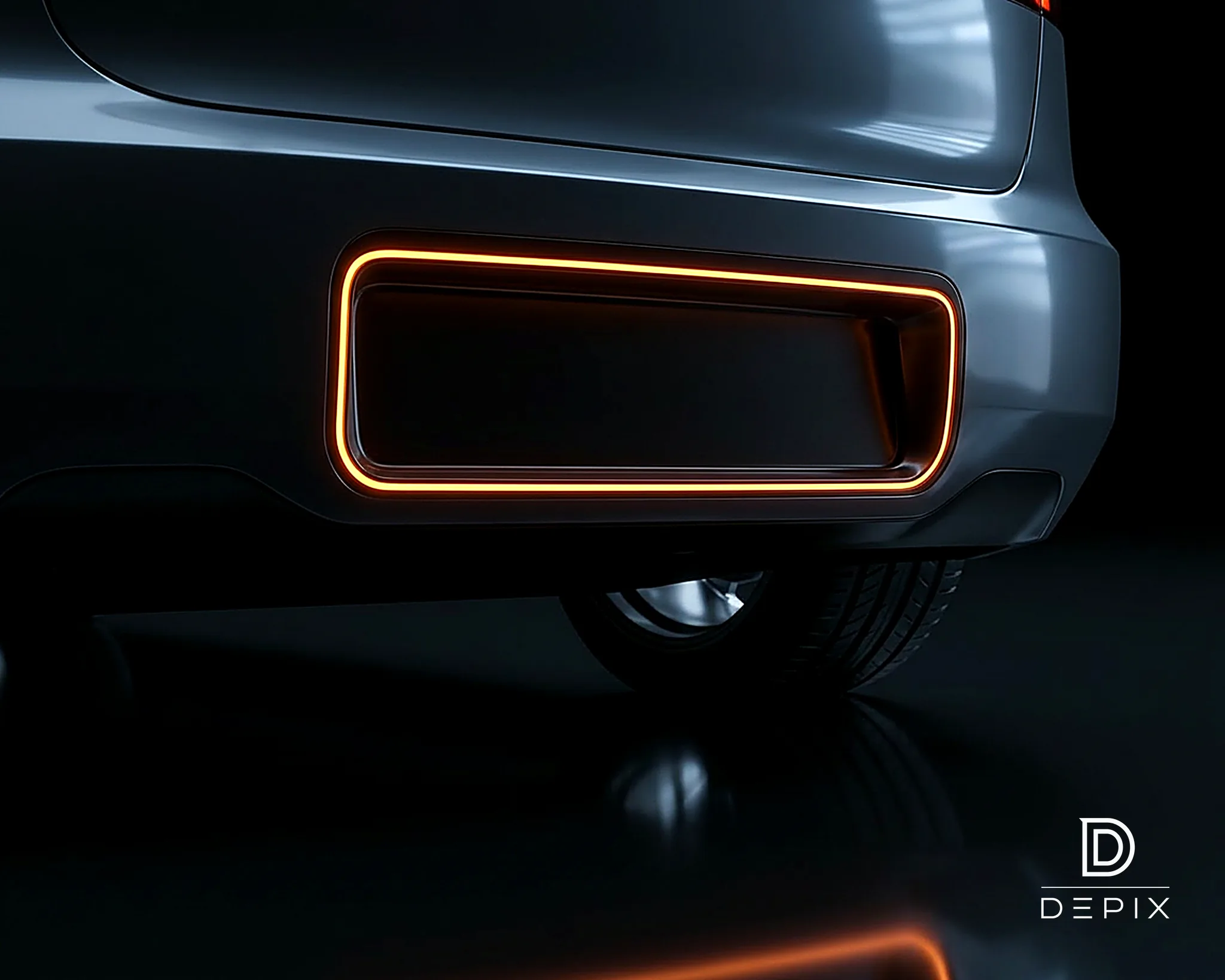
The one rectangle on the car the studio is forced to host and never allowed to own
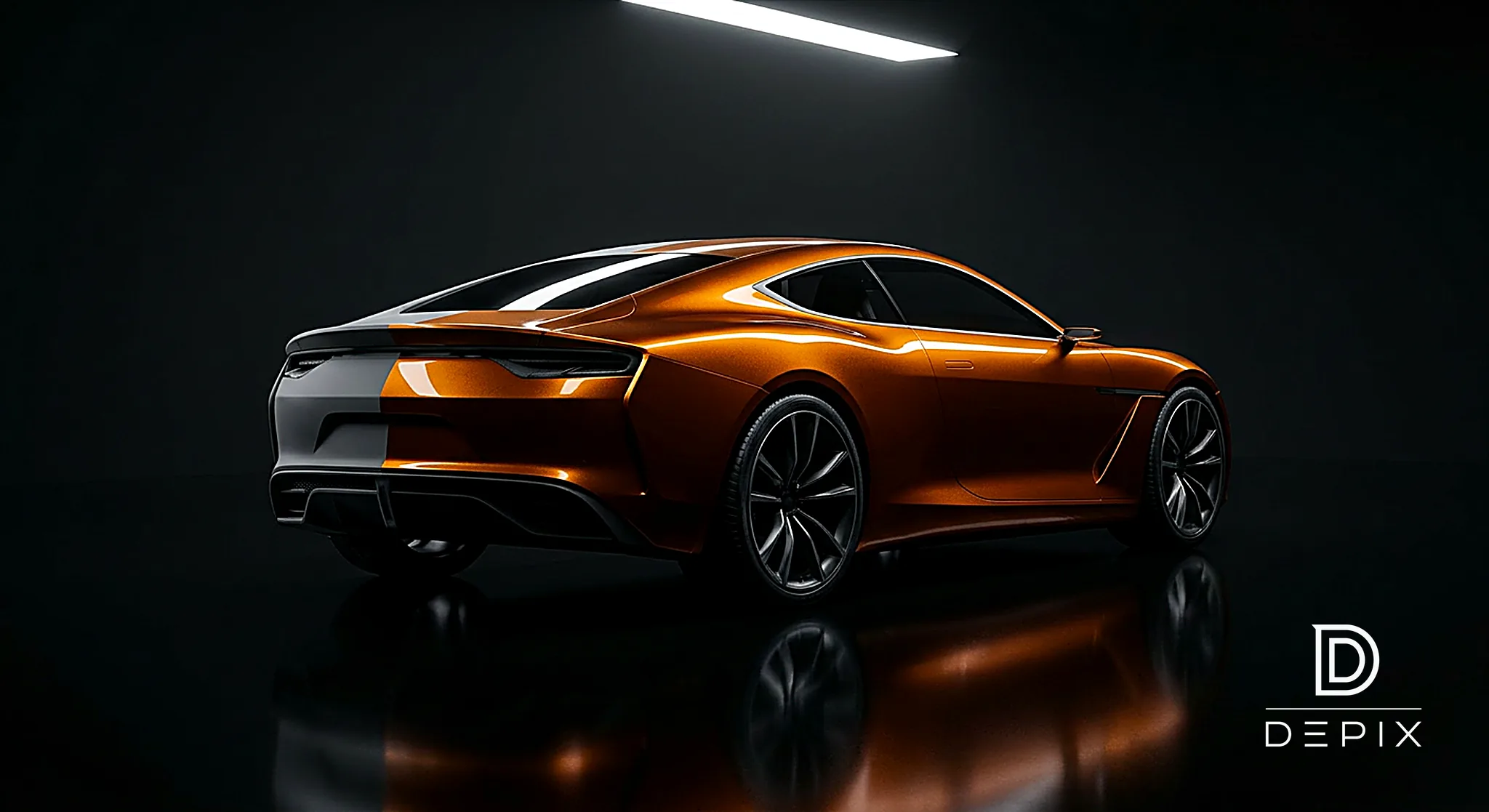
The most emotional decision in the building is now the one nobody dares to make
Related posts

The bridge of air where the gearstick used to be — the console the studio floats for the look, that the elbow and the loose phone never agreed to

The clean pad that cooks the phone it charges — the cabin feature sold as the cableless future, that a fifty-cent wire still beats on every metric that matters

The rails on the roof that carry nothing — the one styling cue that promises a life the car will never live, and quietly taxes the range to do it