
The rails on the roof that carry nothing — the one styling cue that promises a life the car will never live, and quietly taxes the range to do it
Run your eye along the roof of almost any crossover and you will find two slim rails, front to back, painted silver or anodised black, reading as capability: kayaks, roof boxes, the weekend in the mountains the brochure photographs. On a large share of those cars the rails carry nothing and were never meant to. They are styling — a costume of utility bolted to a vehicle that will spend its life in a supermarket car park. The roof rail is one of the quietest contested decisions on the car precisely because it looks so settled. It is the part that sells a story the vehicle does not tell, and on an electric car it charges rent to do it.
A part that forgot what it was for. Roof rails were not decoration "at least, not originally," as the buyer guides now have to clarify — "their real purpose is expanding your car's cargo capacity," the base a crossbar clamps to so the car can carry bikes, luggage, boards (GoMechanic; Detailing Devils). That function still exists and still matters to the people who use it. But the industry quietly split the part in two. There are now load-rated rails that do the job, and there are "fake roof rails, installed just for aesthetics" that, in the words of one accessory catalogue, "do nothing" — and a whole product category of "raised side rails without cross bars… for vehicles that want to add contemporary styling without the need to carry loads." The tell is the owner who buys the car for the adventurous look, then discovers the rails won't take a proper rack, or that there are no rails at all under the trim that suggested them. The cue promises a capability the part cannot deliver.
Why it is contested, and why it costs more on an EV. The case against the rail is not taste — it is physics, and electricity sharpened it. Roof rails add weight and aerodynamic drag, "slightly reducing fuel efficiency, especially on long journeys," and that penalty is "particularly significant for electric vehicles" (Detailing Devils). The leverage is brutal on an EV: a roughly 10 percent improvement in aerodynamic performance yields a 5–8 percent gain in range, and wind resistance matters about twice as much to an EV as to a combustion car. So the same two rails that say "adventure" in the showroom are quietly subtracting motorway range and adding wind roar at speed — a cost the buyer pays every day for a capability they may use twice a year. The studio is caught between two true things: the rail sells the car, and the rail taxes the car. Deleting it for a clean, slippery roof loses the rugged read that moves metal; keeping it loses range on the spec sheet that now sells the same metal.
The engineering answer that proves it's a real fight. When two true things collide and neither side will give, engineers start patenting their way out — and the roof rail now has two. Ford filed for deployable roof rails that pop up on hinges only when you need a mounting point and stow flat the rest of the time, "to improve fuel economy and extend electric vehicle range by minimizing wind resistance when the accessories aren't required" (Green Car Reports, 18 August 2024). Stellantis went the other direction entirely: a patent for inflatable roof rails on the Dodge Charger that deploy at speed — "they would go up at 55 mph" — channelling air over the rear spoiler, hidden under decorative trim when flat, pitched as cheap active aero versus a moving wing (CarBuzz, 8 June 2026). Both are the same admission in different clothes: the rail you can see is in the wrong place for half the car's life, and the honest version is one that appears only when it earns its drag. You do not patent your way around a part that was never contested.
The decision the studio is actually making. The roof rail is not "add rails or not." It is choosing how much daily cost the car will pay to look like a different car — and whether to be honest about it. A render answers the question one way every time: rails on, in silver, against a mountain backdrop, the vehicle at rest where drag is free and the look is everything. It cannot show the motorway at 120 km/h where those rails are eating range and droning, nor the owner who bought the capability and never used it, nor the one who needed it and found the rails were cosmetic. The same rail is honest equipment for one buyer and a drag-inducing costume for another, and the configurator flatters both identically.
What good design intelligence does here. This is a decision that is invisible in every artefact a studio decides with — a still, a clay, a configurator — and lives entirely in states they don't depict: the range hit at speed, the wind noise, the gap between the life the rail promises and the life the car lives. Design intelligence is the parallel team that holds the rugged hero shot and the motorway drag number and the deployable-vs-fixed-vs-deleted options as one resolved decision before the roof is tooled — so the rail is on the car because evidence says this buyer will use it and accept its cost, not because the segment expects a silver line on the roof. The brands patenting rails that hide until needed have already conceded the point. The open question is whether the studio concedes it before the press render, or after the owner reads the range penalty on the window sticker.
The rails were never about the roof. They were about selling a life the car won't live — and quietly billing the owner for the disguise.
Sources
- ●Roof Rails in Cars: Function, Practicality and Use — GoMechanic
- ●What Are Roof Rails? Benefits, Drawbacks & Usage Guide — Detailing Devils
- ●Ford Tackling Aero Efficiency With Deployable Roof Rack Rails — Green Car Reports, 18 August 2024
- ●Only Dodge Could Take Roof Rails And Turn Them Into Performance Enhancers (inflatable roof rail patent) — CarBuzz, 8 June 2026
- ●These Are the 12 Most Aerodynamically Efficient EVs on Sale — Top Gear (why aero/range dominates EV design)

The clean pad that cooks the phone it charges — the cabin feature sold as the cableless future, that a fifty-cent wire still beats on every metric that matters
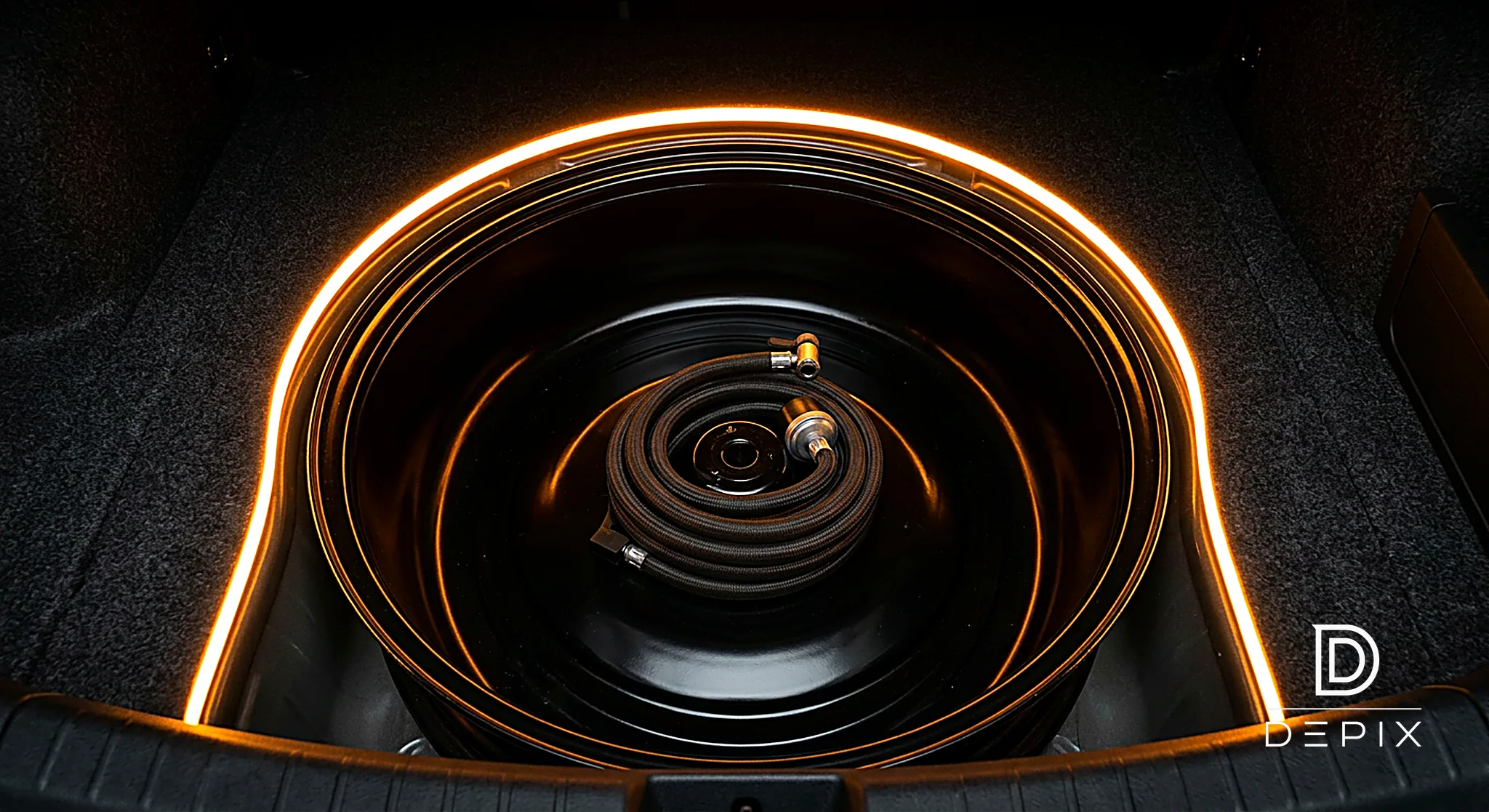
The fifth wheel the spreadsheet deleted — the one part no designer ever wanted, that a quarter of new-car buyers don't know is already gone
Related posts

We finally flattened the floor — then deleted the safest seat in the car.

The bridge of air where the gearstick used to be — the console the studio floats for the look, that the elbow and the loose phone never agreed to
The clean pad that cooks the phone it charges — the cabin feature sold as the cableless future, that a fifty-cent wire still beats on every metric that matters