The Material Decides the Form
The most talked-about design detail on Xiaomi's new power bank is a number: 6mm. The UltraThin Magnetic Power Bank is thinner than the phone it charges — 6 millimetres, 98 grams, a smooth glacier-silver slab you forget is in your pocket. It looks like a styling triumph, a designer shaving away bulk. It isn't. The thinness was decided somewhere a designer never touched: inside the battery chemistry.
Conventional lithium-ion cells store their energy in a graphite anode. Graphite is reliable but bulky — it caps how much energy density you can pack into a given volume, which in turn sets a hard floor on how thin a battery, and therefore a device, can be. For a decade, "how thin can this be?" was really a question about graphite. Xiaomi's power bank uses a silicon-carbon battery — a cell whose anode blends silicon (16% here) with carbon. Silicon holds far more lithium than graphite by volume, so the same 5,000mAh fits in a much slimmer cell. The 6mm body isn't a bold styling call; it's what became physically possible once the material changed.
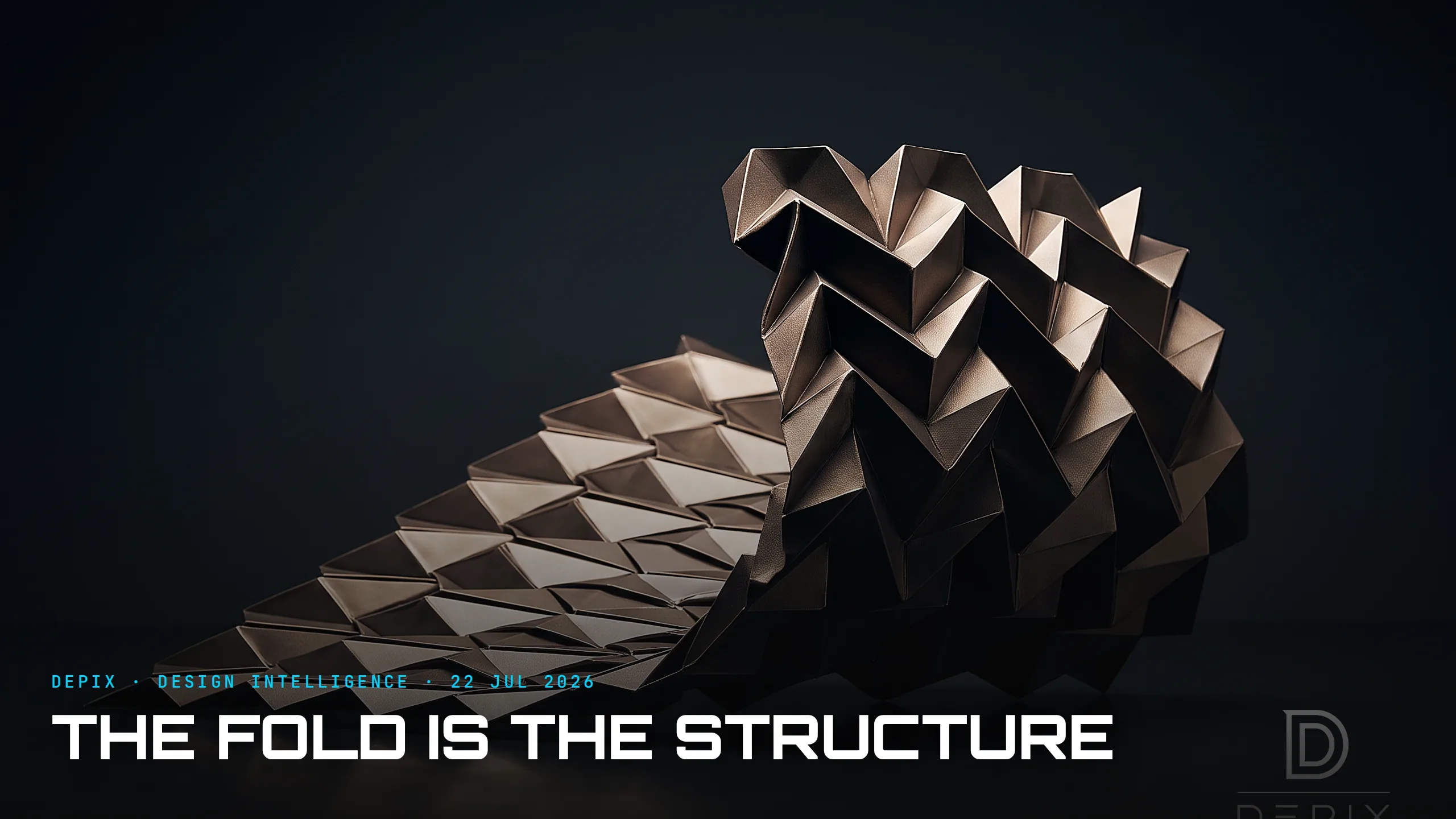
This is the design-intelligence point, and it's easy to miss because it happens off-stage: the most consequential decision behind a product's form is often a materials decision, made upstream of anything a designer draws. A material sets the boundary of the possible. Every silhouette a designer can propose lives inside a fence built by physics and chemistry — and when a new material moves that fence, a whole region of previously impossible forms opens up at once. The designer who drew the 6mm slab didn't invent the thinness; they were the first to walk into the room the battery chemists had just unlocked. It has always worked this way. The aluminium unibody made the impossibly thin laptop; OLED made the curved and folding screen; carbon fibre made the monocoque supercar. In each case the silhouette everyone praised was a material's gift, cashed by whichever team reached for it first.
Which reframes what "innovation" in a product category actually looks like. Most iterations shave a fraction off the old constraint — a slightly thinner bezel, a marginally smaller case. Real jumps come when the underlying constraint is removed, not negotiated. Silicon-carbon isn't only in this power bank; it's quietly showing up across 2026's thinnest phones, and every one of them can now be designed to a proportion that was off-limits a product cycle ago. The interesting question at the concept phase stops being "how do we make this thinner?" and becomes "now that thin is nearly free, what should this actually be?"
Because that is the trap. When a constraint lifts, the lazy move is to spend the whole gain on the old metric — build the thinnest possible thing and call it a day. The Xiaomi unit resists that a little: it spends the density on staying genuinely pocketable and adding Qi2 magnetic charging, two temperature sensors and a real thermal system, rather than chasing a record number for its own sake. But the deeper opportunity, whenever a material frees you, is to ask what the object could become that it never could before — not merely a thinner version of the same idea.
It also relocates where credit and attention should sit. We lavish design praise on the visible surface — the finish, the radius, the aluminium shell — and treat the battery as a component to be specced late. But on a device like this, the battery is the design decision; the shell is downstream of it. A studio that treats materials as someone else's problem, chosen after the form is locked, has already given away its most powerful lever. The teams that win the next form factor are the ones sitting with the chemists at the start, asking not "what shape do we want?" but "what does this new material make possible that nothing did before?"
The 6mm power bank will be remembered, if at all, as a neat spec. The more useful takeaway is quieter: forms don't only follow function — they follow material. Decide the material early, understand exactly which fence it moves, and you get to draw shapes your competitors physically cannot. Ignore it, and you'll spend the next cycle shaving millimetres off a constraint someone else already deleted.
Sources:
- ●Yanko Design — A 6mm 5,000mAh power bank: Xiaomi built one thinner than any phone
- ●GSMArena — Xiaomi 5,000mAh Qi2 power bank, only 6mm thick and 98g
- ●Techlicious — The world's thinnest magnetic power bank is just 6mm thick
- ●Xiaomi — UltraThin Magnetic Power Bank 5000 15W (official specs)
- ●Wikipedia — Lithium-ion battery
- ●Wikipedia — Anode
- ●Wikipedia — Energy density
- ●Wikipedia — Silicon
- ●Wikipedia — Xiaomi
- ●Wikipedia — Qi (wireless power standard))