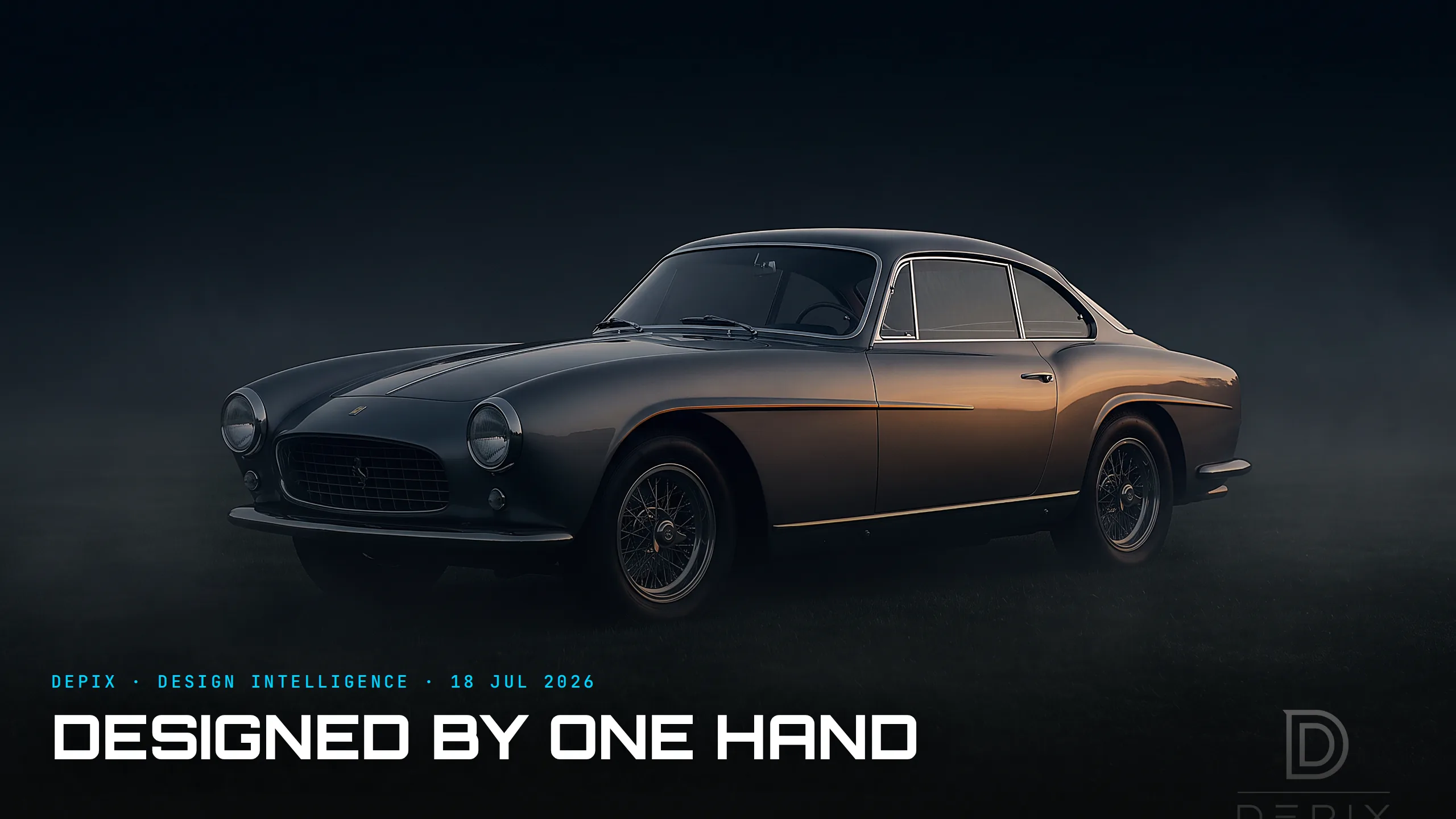
Designed by One Hand: What a Concours Lawn Reveals About Why Committees Can't Make a Beautiful Car
The lawn at Pebble Beach is the closest thing car design has to a hall of fame, and in 2026 it turns seventy-five. Monterey Car Week runs 7-16 August; The Quail gathers on Friday 14 August; and the 75th Pebble Beach Concours d'Elegance closes it on Sunday the 16th, with Ferrari the featured marque and Carrozzeria Vignale the featured coachbuilder. Walk that grass and something becomes obvious that the industry spends most of its energy avoiding: almost every car that stops you cold was drawn by a single hand.
The great post-war Italian carrozzerie - Vignale, Pininfarina, Bertone and Touring - were not design departments. They were, in effect, one person's eye given total authority over a whole car. A coachbuilder took a rolling chassis and built a body of almost any form around a single coherent idea. The coherence you feel on the lawn - the sense that every line belongs to the same sentence - is the fingerprint of that authorship. It is not nostalgia. It is a structural property of how the car was decided.
Now stand in a modern design review. A mainstream car is not authored; it is negotiated. Surfaces are argued across engineering, aerodynamics, cost, legal, marketing and pedestrian regulation; proportions are tested in clinics; details are sanded down until nobody in the room objects. The result has a name. Design by committee is the well-documented failure mode in which divergent opinions average into a diluted design with no unified vision, bold moves sidelined to keep the peace. Its patron saint is the Pontiac Aztek, a car shaped largely by focus-group feedback and released to ridicule. A committee optimises for the absence of objection, not the presence of a point of view - and beauty is a point of view.
Here is the part designers know and rarely say: coherence cannot be added later. It has to be present in the first move, because it is the thing every later move refers back to. A single author can hold the whole car in one head at the concept phase and say no on its behalf - no to the clever detail that fights the stance, no to the feature that muddies the silhouette. Once the concept fragments into parallel workstreams, no one owns the gestalt, and the car becomes a sum of locally reasonable decisions that never add up to a whole.
The most telling evidence is that the industry, at its very top, is quietly buying its way back to single authorship. Rolls-Royce revived Coachbuild in 2017 with Sweptail and has since built the Boat Tail and the roughly thirty-million-dollar Droptail, four examples only. The revealing detail sits inside its new Coachbuild Collection: these clients are explicitly not there to micromanage the design - they want to see what the marque creates when left entirely to its own imagination. The buyer chooses to become a collector of authored work rather than the commissioner of a negotiated one. Ferrari runs the same logic through its Special Projects one-off programme, begun in 2008 and now more than ten years deep under an in-house design centre. What money buys at the top is not more options. It is fewer authors.
That is the concept-phase lesson, and it has nothing to do with cars specifically. The decision that most determines whether a design will be coherent or muddled is made before a single surface exists: who holds the pen, and whether they have the authority to say no. Authorship is an org-chart decision disguised as an aesthetic one, and it is set at the concept phase or not at all. You can run all the clinics you like afterwards; you cannot focus-group your way to a point of view.
So the concours is not really a museum of old cars. It is a controlled experiment, run for seventy-five years, that keeps returning the same result: the cars we still find beautiful were authored, and the ones we forget were agreed. Decide who is holding the pen before you argue about the lines - that is the design intelligence worth carrying off the lawn.
Sources:
- ●See Monterey - Monterey Car Week 2026
- ●The Quail, A Motorsports Gathering - Aug 14, 2026
- ●Pebble Beach Concours d'Elegance 2026 - 75th Edition
- ●List of Ferrari Special Projects cars (carrozzerie) - Wikipedia
- ●The History of Coachbuild - Rolls-Royce Motor Cars
- ●Design by committee - Wikipedia
- ●How to Avoid Design by Committee (Pontiac Aztek) - ProductPlan
- ●Rolls-Royce introduces Coachbuild Collection - Magneto
- ●The 600bhp+ coachbuilt Rolls-Royce Droptail - Top Gear
- ●Rolls-Royce announces the Coachbuild Collection - RR Press
- ●Rolls-Royce Droptail makes rivals look mid-market - CarBuzz
- ●Ferrari Special Projects - Coachbuild.com
- ●Celebrating 10 years of Ferrari One-Off projects - Ferrari
- ●Design By Committee - Dovetail
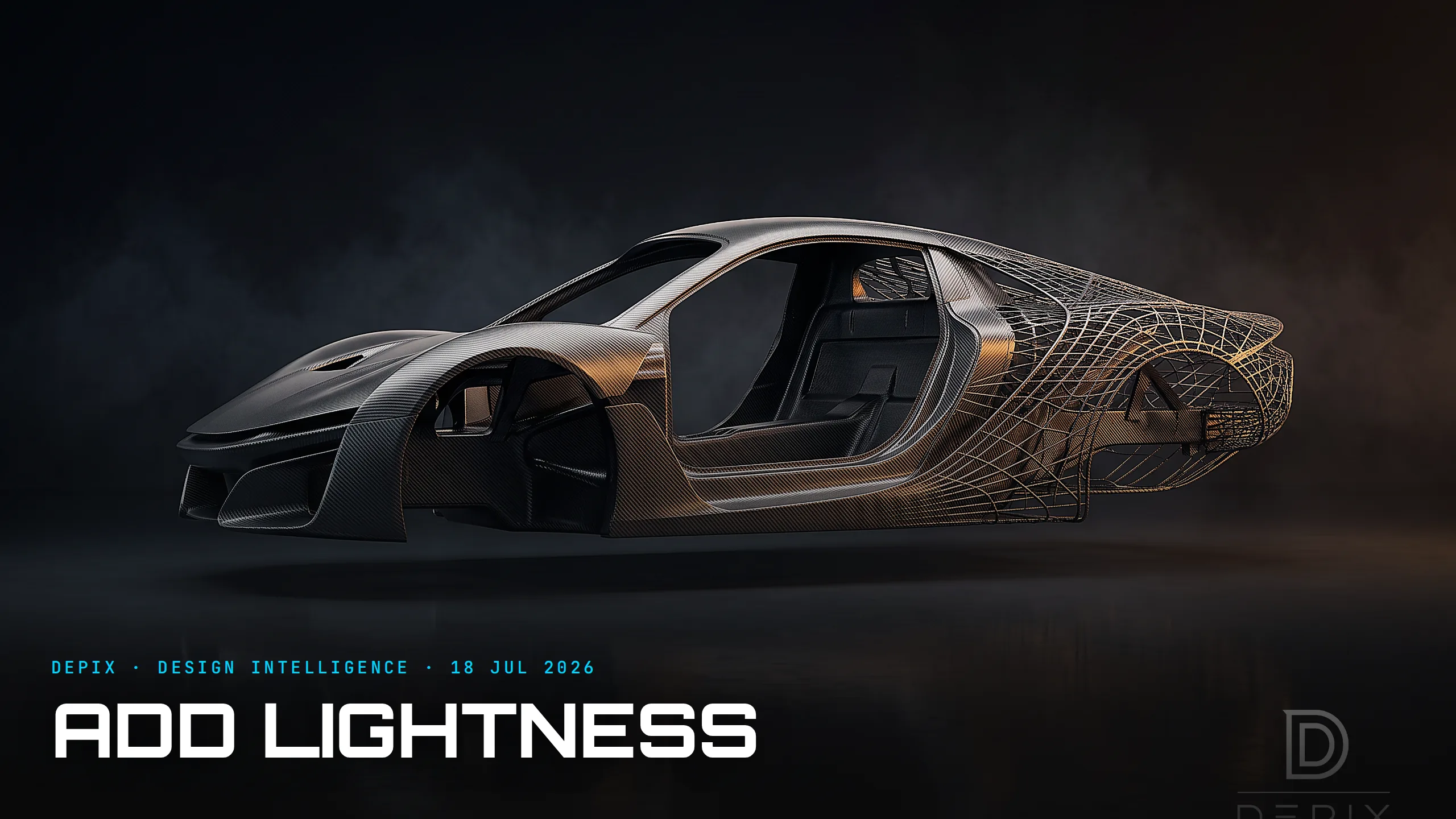
Simplify, Then Add Lightness: Why a Car's Weight Is Decided Before the First Line Is Drawn
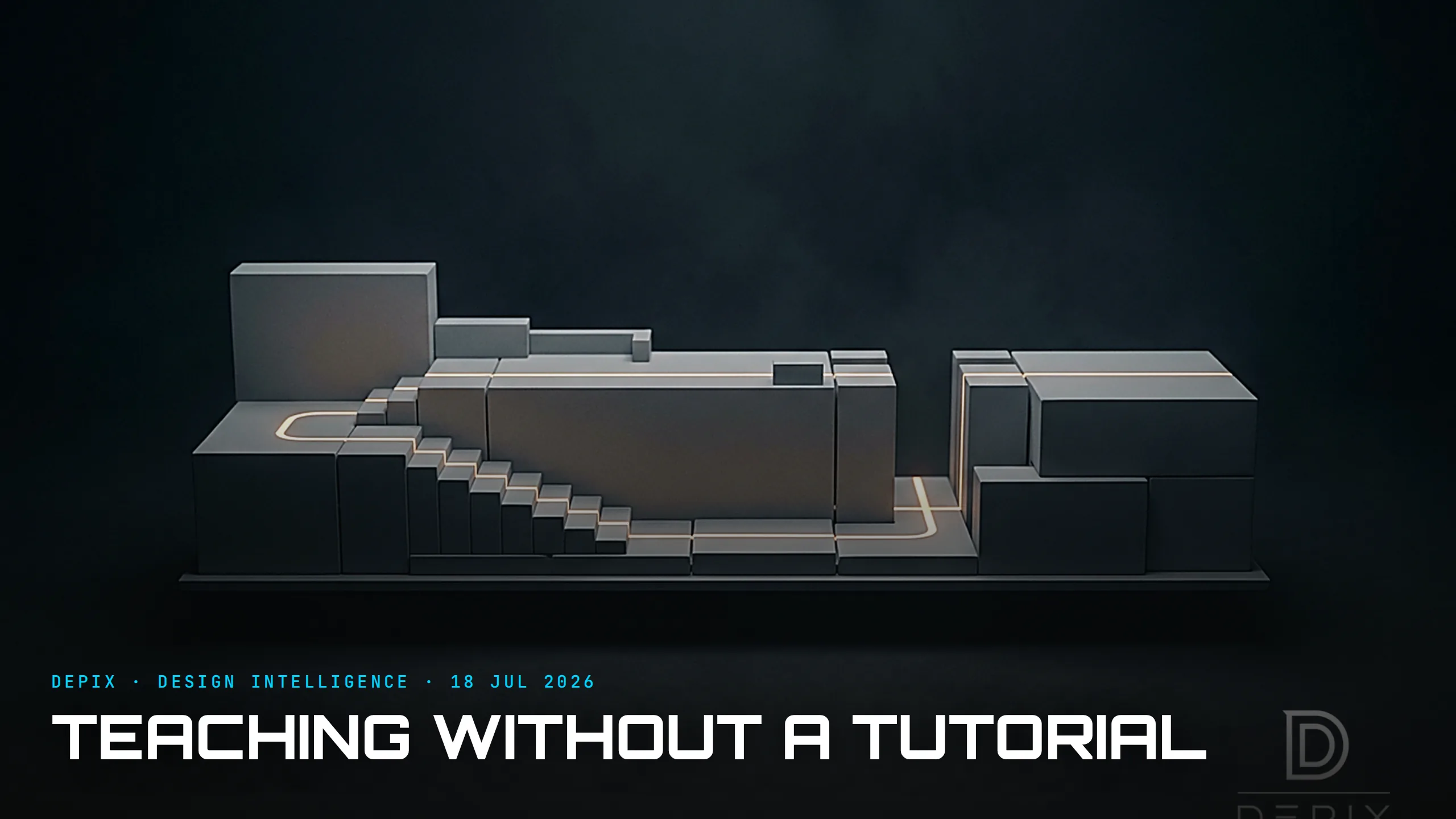
Teaching Without a Tutorial: What Super Mario's First Level Reveals About Designing How People Learn