What Premium Feels Like Now
Every September, a trade fair in Milan called Lineapelle quietly sets the material palette for a large slice of the physical luxury world - it is the primary sourcing destination for leather and its alternatives, drawing designers from fashion, furniture and automotive alike. This year's headline is the one it has been building toward for a while: the bio-based alternatives are finally good. And that is precisely where the design conversation goes wrong.
The alternatives are real now. Rheom's Shorai is 91% bio-based; WASTEA runs 40 to 95% bio content; the market for plant- and bio-based leathers is projected to reach $2 billion in 2026. Automotive has moved even faster than fashion: Tesla has been fully animal-free since 2019, Mercedes' GLC became the world's first Vegan-Society-certified car interior, and BMW now ships vegan interiors, steering wheels included. The engineering problem is largely solved.
But watch what almost everyone does with that freedom, and you see the mistake. They use it to make a more convincing fake. Mercedes calls its material an ARTICO "leather replica." The mushroom and cactus materials are embossed with grain. Enormous effort goes into making the new thing smell, wrinkle and patina like the old thing. The entire industry, handed a blank slate, is spending it drawing a picture of a cow.
This is a concept-phase error wearing a sustainability costume. For a century, "premium material" simply meant leather - the grain, the smell, the way it aged, the quiet signal of status. That equation was so total that "premium" and "leather" became the same word in most designers' heads. So when leather had to go, the reflex was not to ask what premium should be; it was to rebuild leather out of anything else. The reference image - real hide - is still running the design, even after the thing it points at has been removed.
That is the trap, and it is the most dangerous tool in design doing its quiet work: a strong reference forecloses the actual question. If your brief is "make a leather that isn't leather," you have already lost the interesting decision. You will spend years and fortunes chasing an asymptote - a fake that is forever slightly less than the real thing it imitates - and arrive at a material with no identity of its own, defined entirely by its distance from a hide.
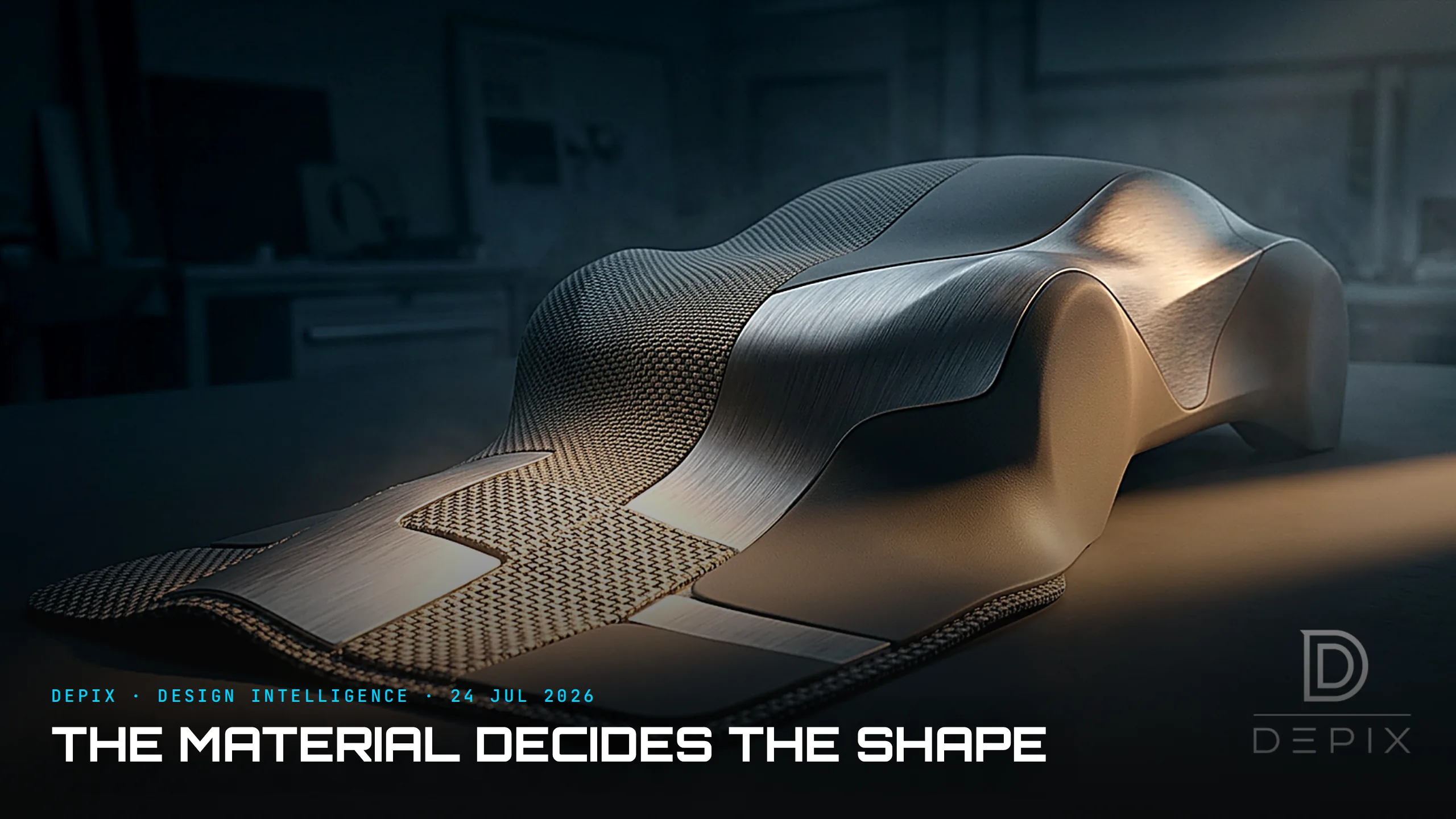
The brands that win the next decade of material design are asking a harder, concept-phase question: what should premium feel like now that it can be made of anything? Not "how do we replace leather," but "what is the new signal of care, quality and status, unshackled from a specific animal skin?" Mercedes' EQXX concept at least gestures at it - interiors of mushroom, bamboo, cactus and vegan silk that could, if the design nerve holds, read as their own thing rather than as leather-cosplay. The material innovation on show at Lineapelle is the raw vocabulary; whether anyone writes a new sentence with it is a design decision, not a chemistry one.
Because here is what the sustainability framing hides: people do not actually want leather. They want what leather has meant - that someone chose the best, that the object will last, that it feels considered against the skin. Those meanings are portable. A woven bio-composite or a cell-cultured textile can carry them just as well as a hide - but only if a designer decides, early, what the new material is trying to say, instead of defaulting to what the old one said.
Leather is not ending. Its monopoly on the meaning of "premium" is - and that monopoly was always a concept-phase assumption, not a law of materials. Lineapelle can hand you a hundred new materials. It cannot tell you what premium should feel like now. That is the one decision worth making yourself.
Sources:
- ●WWD - Lineapelle 2026: challenges, trends, sustainability (trend indicator for fashion/furniture/automotive)
- ●Ethos - Rheom and Econock debut bio-based alt leather Shorai (91% bio) at Lineapelle
- ●vegconomist - SUSMATA presents plant-based leather alternative WASTEA at Lineapelle Milan
- ●vegconomist - Leather alternatives: latest news 2026 ($2bn market)
- ●Mercedes-Benz - World's first car with vegan-certified interior (ARTICO replica)
- ●Species Unite - BMW launches new cars with vegan leather interior as standard (Veganza)
- ●Pedal Commander - Vegan car interiors: the rise of animal-free luxury (Tesla since 2019)
- ●PETA - Mercedes EQXX vegan interior (mushroom, bamboo, cactus, vegan silk)
- ●CUCUBIRD - Innovative sustainable leather technologies redefining eco-friendly fashion in 2026
- ●MDPI Materials - Bio-based and sustainable alternatives to conventional and synthetic leather
- ●DEPIX - The Reference Image: the most dangerous tool in design