The Retro Trap: How Heritage Design Becomes a Costume — and How the Best Brands Escape It
Somewhere in the late 1990s the car industry discovered nostalgia, and it has never fully let go. The retro wave arrived with the 1998 New Beetle and rolled on through the reborn Mini in 2000, the Fiat 500 in 2007, and a long line of cars that look deliberately old. Nostalgia sells — it is the safest emotion in the showroom. But it is also a trap, and the difference between the brands that used heritage to grow and the ones it quietly strangled comes down to a single distinction: pastiche versus reinterpretation.
Pastiche copies the form. It takes the round headlights, the two-box silhouette, the specific curve everyone remembers, and reproduces them on a modern platform. The New Beetle is the honest example: a lovable, faithful homage to one of the most recognisable shapes ever made — and a design cul-de-sac. Because it copied the silhouette so literally, there was almost nowhere to take it. You cannot evolve a photocopy; the next generation can only be a slightly different photocopy, and eventually the joke wears thin. Tellingly, collectors still aren't sure the retro-wave cars will ever be truly collectable — a copy has no story of its own.
Reinterpretation does something harder. It asks why the original worked and carries that forward, even when the result looks quite different. The reborn Mini is the standard case: it is far bigger than Issigonis's 1959 original and shares almost none of its engineering, yet it feels unmistakably Mini because it kept the essence — the wheel-at-each-corner stance, the cheeky attitude, the sense of a small car punching above itself — rather than the exact metal. That essence could be stretched, electrified, turned into a whole family, because it was a principle, not a picture. The Mini had a future because BMW copied its spirit, not its shape.
The purest illustration lives at the luxury extreme, in Singer. Singer takes an air-cooled Porsche 911 and "reimagines" it — and connoisseurs revere the results because Singer clearly understands why every original detail existed, restoring each car with obsessive intent, before deciding how to reinterpret it. The work is driven by "what if…?", not "let's copy this." Tellingly, even Singer draws fire the moment a model is felt to lean too hard on nostalgia instead of advancing it — proof that the line between homage and costume is thin even for the masters. Porsche itself codifies the discipline in its Heritage Design programme: revive a classic cue, but present it in genuinely contemporary form.
The cautionary tale is what over-reliance does to a brand. Fiat's 2007 500 was such a hit that the company built much of its later line-up on that single retro lineage — a strategy analysts have long flagged as too many eggs in one nostalgic basket. When your whole identity is one beloved memory, you become hostage to it: you can't retire it, can't radically change it, and every new model is measured against a ghost. Heritage that was meant to be a foundation becomes a ceiling.
This is, underneath, a concept-phase identity decision — and it is the one every heritage brand is now being forced to make again by electrification. When you remove the engine, the long hood, the exhaust and the grille — the very features many heritage cues were built around — you have to decide what your heritage actually is. If it is a set of shapes, you are stuck: an EV wearing a fake grille and a pretend long hood is pastiche in its most anxious form. If it is a set of principles — a proportion, a stance, an attitude, a way of treating the driver — then it survives the transition intact, because principles don't need an engine. The brands panicking about EV design are usually the ones that mistook their silhouette for their soul.
None of this is an argument against looking backward. Heritage is one of the most valuable assets a brand can own, and quoting it well is a genuine skill. But there is a test, and it is worth applying at the very first sketch: are you copying what the past looked like, or carrying forward why it worked? The first gives you a warm, finite tribute. The second gives you something that can keep evolving for another fifty years — which is the whole point of having a heritage in the first place.
Sources:
- ●Wikipedia — Retro-style automobile
- ●CNN — Why 'new' car designs are surprisingly old
- ●Hagerty — The New Retro Wave: 13 Cars of the Present Inspired by the Past
- ●Wolf and Mare — Will 'Retro Wave' Cars Ever Be Collectable?
- ●SlashGear — 11 Modern Cars That Look Like Retro Classics
- ●Singer Vehicle Design
- ●Popular Science — Inside Singer's Porsche 911 restorations
- ●Arts & Collections — Porsche Reimagined by Singer
- ●The Autopian — When a Singer model leans too hard on nostalgia
- ●Porsche — What is Porsche Heritage Design?
- ●Classics World — A brief history of retro car design
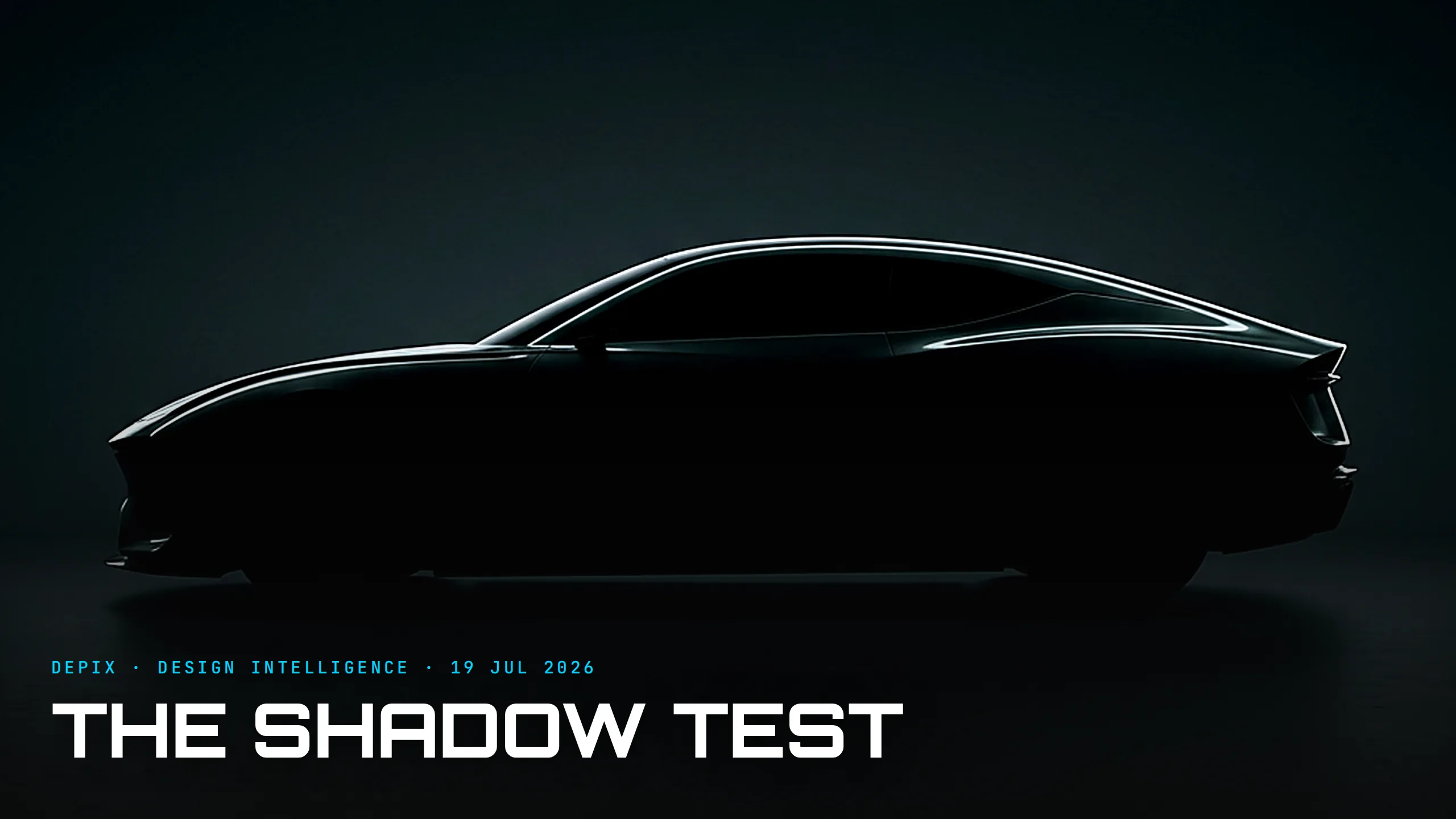
The Shadow Test: Why the Best Designs Survive as a Pure Black Shape
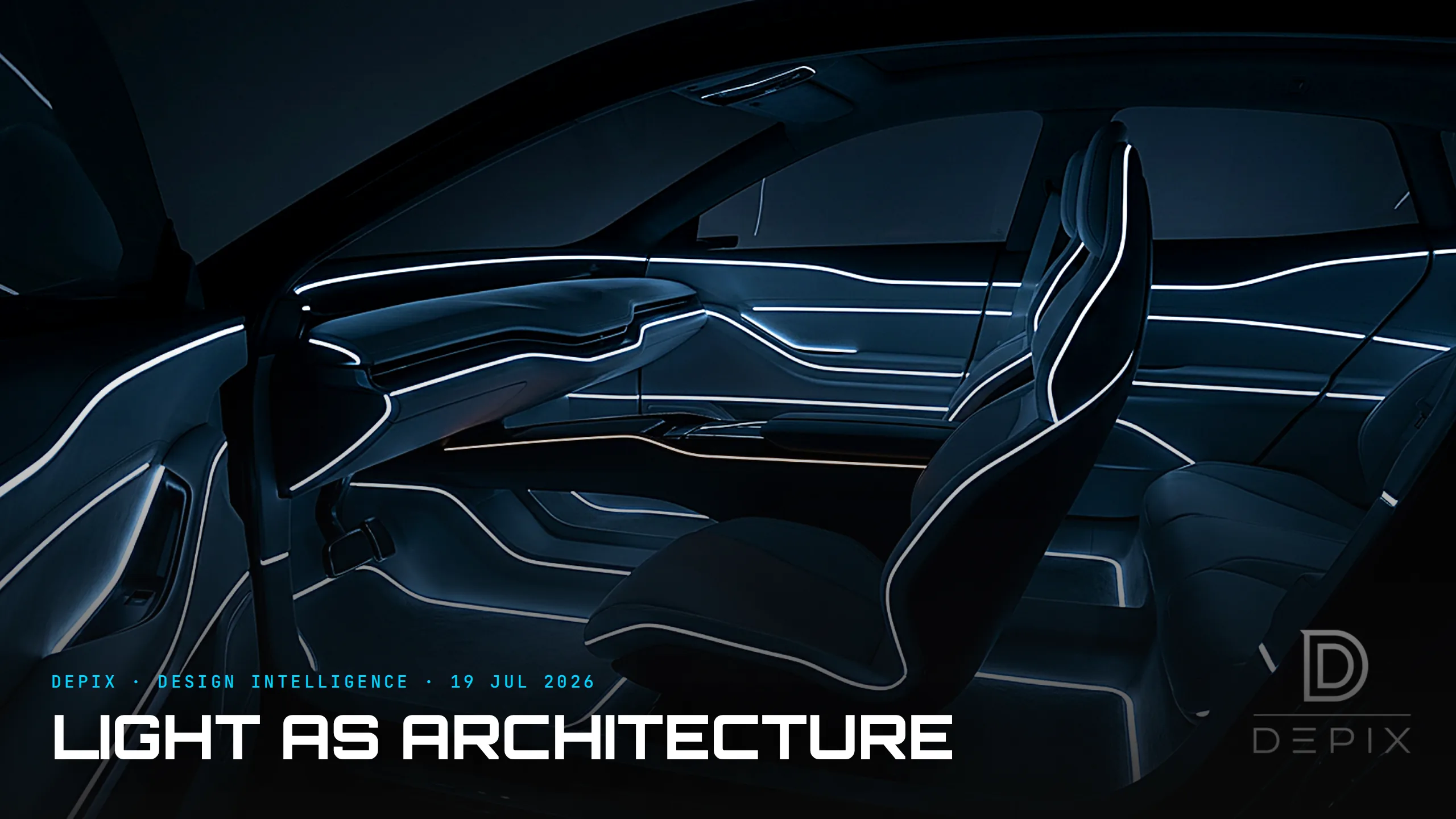
Ambient Light as Architecture: How the Cabin's Gimmick Became Its Structure