The Typeface Is the Brand: Why the Logo You Obsess Over Isn't Your Most-Used Asset
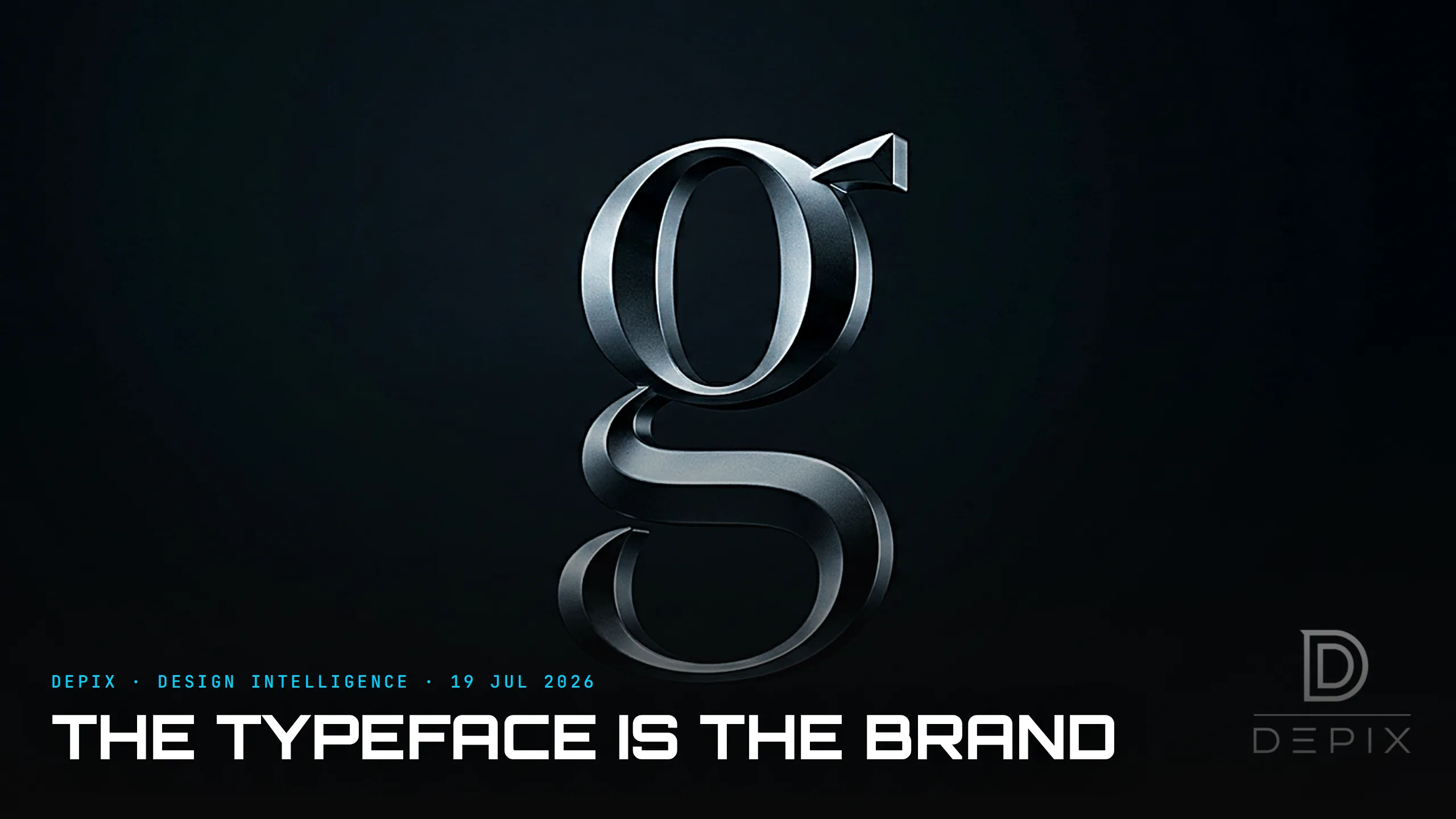
Ask a brand team which asset they have spent the most time, money and anguish on, and the answer is almost always the logo. Ask which asset their customers actually see the most, and the honest answer is something else entirely: the typeface. A logo is glimpsed a handful of times a day. The typeface sets every single word the brand ever writes — every button, menu, price, road sign, spec sheet, subtitle and social caption — seen thousands of times more often, and almost nobody outside the studio ever consciously notices it. That inversion of attention is one of the most useful things a designer can understand.
It is why, over the last decade, the smartest and largest brands have quietly stopped renting their letters and started drawing their own. Apple made San Francisco. Google made Product Sans. Netflix made Netflix Sans. IBM made Plex, the BBC made Reith, Samsung made SamsungOne, Airbnb made Cereal. This is not vanity: there are fifteen-plus major brands with proprietary typefaces now, and the roster keeps growing because the logic is remarkably consistent.
The first reason is money, and it is bigger than you would think. At the scale of a global brand, font licensing is not a one-off purchase; it is a recurring fee that applies to every application — every screen, billboard, email and subtitle, across every market. Netflix commissioned its own font in large part to save those licensing costs at global scale, running the same calculation everyone else did: licensing can cost millions over time, while a bespoke family is closer to a one-time $50,000. IBM is the clearest case — it was paying over a million dollars a year to license Helvetica Neue before it built Plex, and then, tellingly, gave it away free to everyone else.
The second reason is the one designers should care about more: ownership of a voice. When you set your brand in a font anyone can license, any other organisation can share your exact typographic identity, and the distinctiveness quietly leaks away. A custom typeface can never be used by a competitor. And a well-made one carries meaning a logo cannot: IBM Plex is a grotesque nodding to the industrial age the company was born in; the BBC's Reith was built as a whole family — sans, serif and condensed — to carry one voice across everything the broadcaster does, and to end the rising licence costs and inconsistency of juggling many fonts at once. The typeface becomes the tone of voice, made visible.
Here is the concept-phase point, and it is the whole lesson. A type system is one of the earliest decisions in a brand identity, and it is also the one that cascades furthest. Every later artefact — the app, the packaging, the wayfinding, the annual report, the car's infotainment menus — inherits it. Change your logo and you change a mark seen occasionally; change your typeface and you change the texture of every sentence the brand will ever set. That reach is exactly why it has to be decided deliberately, up front, as identity — not chosen late by whoever is building the website, from whatever happens to be installed.
And it explains the strange invisibility of the whole thing. The typeface works precisely because you do not notice it. A logo announces itself; a typeface simply makes everything the brand says feel consistently, unmistakably like that brand, at a level below conscious attention. It is the most-used, least-credited asset a brand owns — which is exactly why the brands that take it seriously get a compounding advantage that competitors, still agonising over their logo, never quite see coming.
So the next time you judge a brand's design by its logo, look at the words around it instead. The alphabet they are set in was a bigger decision, made earlier, and doing more work — every second, on every screen — than the mark you were told to look at.
Sources:
- ●15 brands that created their own custom typeface — World Branding Forum
- ●Famous brands that invested in custom typography (and why) — Designity
- ●The custom typeface behind streaming's biggest brand — Etienne Aubert Bonn
- ●Netflix's new font is set to save millions — CNBC
- ●To save some cash, Netflix developed its own font — Entrepreneur
- ●Netflix Sans: the story behind a typography decision — Lipi
- ●What font does IBM use? (Plex & the Helvetica licensing cost) — Made Good Designs
- ●IBM Design Language — Typeface (IBM Plex)
- ●IBM's custom corporate typeface, now free for anyone — Eye on Design (AIGA)
- ●BBC Reith custom font suite — Dalton Maag
- ●Website fonts used by popular brands — byRadiant

The Box Is the Product: Why the Thing You Throw Away Is the First Thing You Feel

Should It Look Recycled? The Design Politics of Visible Waste