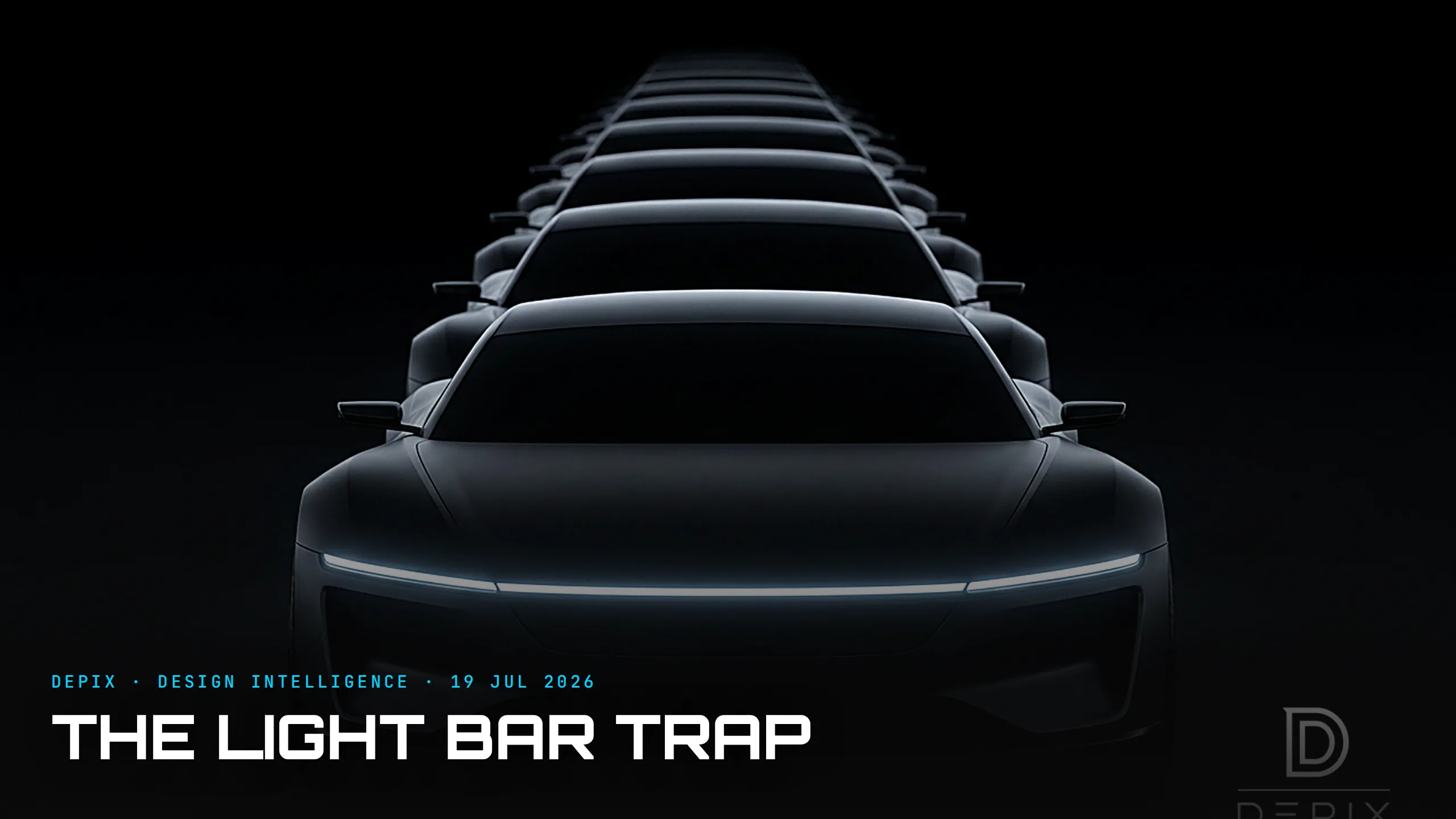
The Floating Roof: How a Free Graphic Trick Ate Every Car
Look along any car park in 2026 and you will see the same trick a hundred times over: a roof that appears to hover above the cabin, disconnected from the body, held up by nothing but glass. It is called the floating roof, and it is achieved by darkening the pillars — blacking out the A-, B- and C-posts with paint, gloss trim or dark film so the eye reads roof and body as two separate objects. A decade ago it looked expensive and modern. Today it is on the school-run crossover, the budget hatchback and the luxury saloon alike, and that ubiquity is the whole story.
The device has a genuinely noble lineage. Three of the most revered shapes ever drawn — the original Citroën DS, the Issigonis Mini and the first Range Rover — each carried an ancestor of the floating roof. But here is the distinction that matters: on those cars the roof really was a separate thing. The DS bolted a fibreglass (later aluminium) roof panel onto the frame as a distinct unit; with its chromed window frames it was sliced cleanly into three bands — roof, glasshouse, body. The Mini earned its two-tone identity on a rally stage, Paddy Hopkirk's red-with-white-roof Cooper S winning Monte Carlo in 1964. The look was the honest by-product of how the car was built.
What spread across the industry after the 2011 Range Rover Evoque popularised the modern version is something else: a graphic applied to the glass, not a structure. And to see why that is a concept-phase question, you have to understand the DLO — the daylight opening, the shape of the glass seen from the side. Designers will tell you the DLO is the strongest, most important graphic element) of a car's profile; the greenhouse and its glass decide whether a shape reads as saloon, coupé or wagon before anything else registers. The floating roof is a cheat code laid over that element: instead of resolving a beautiful glass shape and pillar structure, you paint the pillars out and let black do the work.
That is precisely why it conquered everything. It is the cheapest differentiator in car design. Depending on budget you can de-emphasise the pillars with overlapping glass, black polycarbonate, a strip of gloss trim or simply dark paint — pennies against the cost of re-engineering a roofline. A contrast or blacked-out roof also lifts margins and feeds personalisation, the same profit logic the modern Mini proved. When a styling move is nearly free and reads as premium, every accountant in every studio says yes.
And there is the trap. A differentiator that anyone can apply for almost nothing differentiates nothing. Critics now file the floating roof under the most tired trends going, a "unique" element that has become anything but unique, quietly making cars from unrelated brands look alike. The cheap version — thin black plastic bridging side glass to backlight — is the one that ages worst. Even the awkward dog-leg pillar it so often replaced at least belonged to one brand.
This is the same lesson the concept phase keeps teaching in different clothes. The durable, uncopyable parts of a car's identity are the hard, expensive ones decided early: the real proportion of the greenhouse, the kink and fall of the DLO, the height of the beltline, the structure of the pillars. Those cost real money and real time, and that cost is exactly what protects them — a rival cannot paint your proportion onto their car overnight. The floating roof is the opposite: a borrowed effect with no structural truth beneath it, which is why it increasingly reads as design-school reflex rather than conviction. It echoes the fake-vent problem — an element wearing the authority of something it is not — but in the language of identity rather than function.
None of which means the floating roof is dead; a well-integrated one, born of a genuine two-box structure, still looks superb. The point is upstream. If your only distinguishing move is the one your competitor can add with a can of black paint, you have not made a design decision — you have deferred it. The uncopyable choices are the ones you can only make at the start, in the hardest currency a studio has: proportion.
Sources:
- ●Car Design News — The rise of the floating roof
- ●Cars.com — The Floating Roof Is Sinking
- ●Wikipedia — Citroën DS
- ●autoevolution — Range Rover Evoque (2011)
- ●The Truth About Cars — Daylight Opening (DLO), Defined
- ●Wikipedia — Greenhouse (car))
- ●Jalopnik — The Worst Current Automotive Design Trends
- ●Autostyling — Floating on the C
- ●Indie Auto — Infiniti's dog leg is gone, all hail the floating roof
- ●Car Design News — A glossary of automotive design terms
- ●Medium — Let's talk about over-design
- ●Hagerty — Vellum Venom: A Glossary of Automotive Design Terms
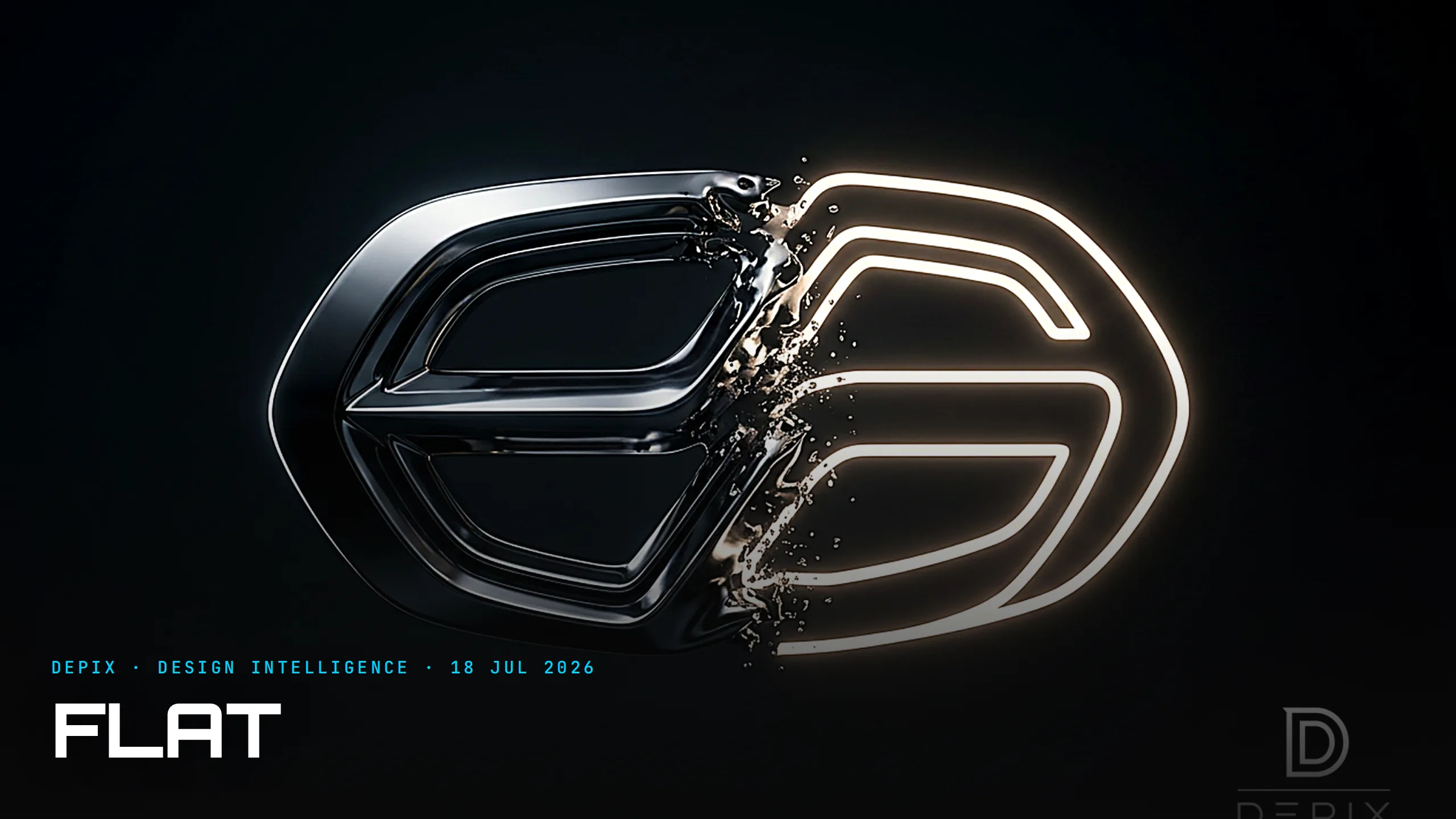
Flat: What Car Brands Gained and Lost When They Flattened Their Badges

Ta-Dum: Why a Two-Second Sound Can Be a Brand's Fastest, Most Defensible Asset