
When the battery becomes the body, the designer loses the floor
For a decade the EV floor was the industrial designer's quiet luxury: a flat, sealed slab you could style, re-package and revise almost independently of the cells bolted beneath it. Cell-to-body and cell-to-chassis construction is deleting that luxury, and the industry is cheering.
The pitch is irresistible on a spreadsheet. Leapmotor's cell-to-chassis, on the D99 MPV it launched in China on 25 June, claims a 25% stiffer body, 14.5% more battery volume, 20% fewer parts and 15 kg saved by turning the pack lid into the cabin floor. BYD's Blade cell-to-body fuses the pack's upper shell straight into the underbody, and its cell-to-chassis architecture is now rolling into buses and global platforms. Tesla, Xpeng and Zeekr have shipped their own versions of the same idea. Fewer parts, faster line, lighter car, longer range. What's not to like?
What's not to like is that the battery has stopped being a component and become the architecture. And architecture is the one thing a designer is supposed to be able to argue with.
In a conventional car the floor is a negotiation. Packaging wants it low, crash wants it stiff, styling wants a certain sill height, the battery team wants its real estate. Because the pack is a discrete box, each side can move slightly without re-opening everyone else's homework. Cell-to-body collapses that negotiation into a single, welded, un-revisable part. The cell format, the crash structure, the seating height, the sill line, the torsional stiffness and the styling proportion all become the same piece of metal, frozen together three years before job one.
That has three consequences design leadership keeps underestimating.
First, variants get expensive in exactly the place they used to be cheap. The floor was where you spun a saloon into an estate, a five-seat into a seven, a base trim into a flagship. When the floor is the battery, a longer wheelbase or a taller roof is no longer a body change; it is a new crash case and a new pack. Modularity migrates from the studio to the cell chemistry, where designers have no vote.
Second, the facelift dies young. Mid-cycle refreshes have always been where design quietly fixes what the launch got wrong. You cannot facelift a structural battery. The proportion you shipped is the proportion you are stuck with for the pack's entire homologated life.
Third, and least discussed: repair and reuse. Only four makers have shipped cell-to-body or cell-to-chassis so far, and the reason is not only capability. A stone-cracked floor or a mildly deformed pack now threatens the whole shell. "Modular service zones" and "replaceable sections" are being promised precisely because the base idea makes a car harder to fix and harder to take apart at end of life. A build method sold as clean subtraction quietly adds a repairability and circularity bill that never appears on the render.
None of this makes cell-to-body wrong. It makes it a decision, a huge and irreversible one, that is being taken as a manufacturing optimisation and inherited as a design constraint. The 20% parts saving is real. So is the fact that you have just spent the designer's most valuable degree of freedom to get it.
The lesson for design leadership sits upstream, not downstream. Once construction fuses the pack, the body and the styling into one part, the only cheap place left to explore proportion, stance, packaging and variant strategy is before any of it is committed, in the concept phase, where changing the floor still costs a decision instead of a tooling programme. The makers who win cell-to-body will not be the ones with the stiffest pack. They will be the ones who did the arguing while the floor was still an idea.
Sources
- ●Leapmotor launches D99 MPV in China with cell-to-chassis (carnewschina, 25 Jun 2026)
- ●BYD's cell-to-chassis architecture powers global transit electrification shift (carnewschina, 30 Jan 2026)
- ●A review of cell-to-body (CTB) battery-structure integration design for electric vehicles (Frontiers in Mechanical Engineering, 2026)
- ●Only Tesla, BYD, Leapmotor and Xpeng have released CTC/CTB technology (Collision Repair Mag / ResearchAndMarkets, 2024)
- ●Cell-to-Body (CTB) battery technology: how it's reshaping electric vehicles (Highstar)

The AI inspecting your car mistakes new design for a defect.
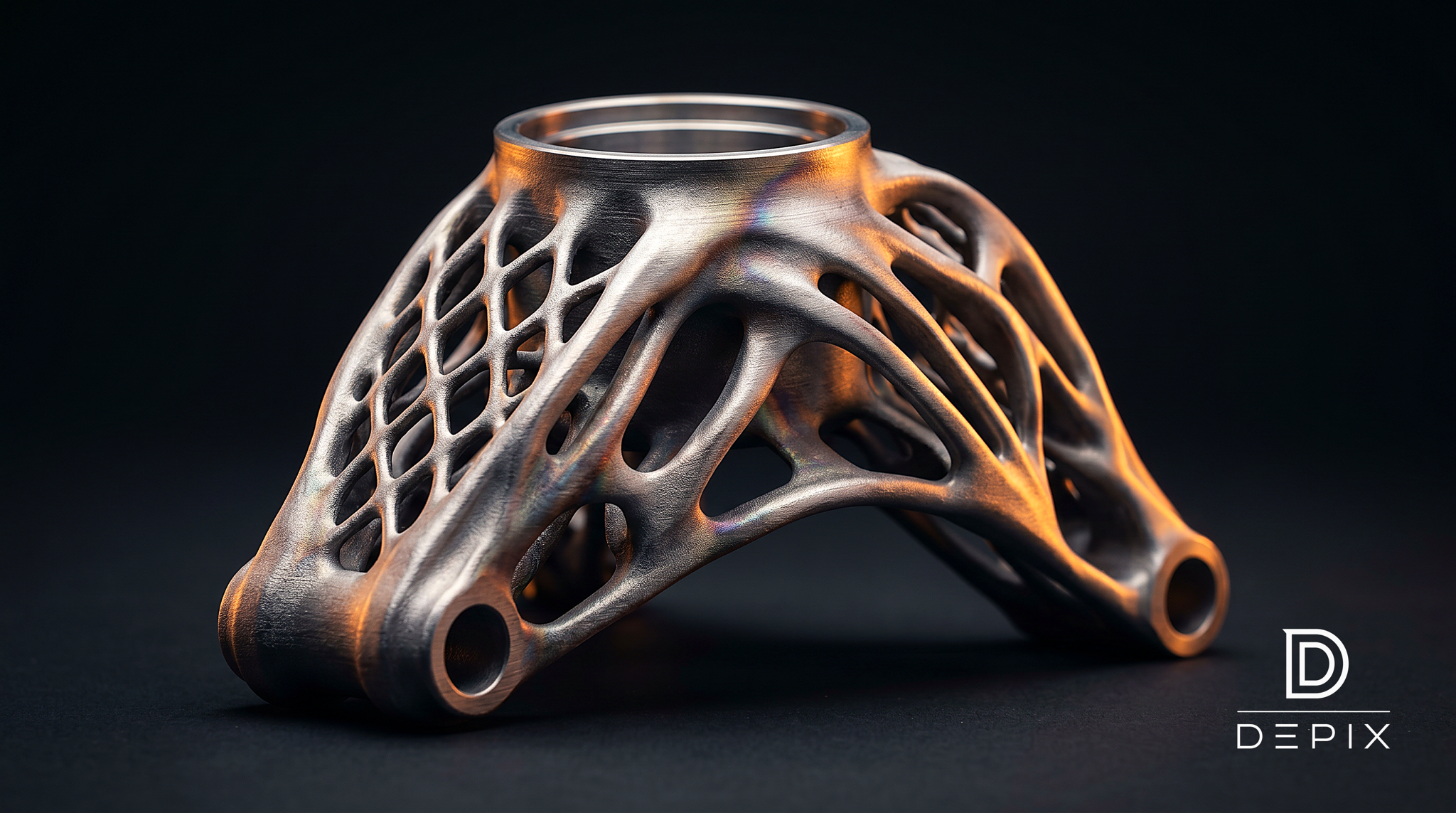
Nobody drew Bugatti's chassis. An algorithm grew it.
