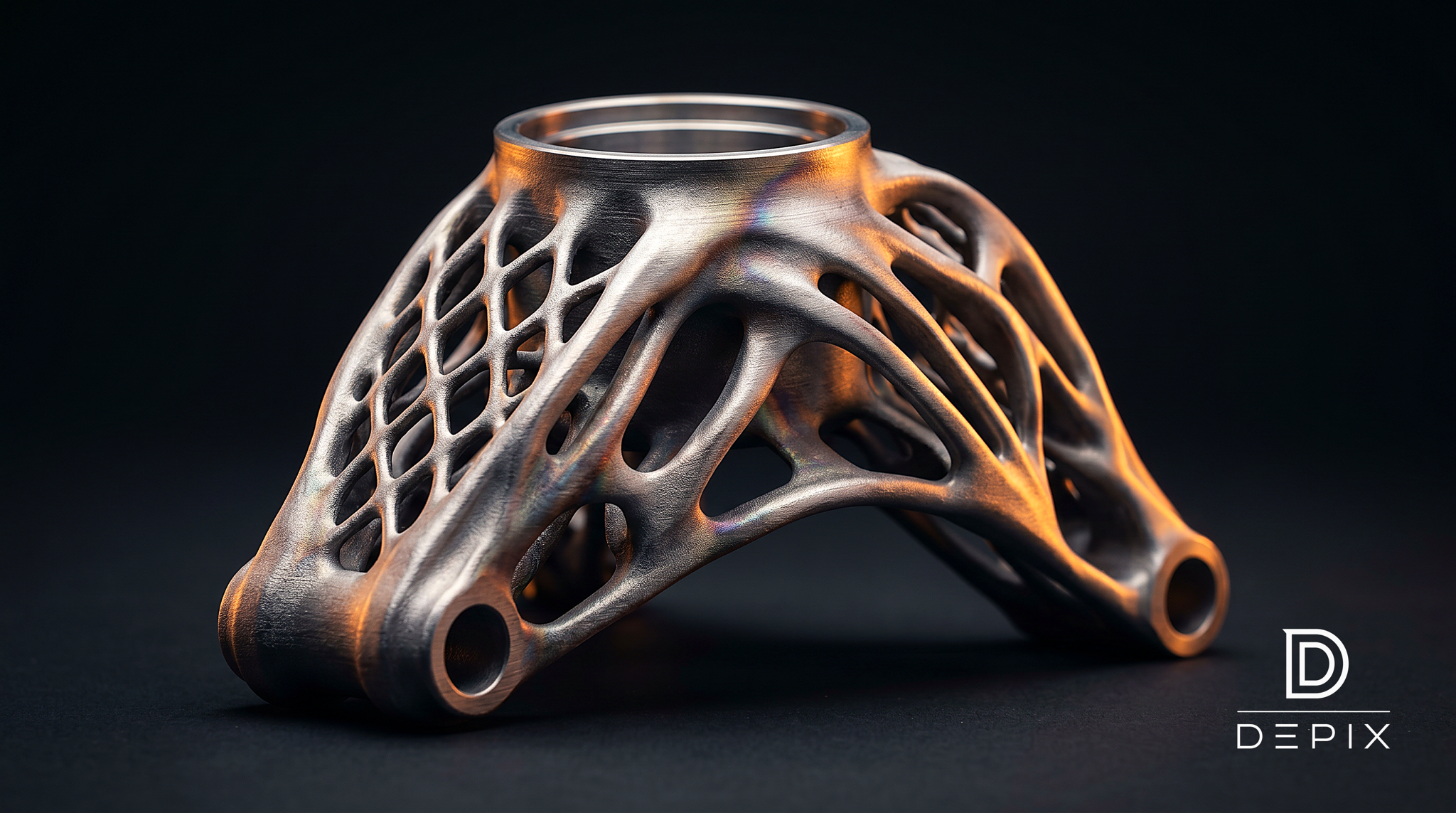
The AI inspecting your car mistakes new design for a defect.
The factory grew a new pair of eyes this year, and nobody told the design studio what they were trained to hate.
Audi confirmed that two AI use cases in its Neckarsulm paint shop — dosage optimisation in pretreatment and anomaly detection in cathodic dip coating — move from pilot into series production in the second quarter of 2026. Its ProcessGuardAI platform reads live machine and sensor data, flags anomalies as they form rather than after they propagate, and is being scaled across Volkswagen Group plants. At Automate 2026 in Chicago in late June, visual AI inspection for automotive bodies was one of the headline debuts. This is real, it works, and it is quietly rewriting who gets a vote on how a car looks.
Here is the mechanism almost no one in the studio has read the fine print on. The most deployable in-line inspection systems are not trained on catalogues of defects. They are trained on normal — a few hundred conforming images — from which the model learns a density map of what a correct panel, weld, or coating looks like. Then it flags anything that falls outside that learned distribution. Vision Systems Design is blunt about why: supervised models "generalise poorly to defect types not represented in training data," so the industry pivoted to learning the shape of good and treating everything else as suspect. That is a brilliant answer to catching the defect you never anticipated. It is also, by construction, a machine that has been taught to distrust the unfamiliar.
Now put a genuinely new design in front of it. A first-of-its-kind surface transition. A crease that throws a reflection no previous body panel threw. A matte-metallic finish, a micro-texture, a colour-shift lacquer the line has never coated before. To the inspector, novelty and defect are the same event: a reading outside the distribution of everything that came before. The system cannot tell "the designer meant this" from "something went wrong." It only knows this panel does not look like the panels it learned from.
So the pressure runs the wrong way. The more original the design, the more false rejects it throws, the more the line stops, the more retraining and re-baselining it demands, and the louder the manufacturing case becomes for softening the surface into something the model already accepts. The inspector becomes an unelected member of the design review — one that votes, every few seconds, for the statistically familiar. Left unmanaged, an AI trained on the cars that already exist becomes a gravitational pull toward more of the same. The factory's eyes start editing the studio's taste, and no one signed off on that authority.
None of this is an argument against the technology. Line accuracy near 99.5% at over a thousand units a minute, catching contamination and out-of-tolerance events a human would miss on the tenth hour of a shift — that is a genuine gain, and the rework it prevents is real money and real quality. The honest point is narrower and sharper: "trained on normal" carries a design-politics side effect that nobody currently staffs. The threshold that separates defect from deliberate is not a QA setting. It is a design decision, and right now it is being made downstream, after the surface is frozen, by whoever tunes the model's sensitivity.
That is precisely the decision the concept phase should own. Before a form is committed, the useful question is no longer only "is this beautiful, is this feasible, will it pass crash and drag." It is also: will the factory read this as intended, or as an error? Which of these novel surfaces is the line prepared to recognise, and which will it fight for a year? That is answerable early — pressure-test the daring surface against how it will actually be seen, lit, coated, and judged, long before an inspection model has been baselined on the boring version. Inspectability of novelty belongs on the concept-phase checklist, next to stance and proportion.
The studios that win the next decade will not be the ones that surrender their most original ideas to keep the line quiet. They will be the ones that decide, up front, which risks are worth teaching the machine to accept — and design so that the factory's new eyes learn to see the future as intended, not as a fault.
Sources
- ●How Audi is building thinking factories using AI quality control, robotics and digital tools across the VW Group
- ●AI inspection systems in automotive manufacturing: smart factory quality for EV, hybrid and ICE production
- ●Audi scales up deployment of artificial intelligence in production (Volkswagen Group)
- ●Anomaly-detection-based AI visual inspection: architecture, implementation and industrial deployment (Vision Systems Design)
- ●Visual AI inspection for automotive manufacturers debuts at Automate 2026 (AI Online)

Europe now makes designers draw the car coming apart.

When the battery becomes the body, the designer loses the floor