The Trunk in the Front
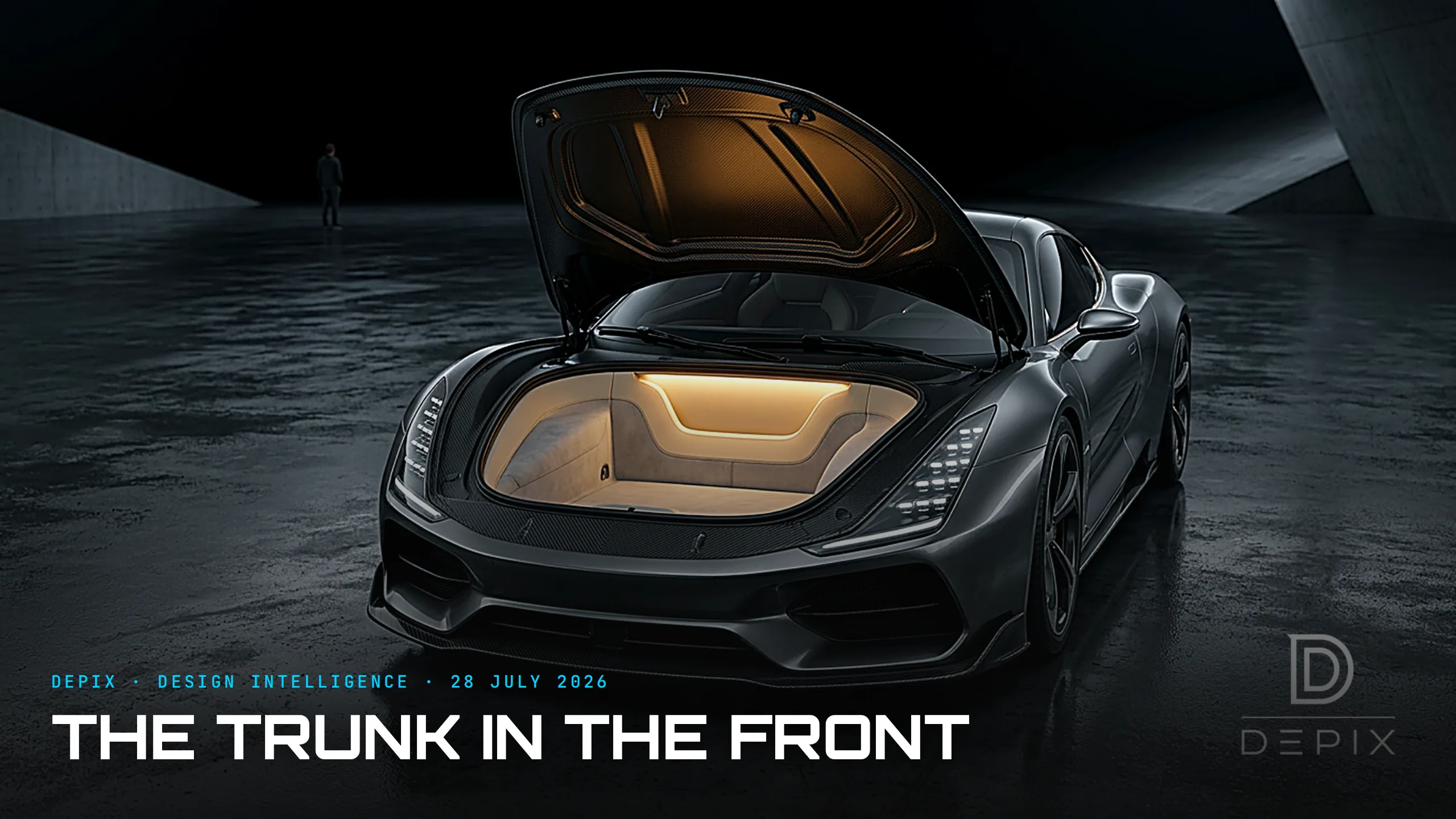
Open the bonnet of an electric car and one of two things happens. Either you find a generous, usable box - somewhere to put a bag, a charging cable, sometimes a cooler - or you find a shallow plastic tray barely big enough for the cable itself. The frunk, the "front trunk" where an engine used to live, has become one of the most quietly revealing features on a car. It looks like a free bonus. It is nothing of the sort.
The frunk exists because an EV does not need a metal block up front. But whether you actually get one - and how big - is decided long before styling, in the choice of platform. Most modern EVs ride on a skateboard platform: a flat battery slab between the axles with motors at the ends. Cars designed that way from scratch, on dedicated EV platforms like Hyundai's E-GMP, GM's Ultium or VW's MEB, tend to free up real space under the hood. Cars that borrow combustion underpinnings usually do not - the old engine bay fills with inverters, cooling and hardware, and the frunk shrinks to a token.
So the frunk became a tell. Show someone the space under an EV's hood and they can often guess whether the car was born electric or converted from a petrol design - a concept-phase decision made years earlier, now legible to anyone who lifts the bonnet. But the interesting part is the exceptions, because they prove the platform is not destiny; the decision is.
Consider the Ford F-150 Lightning. It shares its bones with the combustion F-150 - by the rule of thumb, it should have almost no frunk. Instead Ford engineered the Mega Power Frunk: a 14.1-cubic-foot, 400-litre front trunk with a 400-pound payload, a drain plug, four power outlets and two USB ports, big enough for two golf bags and able to run a slow cooker at a tailgate. On shared underpinnings, Ford decided early that front storage would be a headline feature, and engineered the architecture to deliver it. The rule of thumb held for everyone who treated the frunk as an afterthought; Ford broke it by treating it as a reason.
Now consider the opposite. The Hyundai Ioniq 5 sits on the dedicated, purpose-built E-GMP skateboard - exactly the architecture that should give a big frunk. Yet in North America its frunk is a tiny 0.85 cubic feet, barely a glovebox in the nose, because the all-wheel-drive versions put a motor up there. The rear-wheel-drive cars, with no front motor, get a much larger 57-litre tub. Same platform, wildly different frunk - because the frunk is downstream of yet another concept-phase choice: where you put the motors.
That is the whole lesson, and it reaches well beyond cars. The frunk is not a feature you add; it is a volume that survives a chain of earlier decisions. Dedicated platform or converted. One motor or two. Front-drive or rear. Storage prioritised or sacrificed. By the time a stylist is drawing the bonnet, the frunk's fate is already sealed by choices made in rooms the stylist was never in. You cannot design a great frunk in late; you can only inherit the space the architecture left you.
Which is why the frunk is such a good teacher for anyone who builds anything. The most valuable capacities of a product - the ones users love and competitors struggle to copy - are usually not features bolted on at the end. They are affordances that fall out of deep, early architectural decisions: the flat floor, the low centre of gravity, the storage in the nose. Ford's Mega Power Frunk is beloved not because someone styled it, but because someone fought for it at the platform stage. The token trays exist not because engineers were lazy, but because, at the concept phase, something else won.
So the next time you lift the bonnet of an electric car, read it as a document. A big, thoughtful frunk tells you a team decided, early and deliberately, that this space mattered - and built the whole architecture to protect it. A shallow tray tells you it lost the argument. The frunk is small, but it is honest: it shows you what a car was really designed to be, long before anyone chose its colour.
Sources:
- ●https://www.driveelectrictn.org/10-electric-vehicles-with-the-coolest-frunks/
- ●https://www.capitalone.com/cars/learn/finding-the-right-car/what-is-a-frunk/1270
- ●https://www.capitalone.com/cars/learn/finding-the-right-car/what-is-a-skateboard-platform/1929
- ●https://zecar.com/reviews/dedicated-ev-platforms-everything-you-need-to-know
- ●https://www.makeuseof.com/why-is-bespoke-ev-platform-better/
- ●https://cars.usnews.com/cars-trucks/features/what-is-the-ev-skateboard-chassis
- ●https://tractionlife.com/2022-f-150-lightning-frunk-front-storage-has-advantages/
- ●https://www.ford.com/support/how-tos/more-vehicle-topics/storage-and-trunk/what-is-a-mega-power-frunk/
- ●https://www.newsweek.com/ford-f-150-lightnings-mega-power-frunk-opens-new-pickup-truck-storage-opportunities-1649692
- ●https://insideevs.com/features/739794/electric-car-platforms-guide/
- ●https://www.edmunds.com/car-news/hyundai-ioniq-5-xrt-cargo-test.html
- ●https://www.gearpatrol.com/cars/g35832149/electric-vehicle-platforms/