The Handle That Hides
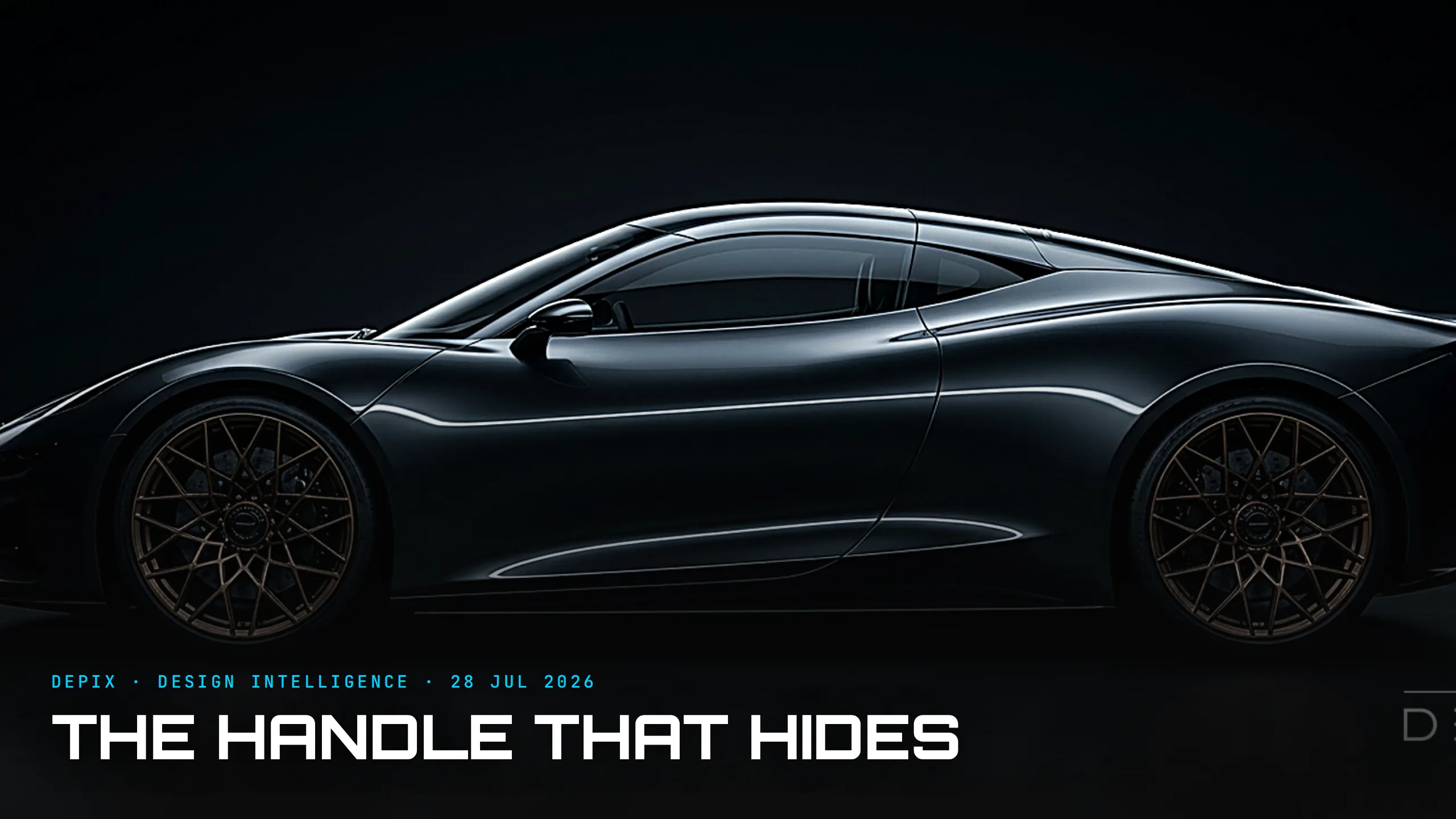
Run your hand along the door of almost any new electric car and you will not find a handle. It is there - folded flush into the door skin, or waiting to power out as you approach - but it has been designed to disappear. The flush door handle is one of the most copied design moves of the last decade: Tesla made it a signature, and nearly every premium marque followed, because a door without a visible handle is a cleaner surface and a slightly slicker car.
The engineering case is real but small. Retracting and flush handles reduce aerodynamic drag by somewhere between a fraction of a percent and about 1.5%, trim wind noise, and add a few miles of range over a long trip - one figure cited by handle makers is roughly 0.6 kWh saved over 62 miles. On a 300-mile EV that is two to four extra miles. Designers love them for a second reason: a flush handle lets the flank read as one uninterrupted, sculptural surface, the same instinct that drives hidden shut lines and frameless glass. It photographs beautifully.
Here is the problem. A door handle is not a styling detail; it is the interface to a non-negotiable human requirement - you must be able to open a door, always. Not usually. Always: with a dead battery, after a crash, in an ice storm, by a frightened passenger in the back, or by a first responder who has never seen this exact car before. An electrically actuated handle introduces a failure mode a mechanical one never had. When the 12-volt battery dies or a collision cuts power, some electric handles will not release, and people have been trapped inside - in the worst cases, rescuers have broken windows to free passengers, including children.
Regulators have noticed. NHTSA has opened a widening federal probe into flush electric door handles and the risk they trap occupants, and has begun drafting new egress rules to guarantee people can get out after a power loss. China's ministry went further, moving to ban fully-flush retractable handles from 2027 unless they include a mechanical backup. Even Tesla's own design chief has said the company will change the design. The clean surface, it turns out, has a cost that never showed up in the wind tunnel or the press photo.
Every one of these cars does have a manual release - regulations require it - but that is exactly where the design failure lives. The backup is usually hidden, unlabelled and unintuitive: a lever buried in a door pocket, a tab under the window switch, a cable behind a trim panel you would never find in a panic and in the dark. The mechanical release was treated as an edge case to be tucked away, not as a first-class part of the design. A flush-handle patent will describe the elegant retracting mechanism in loving detail; the "what happens when it all dies" path is the afterthought. That inversion - the everyday case beautifully resolved, the emergency case hidden - is the whole story.
And it is a concept-phase story. Whether a car uses a mechanical or an electronic handle, how the door module is packaged, where the emergency release sits and whether a stranger could find it in five seconds - all of that is decided when the door architecture is laid out, long before the car is a car. By the time it ships, the trade is frozen in tooling and wiring. You cannot retrofit discoverability into a release cable that was routed behind a panel two years earlier. The engineering of the handle is set at the same moment as the surfacing it serves.
So the flush handle is a near-perfect case study in what goes wrong when a surface is allowed to win. It optimises for the photograph - the uninterrupted flank, the aero number, the feeling of a car from the future - over the single worst moment in the car's life, the one time someone truly needs the door to open and it does not. Those two things were traded against each other at the concept phase, quietly, by people looking at a beautiful render rather than at a passenger in the back seat after a crash.
The lesson is not "flush handles are bad." A flush handle with an obvious, instantly findable mechanical release is a fine design. The lesson is order of operations: design the always-works path first, at concept, as a first-class requirement, and let the surface be as clean as that allows - not the other way round. The most sophisticated thing you can do with a door handle is make it disappear. The most important thing you can do is make sure that, on the worst day, anyone can still find it.
Sources:
- ●https://www.torquenews.com/18004/here-are-surprising-good-reasons-why-electric-vehicles-use-flush-door-handles
- ●https://evkx.net/technology/doors/doorhandles/
- ●https://www.slashgear.com/2104014/why-china-is-banning-retractable-ev-door-handles/
- ●https://www.cnbc.com/2025/11/03/tesla-door-handle-safety-issues.html
- ●https://www.nasdaq.com/articles/us-expands-tesla-probe-over-door-handles-may-trap-occupants
- ●https://techcrunch.com/2026/07/23/teslas-door-handles-may-spur-new-u-s-safety-rules/
- ●https://www.autoblog.com/news/china-is-banning-tesla-style-retractable-door-handles-over-safety-concerns
- ●https://www.thestreet.com/automotive/tesla-forced-to-kill-iconic-design-feature-over-new-safety-rules
- ●https://www.consumerreports.org/cars/car-safety/how-to-escape-your-car-if-the-electronic-door-release-fails-a8152892189/
- ●https://image-ppubs.uspto.gov/dirsearch-public/print/downloadPdf/12503891
- ●https://www.etags.com/blog/its-all-in-the-details-ev-door-handles/
- ●https://visualfoodie.com/the-engineering-of-a-car-flush-door-handle/