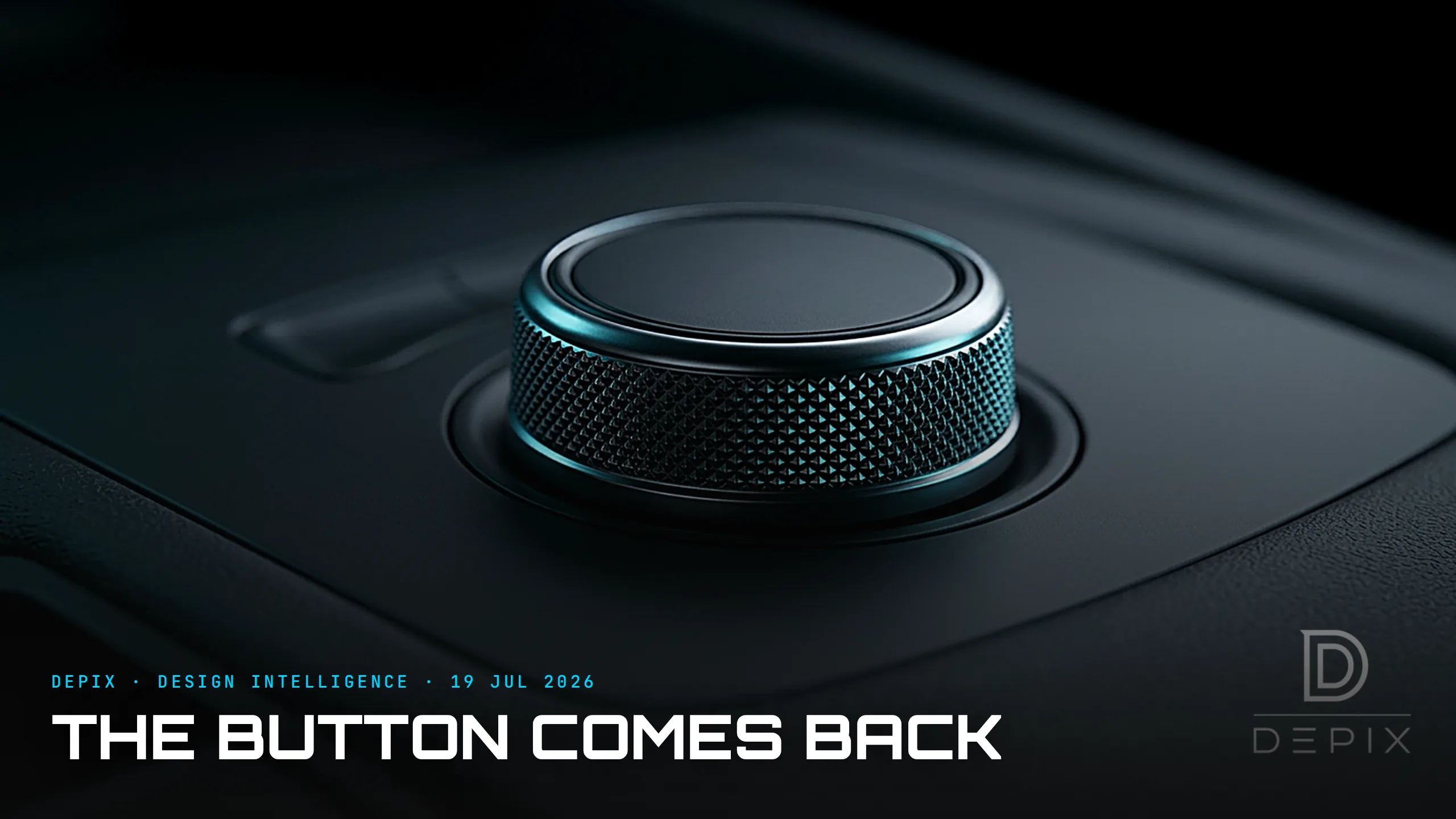
The Button Comes Back: Why the Industry Is Un-Deleting the Touchscreen
For a decade the touchscreen was sold as the future of the car interior. It was clean, it was modern, it looked like a phone, and it was cheap: one glass panel could replace three dozen switches, and the layout could be changed with a software update instead of new tooling. Every incentive in the studio and the spreadsheet pointed the same way — delete the buttons. So the industry did, almost universally, and called it progress.
In 2026 it is quietly reversing. The trigger is regulation: from January, Euro NCAP will require physical controls for five basic functions — indicators, hazard lights, horn, wipers and the emergency call — before a car can earn a five-star safety rating. Carwow and S&P Global both frame it the same way: touch-only cabins now cost points. Because around ninety percent of European buyers check NCAP before they buy, this is not advice — it is an ultimatum, and The Autopian argues other markets should copy it.
The manufacturers were already turning. Volkswagen has committed to restoring buttons for five vital systems after years of criticism; Hyundai has walked back to physical climate and audio knobs across the Tucson, Palisade and Santa Cruz; Porsche is doing the same. Jalopnik, the Atlanta Journal-Constitution and Automotive News all reach for the same phrase — "peak touchscreen" — and WebProNews ties the reversal directly to the safety data.
It is tempting to read this as nostalgia, a retreat from the future back to something comforting and old. It is the opposite. The button is coming back because deleting it was never a design decision — it was the avoidance of one.
Here is the contrarian point. A control has exactly one hard requirement: it must be operable without being looked at. Driving is a task that owns your eyes, so every second a control steals from the road is the whole cost of that control. A knob answers this natively. It has a fixed location your hand finds by feel, a shape that tells your fingers what it does, and a detent that confirms the action without a glance — a task that takes two seconds on a knob can stretch to eight or ten seconds on a screen, and even two seconds of eyes-off doubles crash risk. A flat glass panel has none of that. Every target is a moving, featureless region you must look at to hit. The touchscreen optimised for the one moment the car is stationary — the showroom, the unboxing, the photograph — and pessimised for the millions of moments it is moving.
That is a concept-phase failure, and it is instructive precisely because every local incentive pushed toward it. Cheaper to build, faster to change, cleaner in renders, more modern in a spec sheet. The one thing the screen could not do — be used blind — was the one thing the control existed for, and that requirement is invisible on a stationary studio buck. You only feel its absence at sixty miles an hour, which is exactly where the designer isn't. The discipline the industry skipped was to decide what a control is for before deciding what it looks like, and to weight the used-blind requirement above the looks-clean one when they conflict.
The mature answer emerging now is not "screens bad, buttons good." It is a deliberate division of labour: the screen keeps what genuinely benefits from a screen — maps, lists, deep configuration you do while parked — and the frequent, eyes-on-road functions get a physical home your hand can find. The knob returns not as decoration but as the correct tool for a specific human factor, chosen on purpose rather than deleted by default.
This is the lesson we keep coming back to at Depix. The most expensive mistakes are not the ugly ones; they are the ones where every incentive on the whiteboard agrees, and the single requirement that actually matters is the one you cannot see from where you are standing. Deciding what a thing is for — and protecting that against everything cheaper and cleaner — is the concept-phase work. The button's return is what it looks like when an industry relearns that the hard way.
Sources:
- ●ETSC — Cars will need buttons for a 5-star Euro NCAP rating
- ●Carwow — Physical buttons beat touchscreens in Euro NCAP's 2026 rules
- ●S&P Global — Euro NCAP tightens 2026 norms, requires physical buttons
- ●Euro Weekly News — Euro NCAP brings back car buttons by 2026
- ●The Autopian — Europe is requiring physical buttons for top safety marks
- ●Autoblog — Which manufacturers are bringing back physical buttons
- ●SlashGear — Major automakers ditching touchscreen dashboards
- ●Autonocion — VW, Porsche and Hyundai bringing buttons back
- ●Jalopnik — Car brands rethinking touchscreens, bringing back buttons
- ●AJC — Peak touchscreen? Why automakers are bringing back buttons
- ●Automotive News (via Off-Road.com) — Touchscreen backlash forces a rethink
- ●WebProNews — Automakers revive physical buttons amid safety backlash
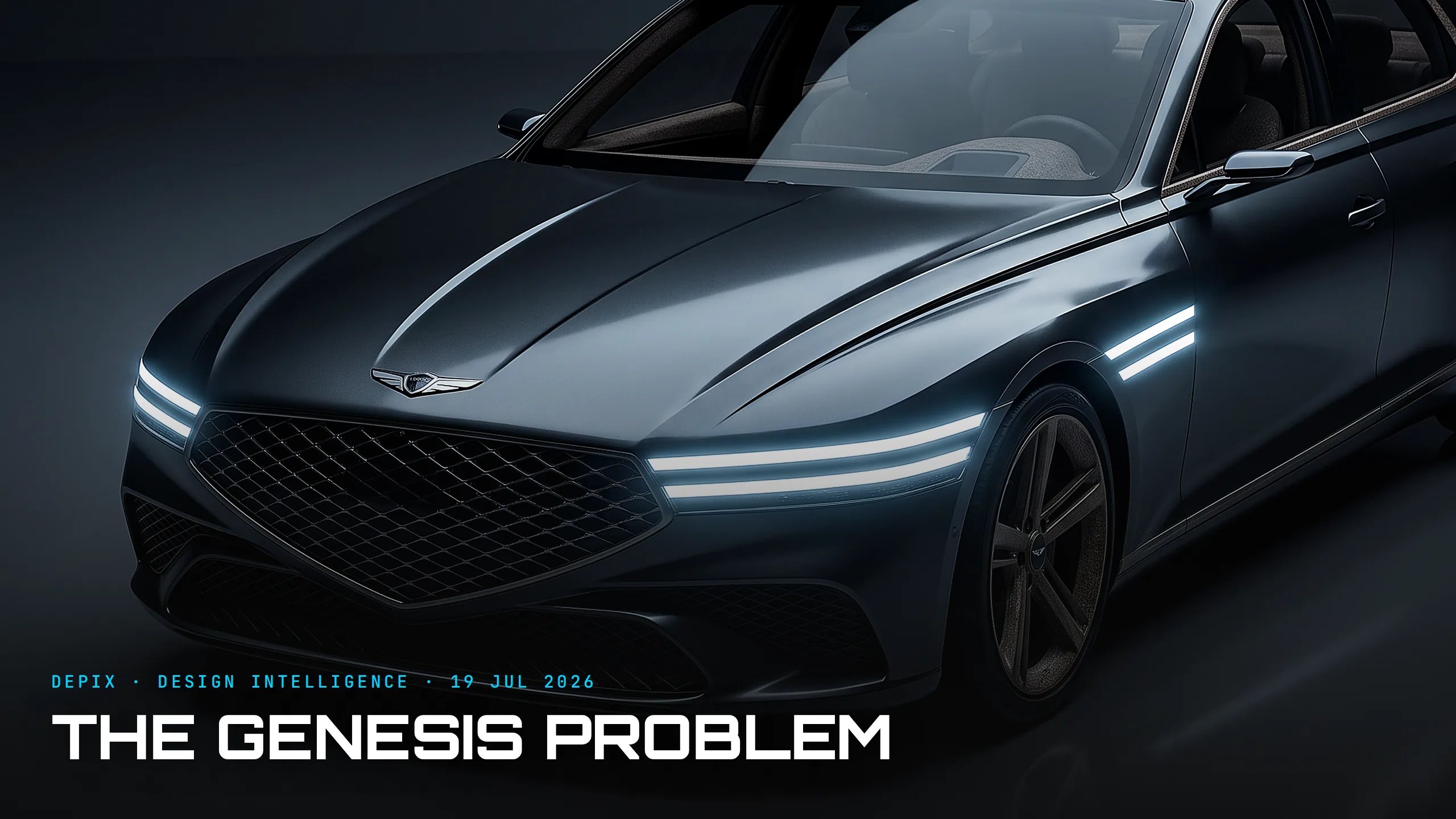
The Genesis Problem: How You Build a Design Language From Scratch
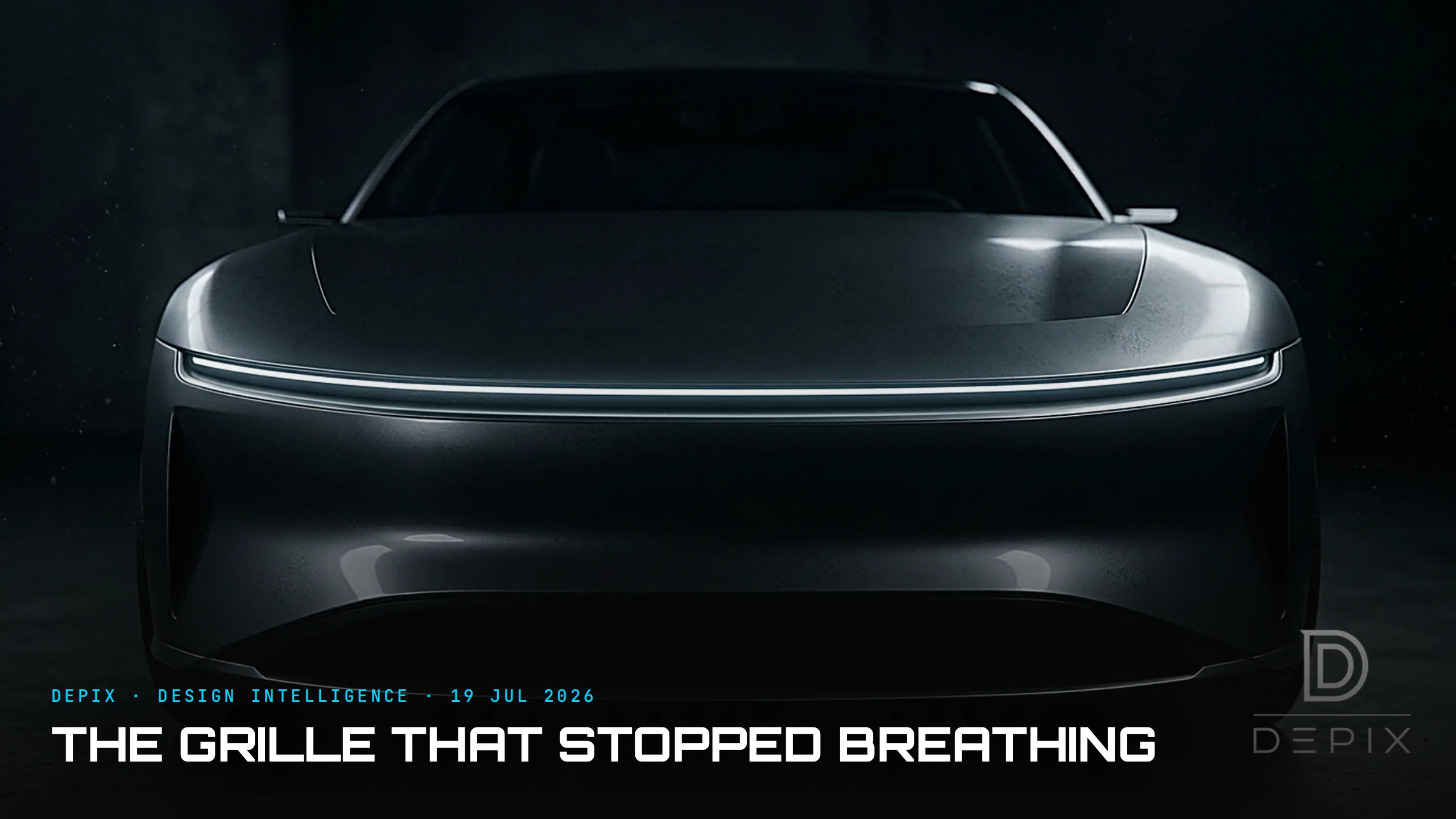
Downsizing the Face: What the Grille Means Now That It Has Nothing to Cool


