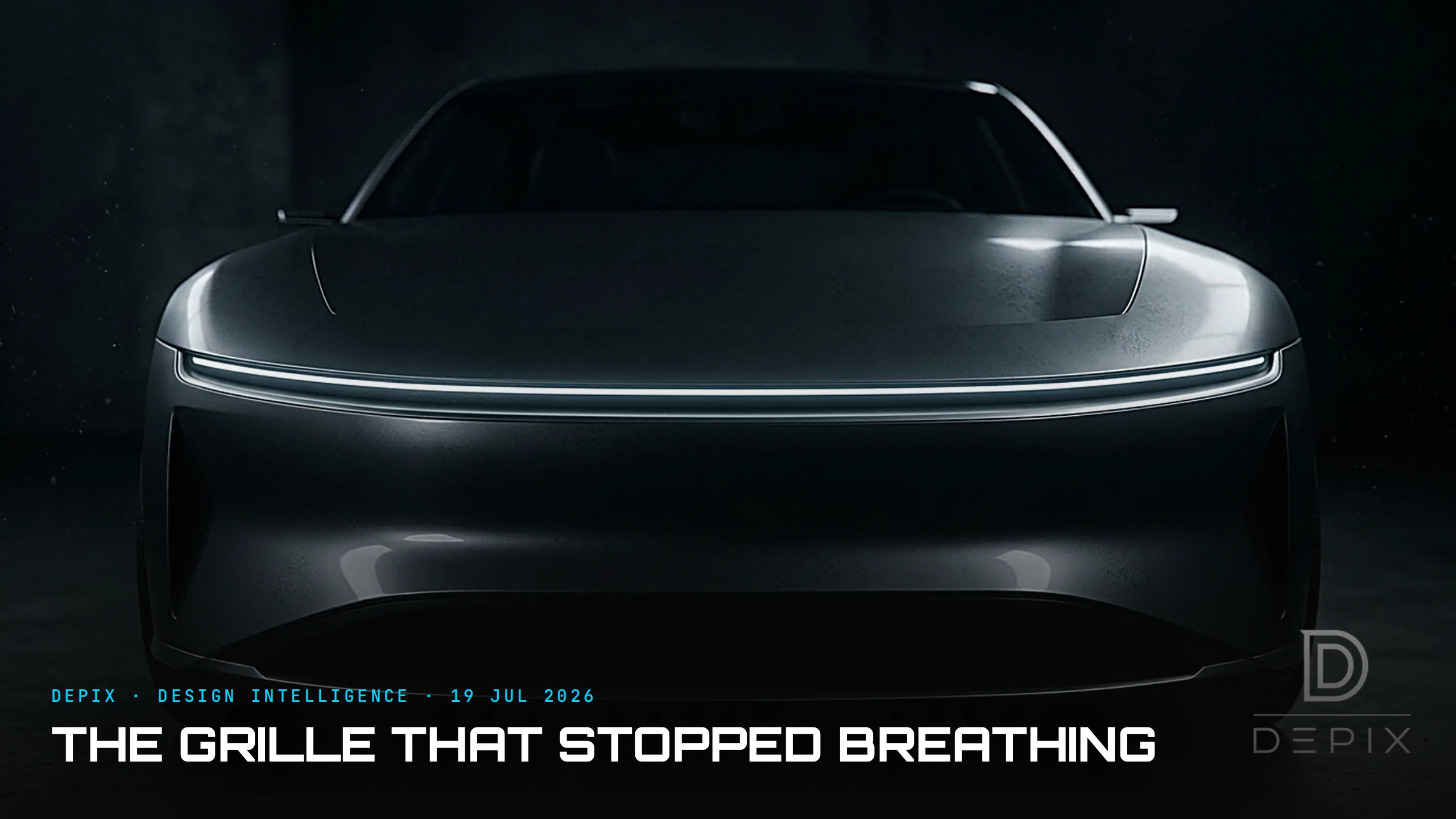
Downsizing the Face: What the Grille Means Now That It Has Nothing to Cool
For a century the grille had an alibi. The slats up front were there to feed air to a radiator, and whatever character they carried — a temple, a kidney, a seven-slot mouth — rode along on top of a genuine engineering need. The engine had to breathe, so the car had a mouth, and designers made that mouth mean something. The function paid for the identity.
Electric powertrains quietly cancelled that arrangement. A battery-electric car needs a fraction of the frontal airflow a combustion engine demands — enough to cool a pack and some power electronics, not a furnace — and most of what it does need can be metered by active grille shutters that stay closed most of the time. Sealing the front end can cut aerodynamic drag by up to eight percent, which on an EV converts directly into range; shutter systems have evolved specifically to trade cooling against drag. The engineering, for once, wants a blank face. So the honest EV front is a smooth panel — and the industry has spent five years discovering it cannot bring itself to build one.
Instead we got the fake grille: a solid, body-coloured or blacked-out panel shaped exactly like the aperture that is no longer there. Both Automotive News and Gulf News have documented designers wrestling with the same paradox: the grille is the most recognisable element of a car's face), so deleting it means deleting the brand's most portable signature. Nissan reinstated a cosmetic grille after cool reception to its grille-less EVs. The mouth stayed even after the lungs left.
This is where it stops being an engineering story and becomes a concept-phase one. Once the grille cools nothing, it is pure semiotics — a face with no reason to have a mouth — and every decision about it is exposed as a naked identity choice with no functional cover. That is uncomfortable, and it splits the industry cleanly in two.
One camp doubles down on the mouth. BMW enlarged its kidneys to the edge of parody, and design chief Adrian van Hooydonk has refused to apologise, noting the backlash never showed up in the sales figures and that some markets actively want a big face. Even as BMW moves past its largest-grille era with Neue Klasse, it keeps the kidney as a lit graphic — and has hinted not every model will shrink it. Here the grille is treated as equity too valuable to retire, so it is preserved as a symbol long after its job is gone.
The other camp abandons the mouth and moves the identity up into the eyes. Hyundai's design leadership has been explicit that signature lighting now dominates the face where the grille used to, and the brand's Power of Pixels campaign makes the point bluntly: none of the Ioniq cars have a grille, the consistency is the pixel lamp — when you see a pixel lamp, it's a Hyundai. Kia converted the old grille zone into an illuminated Digital Tiger Face, a lit panel that communicates rather than breathes. Illuminated branding — the lit logo, the light-bar, the glowing signature — is the new grille, and it works precisely because light needs no aperture.
Both camps are answering the same concept-phase question, and it is not "what shape should the grille be?" It is "what did the grille actually mean, and where does that meaning live now that the function is gone?" For a brand whose identity was carried by an aperture, the honest answer is often uncomfortable: the recognisable thing was never the hole, it was the proportion, the width, the attitude of the face — and those can be rebuilt in a solid panel or a strip of light. For a brand that mistakes the slats themselves for the identity, the temptation is to keep stamping a mouth onto a car that no longer eats.
This is the discipline we keep returning to at Depix. The moment a feature loses its function is the moment you find out whether it was ever design or just decoration wearing an engineering excuse. A grille that has nothing to cool is a perfect test: strip away the alibi and what remains is either a genuine, portable brand signature or a hole where a habit used to be. Deciding which — before the clay is cut — is the whole job.
Sources:
- ●Jalopnik — Why Do All These Electric Cars Have Grilles?
- ●Automotive News — EV designers are seeing grilles in a whole new way
- ●Gulf News — How EV designers are reimagining iconic grilles
- ●Wikipedia — Grille (car))
- ●Valeo — Active Grille Shutters
- ●OPmobility — Active grille shutter
- ●SAE — Evolution of Active Grille Shutters
- ●CarExpert — The grille debate: no design regrets at BMW
- ●The Drive — BMW Says China Was the Reason for Its Massive Grille Phase
- ●HotCars — BMW's Big Grille Era Ends
- ●Motor1 — BMW Design VP on giant grilles' future
- ●Carscoops — EVs Make Grilles Passe, Headlight Signatures Now Dominate
- ●Hyundai Motor Group — The Power of Pixels signature lighting
- ●GlobeNewswire — The Kia EV9 Revealed (Digital Tiger Face)
- ●Innotec Group — The power of illuminated branding
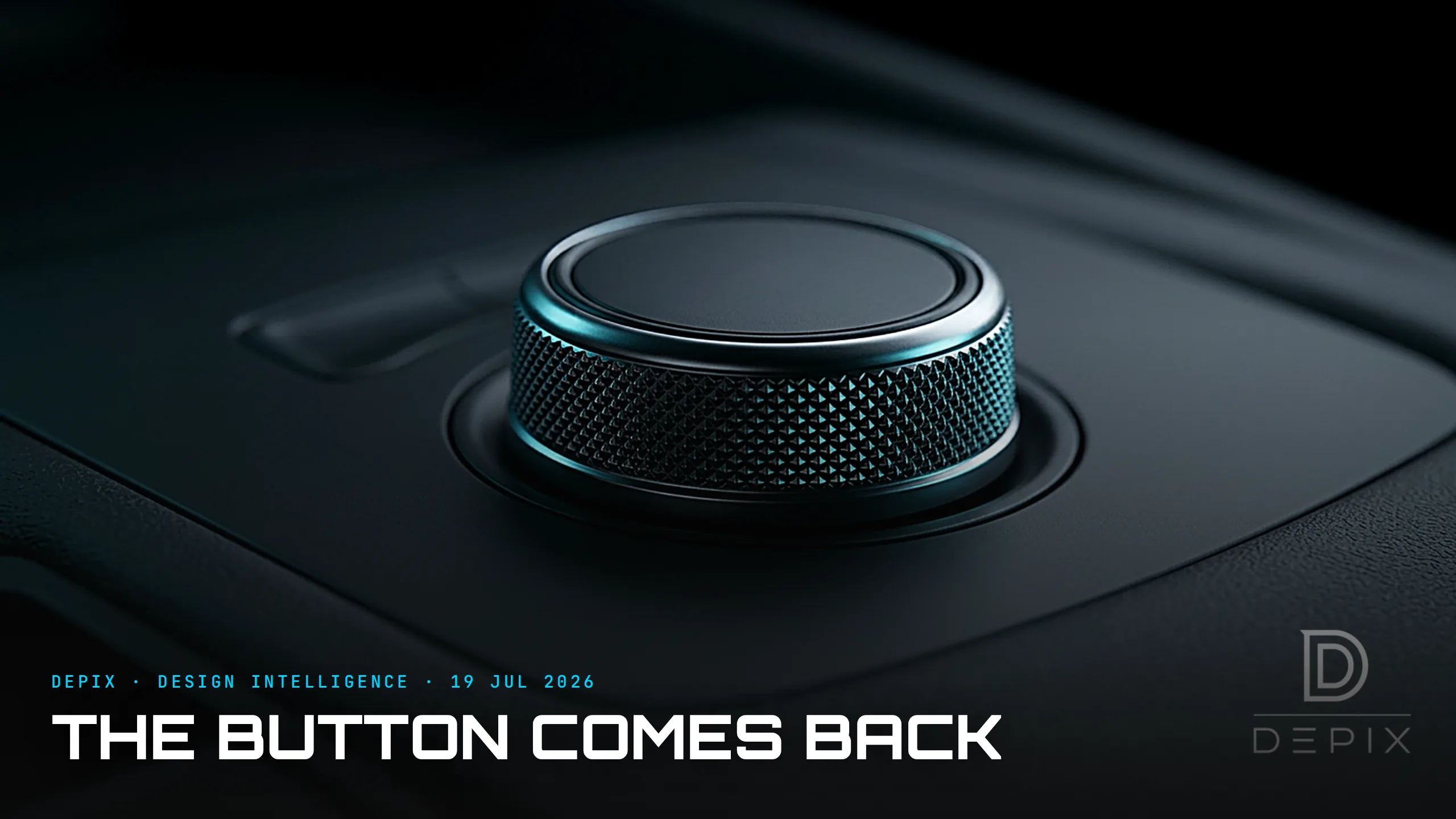
The Button Comes Back: Why the Industry Is Un-Deleting the Touchscreen
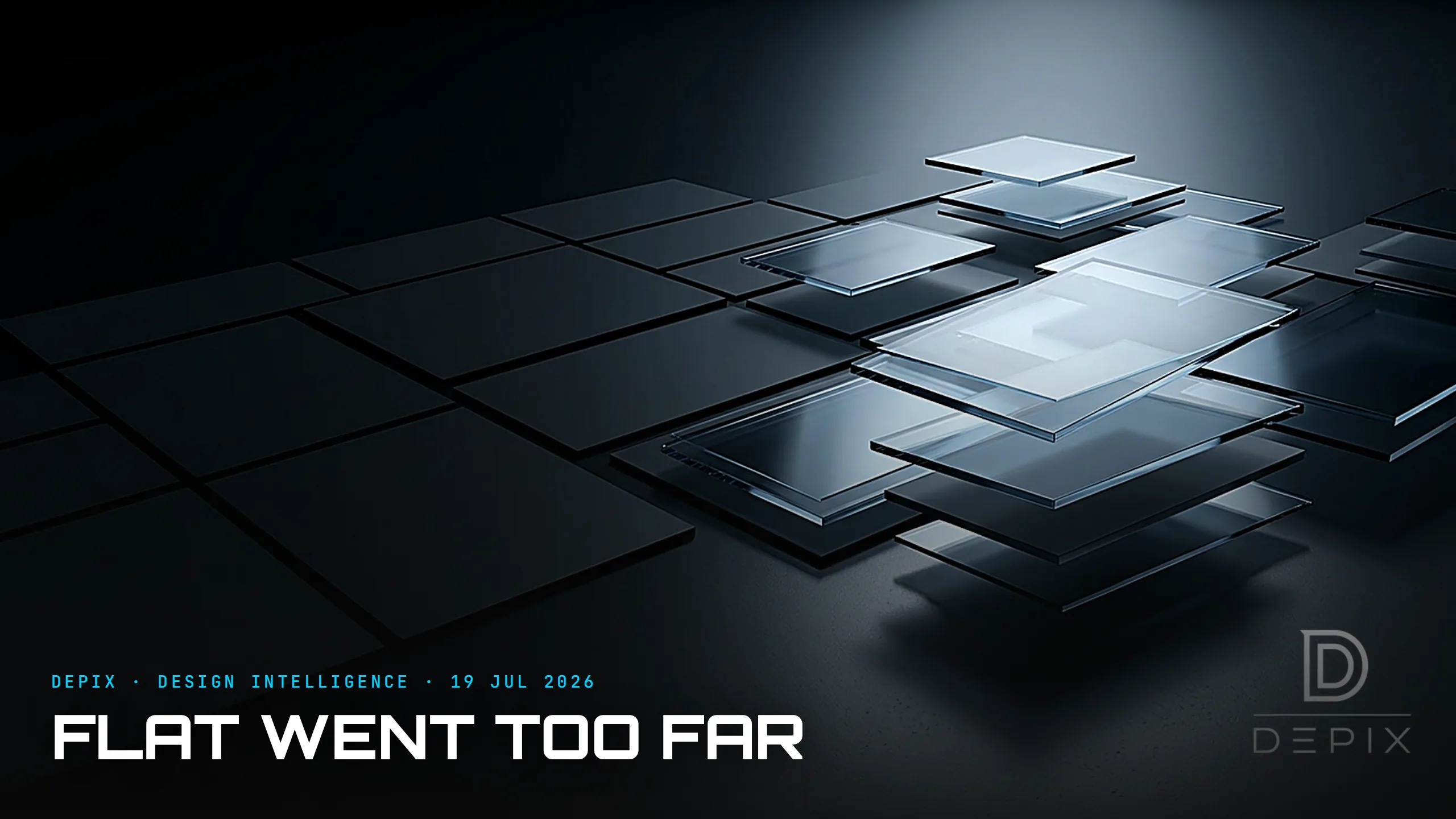
Flat Went Too Far: Why Depth Is Coming Back to the Screen


