
The Material Stopped Being a Constraint: What Lineapelle 2026 Reveals About Designing From Scratch
Twice a year, the design decisions behind next season's shoes, bags, car interiors and furniture are made not on a runway but at a trade fair outside Milan. When Lineapelle opens on 15 September 2026, more than 1,100 exhibitors will show the leathers, synthetics and components brands commit to 12–18 months before a finished product exists. It is one of the most consequential and least glamorous rooms in design — the place where the most upstream decision of all gets made: what is this thing going to be made of?
For essentially all of design history, that question came with a fixed menu. You chose a material from what nature and industry already produced — this leather, that steel, this weave — and then designed around its properties. The material was a constraint you accepted before the first sketch. What's quietly happening at Lineapelle 2026 is the slow collapse of that assumption.
The clearest example is mycelium — a leather-like material grown from the root structure of fungi. In 2026 it is no longer a lab curiosity. Mylo, grown on organic matter in a vertical farm in under two weeks, has appeared in Adidas and Lululemon products. MycoWorks' Reishi uses a "Fine Mycelium" process grown to custom specifications — Hermès developed a material called Sylvania with them. Natural Fiber Welding's MIRUM is entirely plastic-free. The market for these bio-based leathers is projected to reach $2 billion in 2026.
Almost everyone files this under sustainability — a way to do less harm. That framing misses the more radical design-intelligence story, and it hides in three words: grown to specification. For the first time, a designer isn't choosing a material off a shelf; they can state what it should be — its thickness, grain, flexibility, strength — and grow it to match. The material stops being a fixed constraint you design around and becomes a variable you design. Form no longer has to follow the available material; the material can follow the form.
That is a profound shift in where the hardest decision sits. When almost any property is achievable, "what should this material be?" stops being a sourcing question answered by a purchasing team and becomes a concept-phase question answered by taste and intent. The bottleneck moves upstream — into the exact moment that decides what a thing fundamentally is, long before anyone argues about how it looks.
It also inverts one of design's oldest disciplines. Great designers have always been praised for working with the honest nature of a material — the grain of real hide, the spring of steel, the way a wood wants to bend. When the material is engineered to order, that romance of constraint weakens and a harder freedom replaces it: anything is possible, so nothing is decided for you. The wave of research and industrial activity around grown materials is really the industrialisation of that freedom.
There's a catch, and it's the interesting part. These materials are still premium, not mass-market — which means, for now, the power to design your own material belongs to brands willing to decide, early and expensively, exactly what they want. The constraint didn't vanish; it moved. It stopped being "what materials exist?" and became "do you actually know what you want your material to be?" — a question only a clear concept can answer.
So the quiet lesson of a leather fair in Milan is much bigger than leather. When you can grow, print or synthesise a material to order, sourcing stops being the limit and intent becomes it. The most upstream decision in all of design — what a thing is made of — is being handed back to the concept phase. The brands that win the bio-materials era won't be the ones with access to the newest material. They'll be the ones who knew, at the very first sketch, exactly what they wanted it to do.
Sources:
- ●Lineapelle — International Leather Fair (Milan)
- ●Lineapelle September 2026 — dates & agenda
- ●Lineapelle Rho 2026 — 1,100+ exhibitors (10times)
- ●Mycelium leather: how grown materials are redefining leather alternatives — BSL Association
- ●Mylo: a low-impact mycelium leather — Plastic Free
- ●What's Mylo / Reishi — Tsuchiya Kaban
- ●Plant-based leather alternatives: sustainability & performance — Fashion Index
- ●Bio-based & sustainable alternatives to leather — NIH/PMC
- ●Latest mycelium-based vegan leather alternatives ($2B market) — Fumao
- ●Mycelium materials as leather substitutes: a patent review — Frontiers
- ●Lineapelle Milano 2026 — EU Textiles Transition Pathway

The Death of the Car Key: What We Lose When a Ritual Becomes a Feature

Function Was the Fashion: What Oslo Runway Teaches About Designing From Where You Actually Are
Related posts
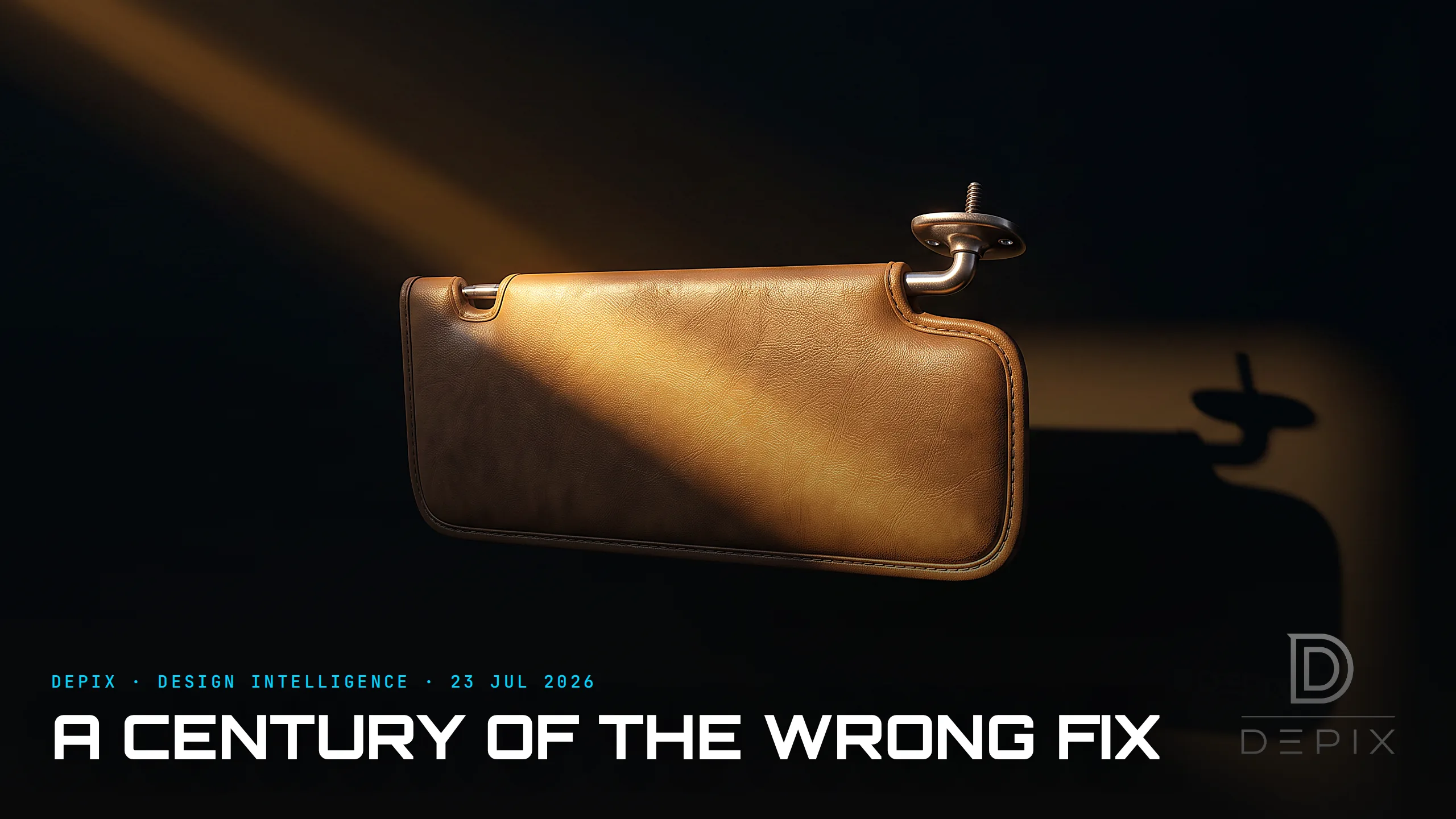
The Sun Visor Never Solved the Problem: What a Century-Old Flap Teaches About Re-Asking the Question
The Death of the Car Key: What We Lose When a Ritual Becomes a Feature
Function Was the Fashion: What Oslo Runway Teaches About Designing From Where You Actually Are