The Helmet Is the Only Product Designed to Destroy Itself — and It Was Aimed at the Wrong Crash
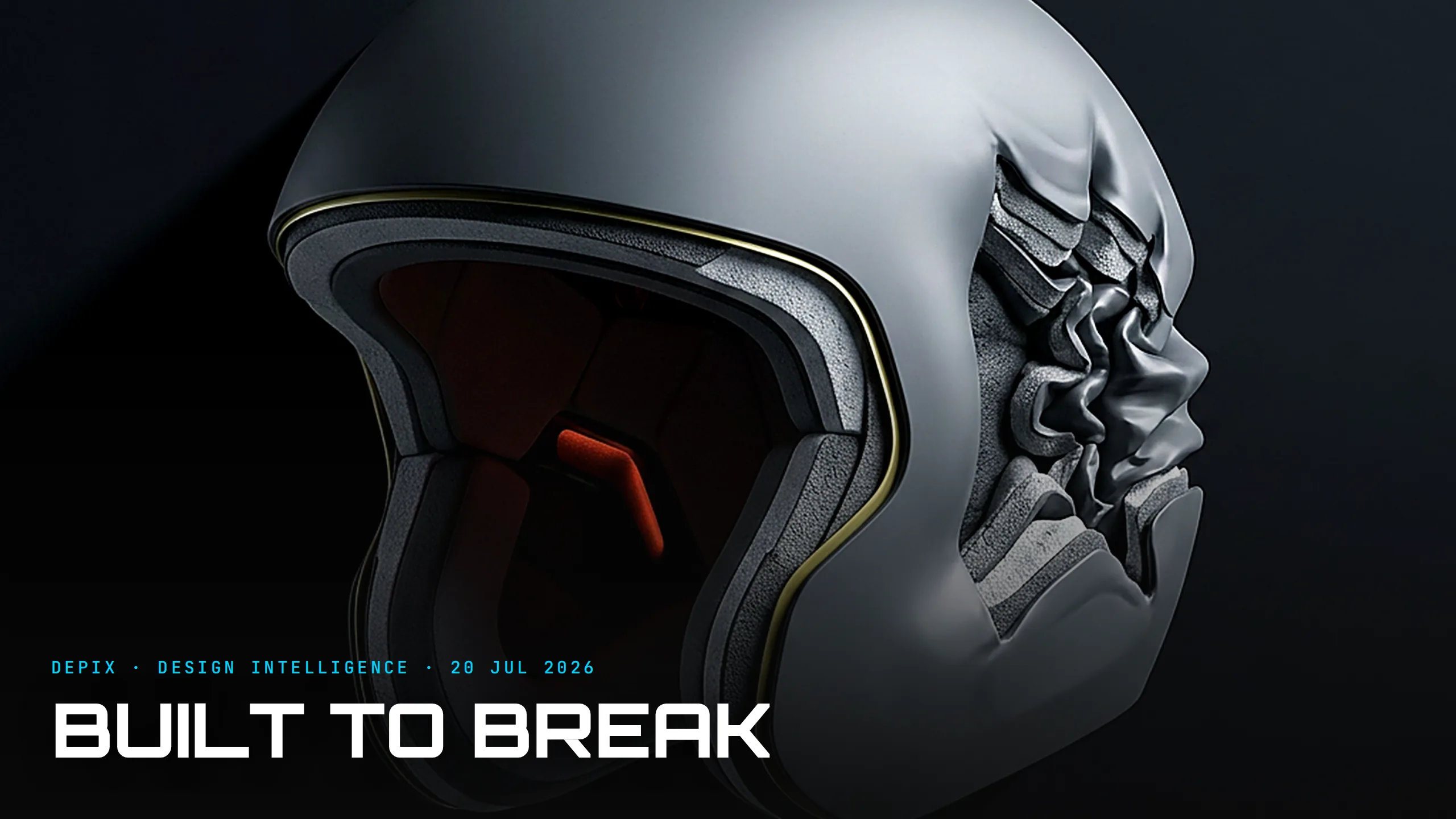
A helmet is a strange object in a designer's catalogue: it is the one product whose success is its own destruction. Almost everything else we make is built to last — to resist wear, survive drops, keep working. A helmet is built to break. Its expanded-polystyrene foam liner is engineered to crush in a single impact, absorbing the energy that would otherwise reach the skull, and then it is spent. A good helmet after a real crash is a ruined helmet, and that is exactly the point. It is designed to fail — correctly — once.
That alone makes it a concept-phase story. You cannot add "crushes correctly" to a helmet at the end; the crush is the architecture. Foam density, liner thickness, shell stiffness and how the whole shell collapses are decided in the very first cross-section, before styling touches it. But in 2026 the helmet is having a deeper reckoning — because for decades it was engineered to destroy itself against the wrong kind of crash.
The classic helmet test is a linear impact: a straight drop measuring straight-line g-force, and EPS foam is brilliant at defeating it. But most real head injuries don't come from a clean vertical hit. They come from oblique impacts that make the head twist, and rotational forces create shear strain throughout the brain — and neural tissue is weakest in shear, not compression. The uncomfortable part for designers is a finding buried in the biomechanics: foam density correlates with linear protection but barely with angular velocity at all. A helmet perfectly optimised for the drop test can leave the injury that actually disables people largely unsolved.
2026 is the year the rulebook finally caught up. New US CPSC helmet standards now require rotational-impact testing for the first time, turning rotational protection from a marketing upgrade into a baseline requirement. That single change alters what a helmet must be at the concept phase. It is no longer enough to mould a crushable dome; the helmet now needs an engineered way to manage twist — a slip-plane like MIPS, whose low-friction layer lets the shell and liner slide 10–15 mm and cuts peak rotational velocity by around a quarter, or a collapsing internal structure like WaveCel, Koroyd or Lazer's grooved KinetiCore liner. Independent labs are already grading to the new reality: Virginia Tech's helmet lab rates both linear and rotational performance across 24 impact tests, and has re-calibrated its five-star system around it.
Here is why that is an architectural story and not a features story. A slip-plane or a collapsing lattice cannot be bolted onto a finished helmet — it changes the liner geometry, the fit, the ventilation channels, the weight and the entire section. The e-bike category makes the stakes plain: those helmets must now absorb impacts at up to 28 mph versus 14 mph for a standard bike lid, which is a different energy problem demanding a different structure from the first sketch. Even the frontier confirms it: D3O is developing a dedicated motorcycle liner from materials proven in American football and the military — a rethink of the crush itself, not a coating added late. The regulation didn't add a feature; it redefined the failure mode the helmet is designed to perform, and that had to be redesigned from the inside out.
The deeper lesson reaches well past headgear. For years the industry optimised brilliantly for the test it could easily measure — the linear drop — rather than the crash that actually hurt people. The metric quietly shaped the object. And notice that the real protection is the part you cannot see: a slip-plane hidden under the shell, an air-filled or lattice structure engineered to shear, while the visible design does the job of looking fast, light and safe. Buyers still choose helmets on vents, graphics and gram counts — the surface — even as the safety that matters lives in an invisible internal layer decided before any of that.
A helmet is the clearest object lesson in two things at once: designing for a controlled, single-use failure, and the trap of letting what you measure define what you build. Get the failure mode right at the concept phase and no one ever sees the engineering. Get the wrong crash — and you have made a beautiful, comfortable, five-star helmet that protects you superbly from the accident you were least likely to have.
Sources:
- ●BikeTips — 2026 Cycling Helmet Standards: rotational impact, MIPS, WaveCel
- ●The Beam — 2026 cycling helmet standards: 40% better brain protection
- ●XNITO — Linear vs. Rotational eBike & Bicycle Helmet Impacts
- ●Scientific Reports (Nature) — Air-filled vs foam helmets: linear and rotational protection
- ●PMC — Superior linear and comparable rotational protection of an air-filled helmet
- ●Mips — Virginia Tech updates their tested helmets
- ●Sweet Protection — Virginia Tech Bike Helmet Ratings
- ●Singletracks — Virginia Tech Helmet Lab re-calibrated its 5-star rating system
- ●Motorcycle News — Airoh's 2026 helmet safety tech (D3O motorcycle liner)
- ●GreenMoov — MIPS Helmet Explained: rotational brain protection
- ●Bicycle Helmet Safety Institute — Helmets by brand
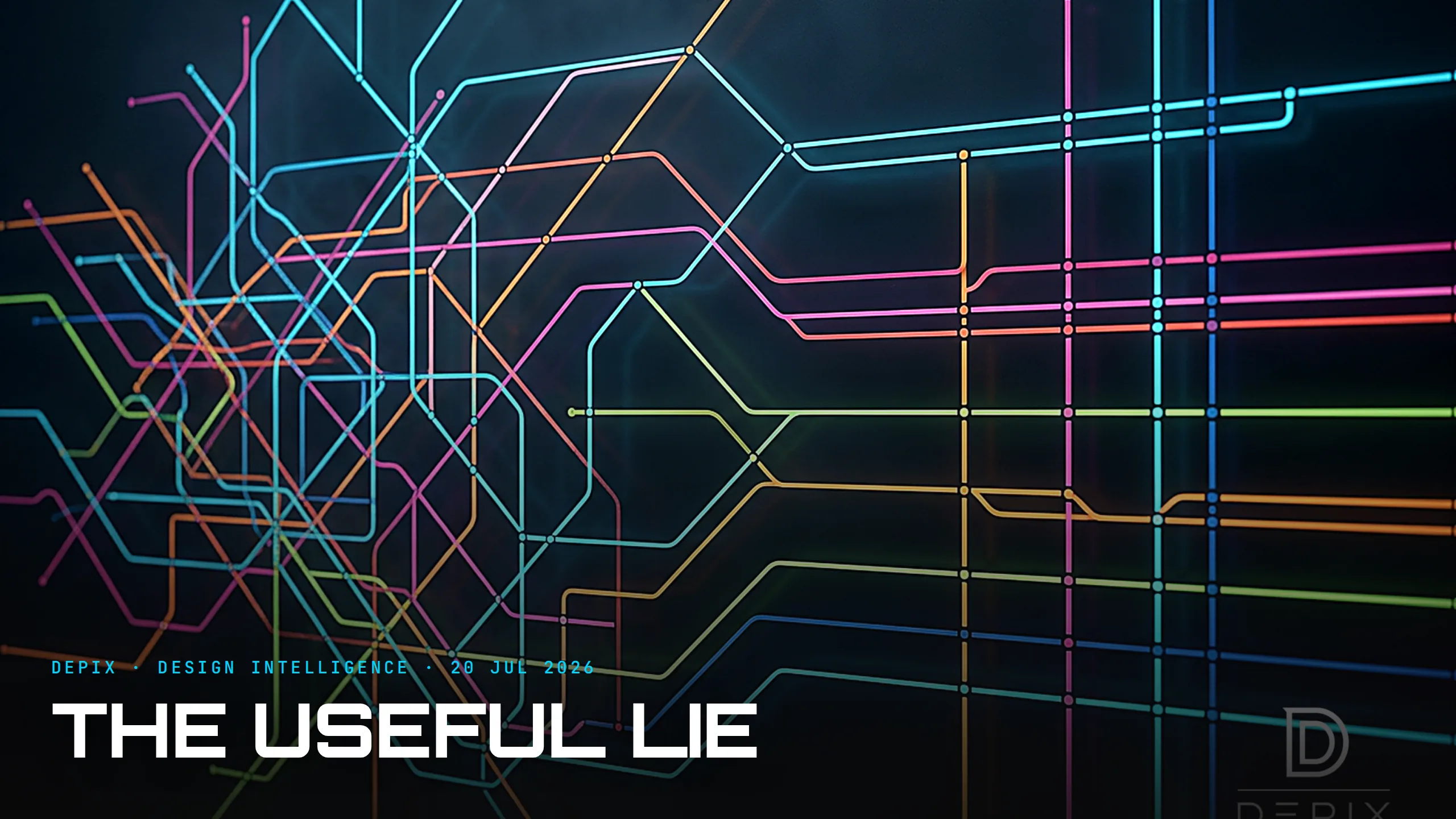
The Subway Map's Whole Job Is to Lie to You Correctly

The Most Sculptural Part of a Bullet Train Is the Least Free Thing on It