
France's best World Cup shirt never plays a match
date: 2026-07-04
France's best World Cup shirt never plays a match
The most-wanted garment of the 2026 World Cup is not a match kit. It is a warm-up top.
For France's campaign across the United States, Mexico and Canada, Nike, the French Football Federation and the Paris label Jacquemus took the pre-match jersey — historically the disposable functional layer players peel off at kickoff — and made it the hero of the whole collection. A vintage navy base, fine red-and-white vertical pinstripes, the swoosh on one chest, and on the other the two-star Gallic rooster stacked over a blocky tricolour reading "JACQUEMUS." It was sold as fashion, not sportswear, through the fashion house's own channels. And the timing was surgical: Mbappé, Thuram and Doué wore it before France's opener on 11 June — the day it went on sale, and the most valuable shop window in sport.
That inversion is the design decision worth studying. Nike did not hand Jacquemus the match kit that will actually be worn on the pitch. It handed over the garment nobody used to care about, and made that the point.
The pre-match top is now the product
The collaboration is part of Nike's "X2" programme for 2026, which pairs national federations with outside designers and gives each nation a distinct off-pitch design language rather than one house style. Founder Simon Porte Jacquemus rooted the France capsule in a specific memory — a vintage navy Nike tracksuit jacket from his childhood — and extended the jersey into jackets, tracksuit bottoms and shorts in the colours of Les Bleus. The reference point is not this season's squad. It is 1990s football nostalgia, engineered to be worn to the bar, the airport and the street, long after the tournament ends.
Read commercially, this is a reclassification. A warm-up shirt is normally a cost line — a functional item the kit supplier produces because it must. Reframed as a lifestyle object with a couture signature, the same garment becomes the highest-margin, most-shared, most-resold piece a federation puts its crest on. The value did not come from new fabric or new performance tech. It came from a decision about what the object is.
The controversial part
Rewriting a national crest is not a neutral move. Placing "JACQUEMUS" inside the tricolour — a designer's name sitting where a country's identity lives — is exactly the kind of choice that splits a fanbase. To some it reads as elegant homage; to others, as a federation subletting its heraldry to a fashion brand. That tension is the story, and it is a concept-phase decision, not a production detail. By the time the pinstripes are stitched, the argument has already been won or lost. The only question that ever mattered was settled at the whiteboard: is this a football shirt that happens to be stylish, or a fashion object that happens to carry a football crest?
That is where design intelligence earns its keep. The teams that win these bets are the ones that can see and pressure-test the decision — the framing, the crest heraldry, the emotional read — before committing it across a federation's identity and a full production run. Get the concept right and you design the demand, not just the shirt. Get it wrong and no amount of finishing saves it.
France may or may not lift the trophy. But it has already produced the tournament's most coveted garment by treating the least important shirt as the most important design decision. The lesson for anyone building a product is blunt: the object is downstream of the idea. Decide what the thing is early, and decide it well — that is the part the customer actually buys.
Sources
- ●Nike x Jacquemus France 2026 World Cup Pre-Match Jersey
- ●Jacquemus, Nike Team with French Football Federation on Collection (WWD)
- ●Jacquemus, Nike, and FFF collaborate on 2026 World Cup lifestyle collection (FashionUnited)
- ●Jacquemus x Nike Reveal France's 2026 World Cup Pre-Match Collab (House of Heat)
- ●Nike and Jacquemus have created France's kits for the World Cup (Culted)
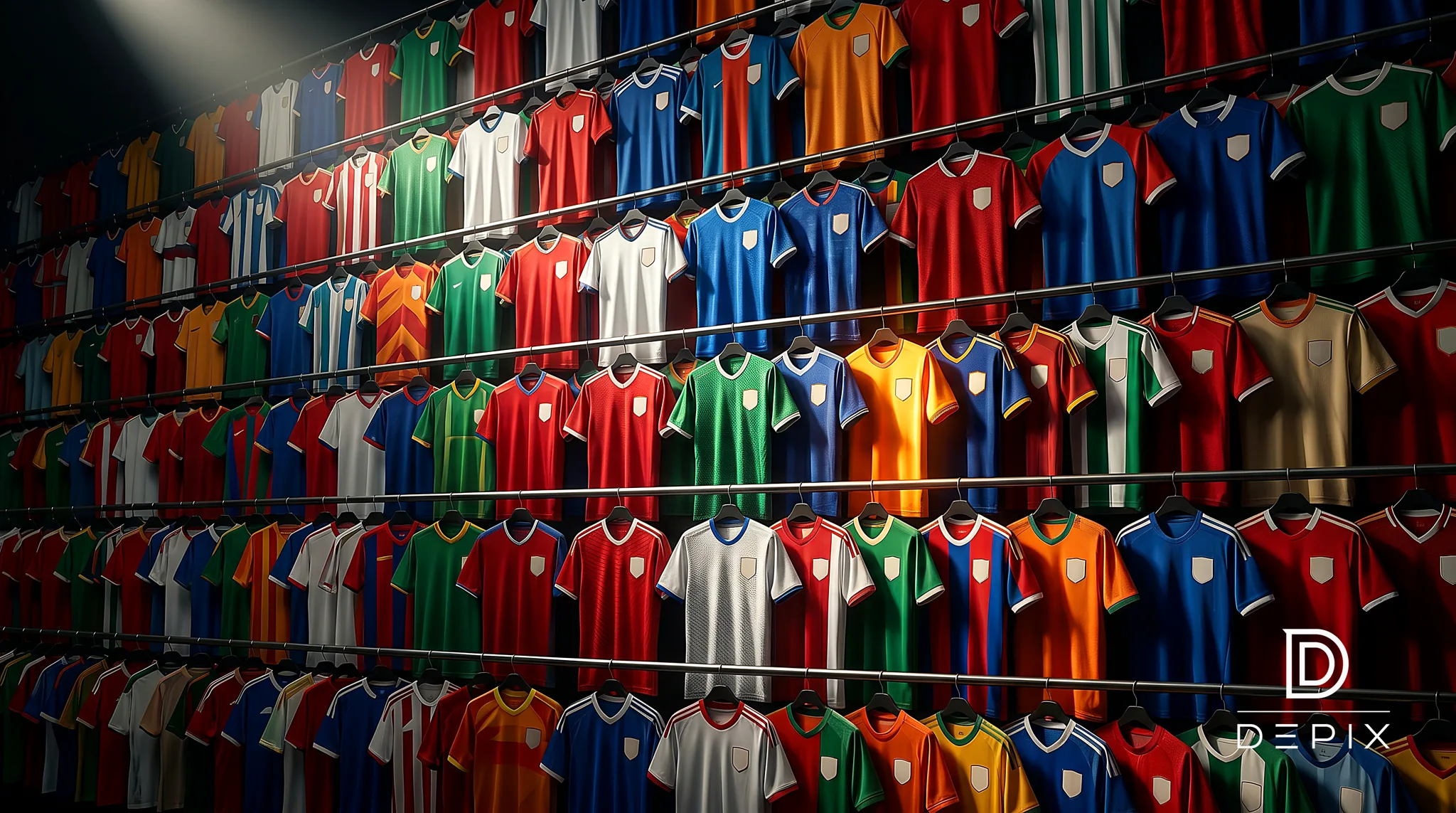
16 more teams, one giant World Cup design stress test.

The World Cup no longer trusts referees to call offside.

