China Bought the World's Best Car Designers. It Still Hasn't Bought a Design Language.
The Chengdu Motor Show opens on 21 August, and by now the pattern is familiar: nearly 120 brands and 1,600 cars, a wall of new electric metal arriving at a cadence no Western maker can match. The received wisdom is that China has already won the design race. The more interesting - and more useful - reading is that it has won two of the three things that matter, and is still visibly short on the third.
China has won on pace. Chinese EV programmes run on 18-to-24-month development cycles while most Western automakers still take four to six years. In design terms that means a Chinese brand can ship, learn from the market, and ship again before a legacy rival has finished a single facelift.
China has also, remarkably, won on talent. The design chiefs who defined the modern European car are now on Chinese payrolls. Xiaomi has opened a Munich R&D centre and poached veterans from BMW, Porsche, Lamborghini and Mercedes; its European exterior design is now led by Fabian Schmolz, the ex-Lamborghini and Porsche designer who worked on the Mission E that became the Taycan. Zeekr and the wider Geely group have hired a roster of European designers too. The talent transfer is real, and it runs one way.
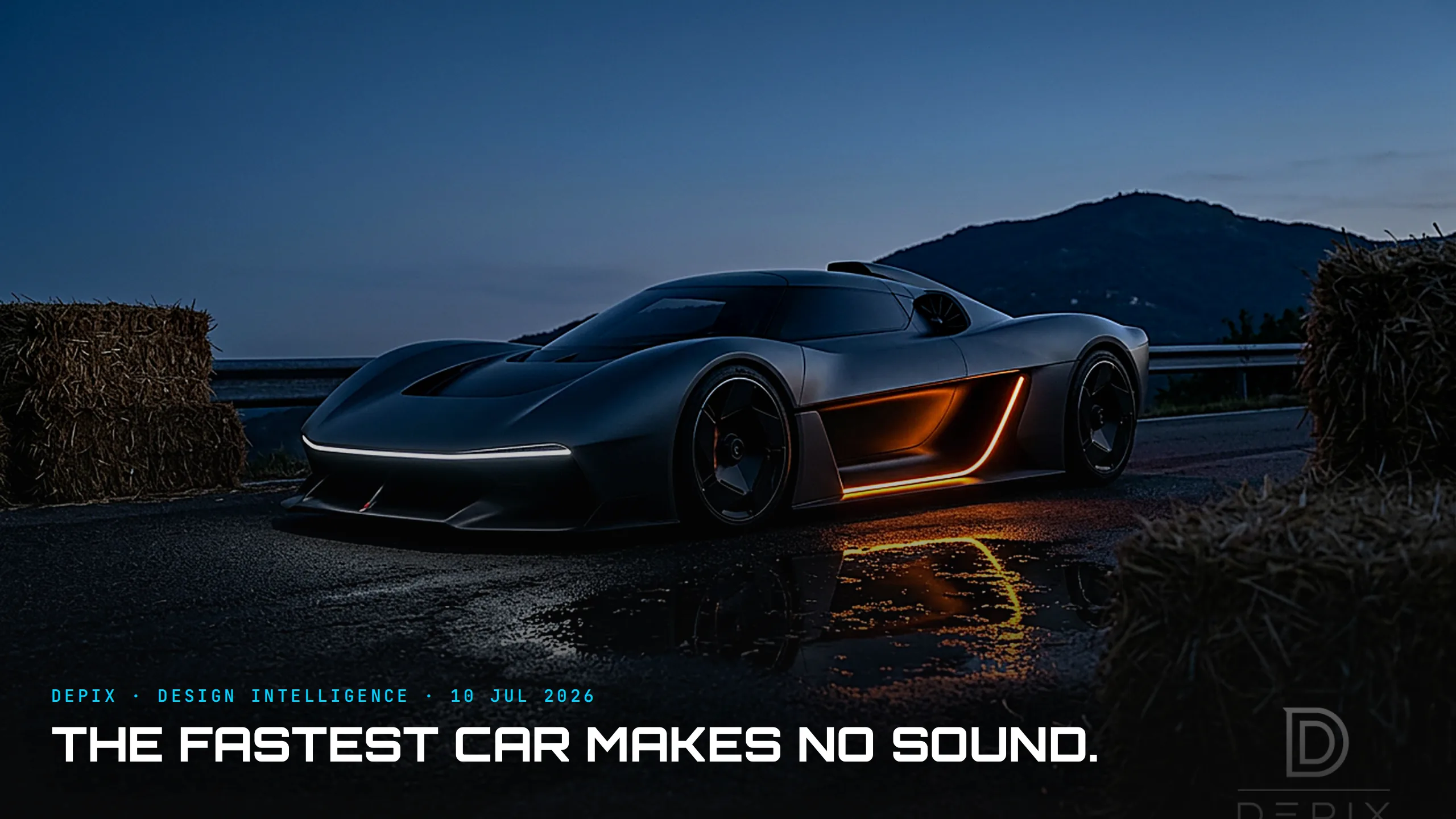
What China has not yet bought is a design language of its own. Walk the 2026 Beijing show - the dress rehearsal for Chengdu - and the most striking thing isn't the volume, it's the familiarity. As Bloomberg bluntly put it, BYD and Xiaomi are still following Porsche and Ferrari. Xiaomi's SU7 is a beautifully executed Taycan-Panamera; the concept sweep is full of shapes that are coherent, accomplished, and unmistakably borrowed. The forms are excellent. They are also, mostly, someone else's.
This should reassure Western studios far less than they think, because it points to where design value actually lives. Pace and talent are inputs you can purchase. Identity is not. A brand's design language - the handful of proportions, gestures and cues that make a car recognisable at a glance and meaningful over a decade - is not a skill you hire or a timeline you compress. It is a decision, made once, at the concept stage, and then protected with conviction across every model until it compounds into equity. Porsche's silhouette, a Rolls-Royce's presence, an Alpine's restraint or a Jaguar's proportion are decades of held decisions, not months of good rendering.
That is why hiring the person who drew the Taycan doesn't give you Porsche. A designer of Schmolz's calibre brings craft, taste and process - genuinely valuable things - but the identity he helped protect belongs to a brand that decided who it was long ago and never wavered. Xiaomi is buying the author, not the authored. The Voyah, Zeekr and Avatr flagships heading to Chengdu are technically superb and strategically borrowed, and the market will reward them anyway - for now.
The real contest, then, isn't the one everyone is watching. It isn't range, or price, or who ships fastest; China has effectively won those. It's whether any Chinese brand will spend the one thing money can't accelerate - the years of concept-stage conviction it takes to decide an original identity and then hold it - or whether the sector stays a brilliant, faster, cheaper echo of Stuttgart and Maranello. The talent is in place to do it. Whether the patience is, we'll learn not at this Chengdu, but at the ones after.
At Depix, this is the distinction we build around: speed and execution are increasingly solvable with tools and talent, but identity is a decision that has to be made deliberately, early, and then defended. The brands that define the next decade of car design won't be the ones that render the fastest. They'll be the ones that decide who they are - and mean it.
Sources:
- ●Chengdu Motor Show (CDMS) 2026 - dates & venue
- ●36Kr - Chengdu, first Class A auto show of H2; NEV 'third pole'
- ●Recharged - Chinese electric car brands 2026 (dev cycles)
- ●CarNewsChina - Xiaomi opens Munich R&D, poaches BMW/Porsche/Lamborghini
- ●ArenaEV - former Lamborghini chief exterior designer heads Xiaomi Europe
- ●Motor1 - the Western designers creating the new Chinese cars
- ●CarDesignNews - China's big wave of debuts at the 2026 Beijing Auto Show
- ●Bloomberg - at Beijing, BYD and Xiaomi follow Porsche and Ferrari designs
- ●CarNewsChina - 2026 Beijing Auto Show concept sweep (Xiaomi Aero GT)
- ●CarDesignNews - Auto China 2026 review: more is more now = less later?
- ●icartea - Voyah Chasing Light L debuts at Chengdu Auto Show
- ●autoevolution - Xiaomi's German R&D centre led by ex-BMW/Mercedes veterans