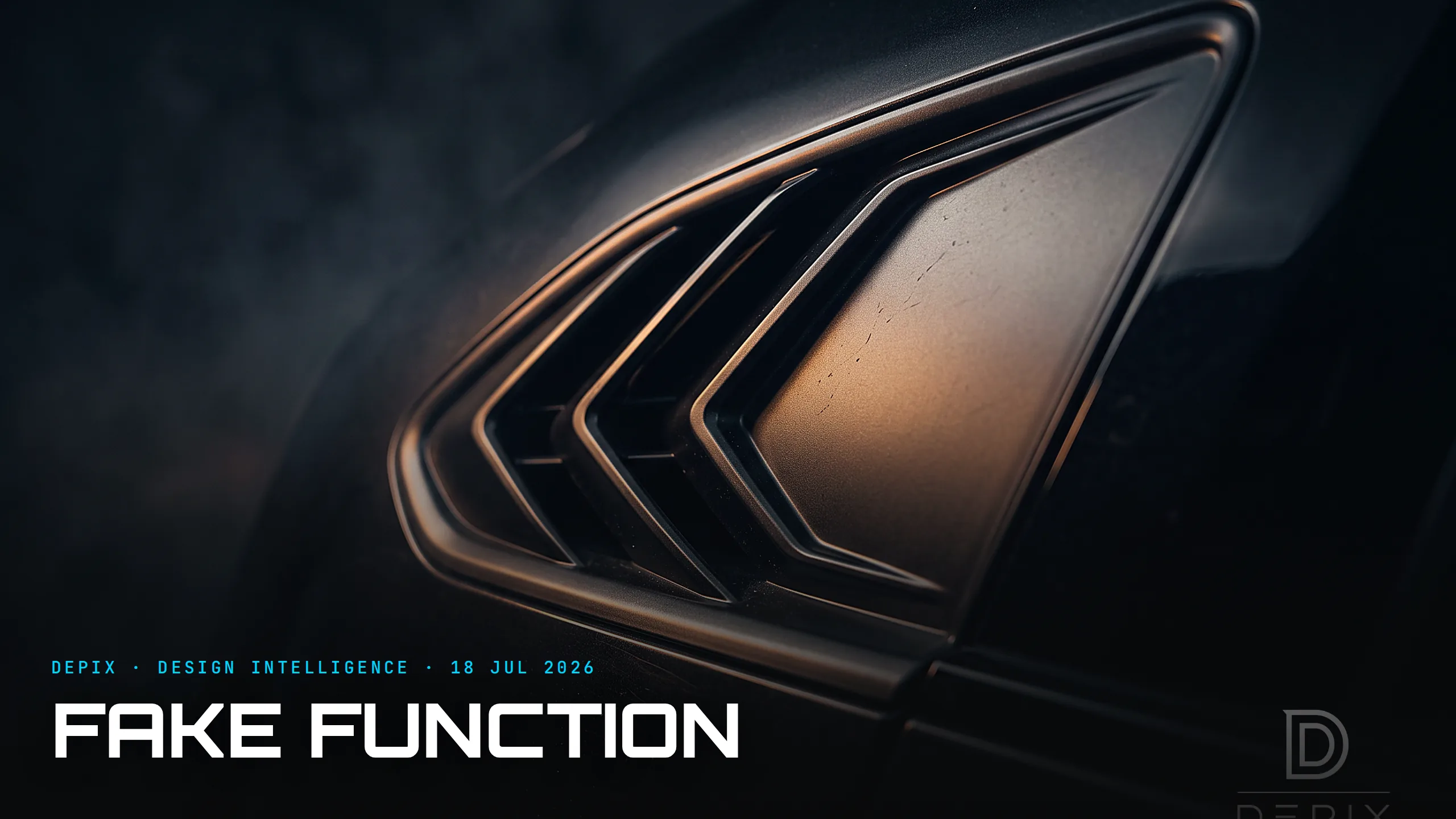
The Sound of the Door: What a Car's 'Thunk' Reveals About Designing Quality You Can Hear
Before a buyer has driven a car, sat in its traffic, or read a single spec, they have already judged its quality - and they did it with their ears. They opened the door and closed it. That half-second sound, the "thunk," is one of the most deliberately engineered noises in the entire vehicle, and how it's made is a small masterclass in where quality actually comes from.
Ford has been unusually candid about why it matters, calling the door-closing sound "their first opportunity to make buyers feel the car's quality, craftsmanship and safety and to justify a premium price tag." Mercedes' own sound-quality manager put the mechanism plainly: what customers read as quality is the optimal acoustic design of the door structure, latches and seals. The industry even has a science for it - psychoacoustics, the study of how physical sound maps to psychological perception - and dedicated teams who do little else.
What they have learned is oddly precise. Research into door sounds finds that a low-frequency thud of short duration reads as "high class," that a low soft thud seems "fancier" than a high-pitched one, and that the most premium-sounding closures even carry a subtle after-sound - a "ker-chunk." Luxury doors are tuned to a lower frequency with gentle damping at the tail of the sound; budget doors land higher and shorter. The perception of cheapness, by contrast, correlates with metallic, rattling and "delayed" qualities - the tinny, hollow slam. None of it is left to chance: it is measured against objective psychoacoustic parameters, studied through customer-perception research, and there are even patents for door structures designed specifically to produce a high-quality closing sound.
Here is the part that makes this a design-intelligence story rather than a trivia one. The great solid "thunk" is not natural - it is a reconstruction. As crash rules forced doors to grow stronger and more reinforced, with heavier internal beams, the inherent solidity of a simple heavy door gave way to a lighter, more complex structure that, left alone, sounds rattly and cheap. So the reassuring thunk you hear on a modern car is engineered back in - through seal geometry, damping materials, latch design, the resonant tuning of the cavity, even the mass and travel of the glass. The sound is honest about the effort, but it is authored.
And it cannot be authored at the end. That is the whole point. You cannot make a rattly door sound expensive by adding a felt strip in the last month of a program; the sound is an emergent property of the door's entire architecture - structure, seals, latch, cavities - all fixed early. Which is exactly why the industry now defines acoustic character during the earliest conceptual phases, alongside styling and packaging, with acoustic engineers in the room before the door structure is frozen. The thunk is a concept-phase decision wearing the disguise of a finishing touch.
That reframes what the sound is really telling you. When a door closes with that low, damped, confident thunk, you are not hearing a nice noise bolted on for the showroom - you are hearing evidence that a hundred structural decisions were made coherently, early, and toward the same intent. The sound is a true readout of concept-phase discipline, which is precisely why it works as a quality signal: it is very hard to fake cheaply, because faking it means fixing the architecture underneath.
The lesson generalises to anything you make. Every product has its door - a first, tiny, multisensory moment where a user's hands and ears reach a verdict long before the features load. The click of a knob, the weight of a lid, the resistance of a switch, the latency of an app's first tap: these micro-signals are read instantly as "quality" or "cheap," and they are almost never fixable at the end, because they emerge from early decisions about structure, material and tolerance. Nearly 40% of luxury buyers can identify a car brand from its sounds alone - proof that a sensory signature, once designed in, becomes the brand.
So the next time a car door shuts with that satisfying, expensive thunk, hear it for what it is: not a sound effect, but the audible proof of a decision made long before anyone could listen. Design the first half-second on purpose - because your user is already judging you, and they are doing it with their ears.
Sources:
- ●Your Car Door Sound Is Engineered To Fool You - Motor-Vision
- ●Think Your Car Door Sounds Solid When It Slams? It's Faked - The Drive
- ●The 'Slam' of Your Car Door Is Fake - MEL Magazine
- ●Objective quantification of door closing sound quality - ScienceDirect
- ●Analysis of car door closing sound quality - ResearchGate
- ●Investigation of Customer Perception of Vehicle Door Closing Sound Quality - ResearchGate
- ●Automobile door to provide high-quality closing sound (patent) - USPTO
- ●Sound Design as Brand Identity - CSM Research
- ●How Sound Became One of Luxury's Most Powerful Tools - Robb Report
- ●Psychoacoustics in the automotive industry - ResearchGate
- ●The 'Slam' of Your Car Door Is Fake - Brand Knew

The Wind Designs the Car: What the Drag Coefficient Reveals About Who Really Shapes a Silhouette
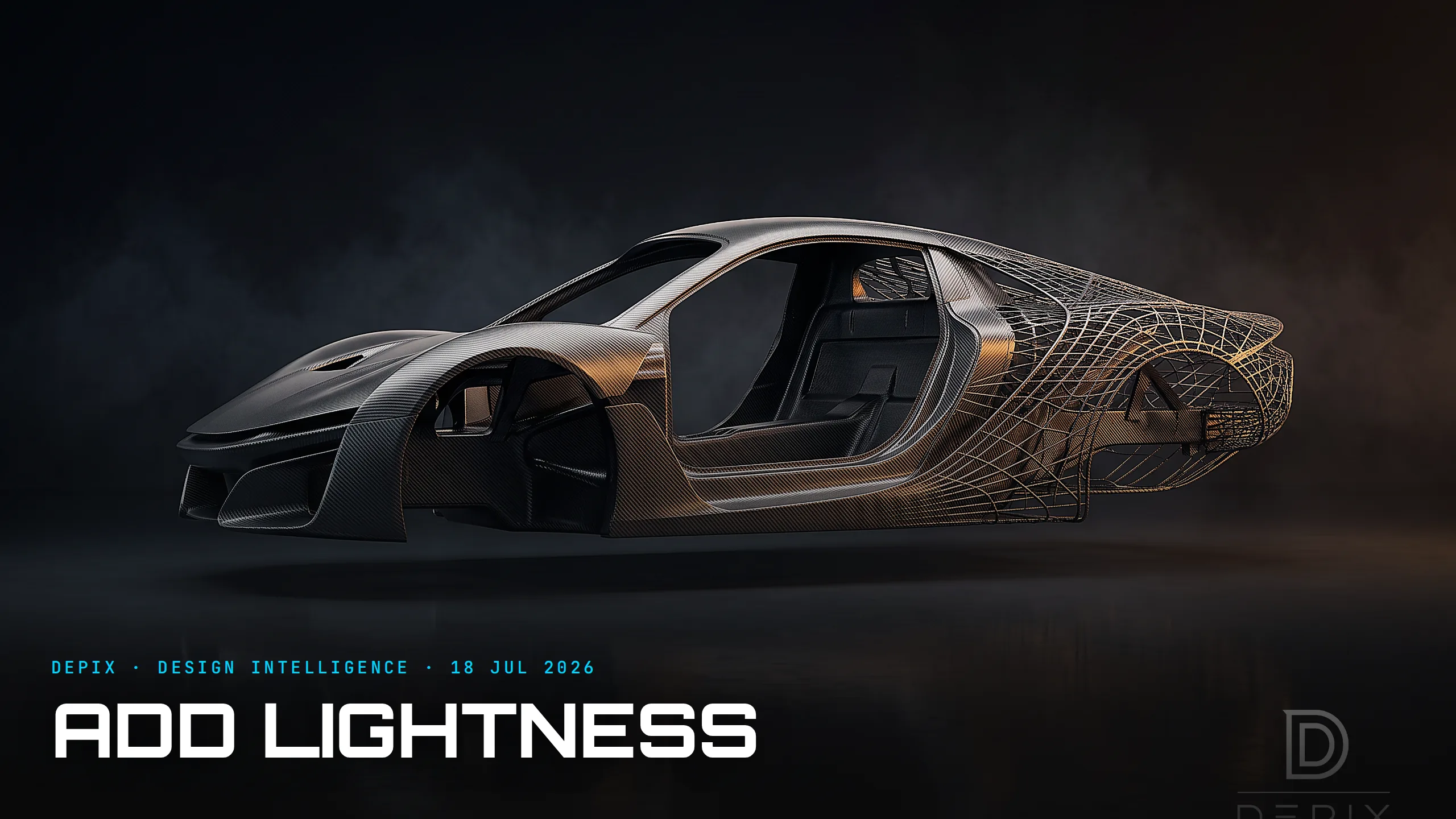
Simplify, Then Add Lightness: Why a Car's Weight Is Decided Before the First Line Is Drawn