The Most Constrained Object
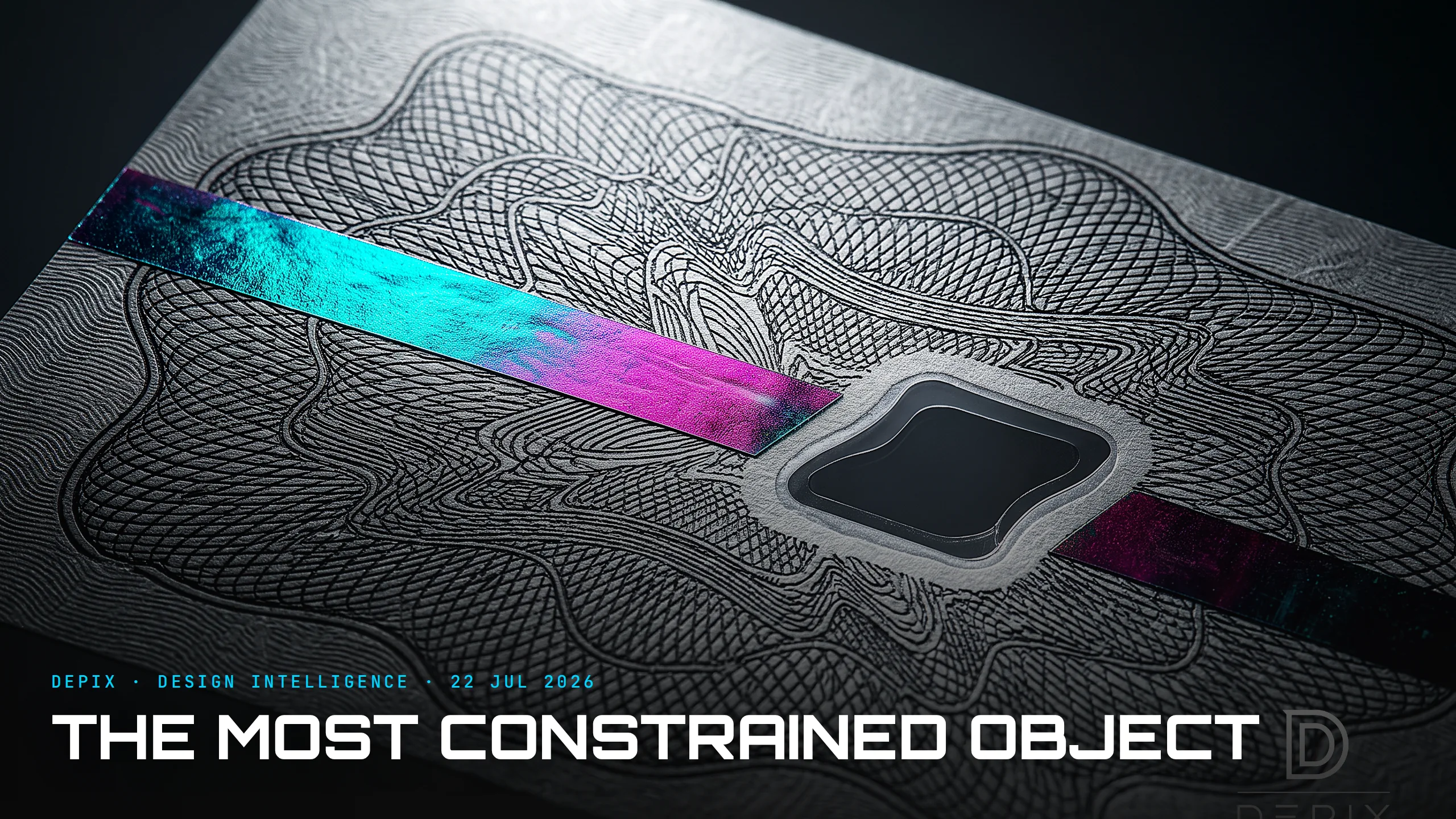
The most constrained design object in the world fits in your pocket, and you never really look at it. A banknote has to satisfy, at once and without compromise, a stack of demands that most products get to trade off against each other. In 2026 the US is rolling out a redesigned \$10 note and the European Central Bank is unveiling a new series of euro banknotes. Both make the same quiet admission: a banknote is a security document that has to pass as art.
Consider what one note must be simultaneously. It must be beautiful — it carries a nation's face, its history, its idea of itself, in millions of hands. It must be secure — the Bureau of Engraving and Printing is blunt that "security is the primary purpose of redesign," because a note must resist increasingly sophisticated counterfeiting. It must be machine-readable — the 2026 \$10 embeds covert features for high-speed bank sensors, invisible to the human eye. It must be tactile — a raised feature so a blind person can tell a ten from a fifty by touch. It must be durable, surviving years folded in a wallet. And it must be legible and trusted instantly, by everyone, in any light. Every one of those is decided at the concept phase, and not one can be retrofitted.
Here is the design-intelligence point: a banknote is the purest example of design serving many masters who never meet, resolved before a single note is printed. The graphic designer wants a clean, iconic image. The security printer needs room for a micro-lens ribbon, optically variable ink, a watermark and a security thread — features that eat into the very space the image wants. The accessibility office needs the tactile marks. The counter-counterfeiting team wants covert features nobody can see or copy. The vending machines and ATMs of an entire economy need consistent, sensor-friendly geometry. The visible art you notice is the small part left over after all the invisible requirements have taken their space.
And the constraints actively fight the beauty. A watermark needs a clear window, so the portrait cannot fill the note. A security thread runs a hard vertical line through the composition. Colour-shifting ink dictates where the boldest colour must sit. Polymer substrates, now standard in many countries, change how ink behaves and where you can place a transparent window. A banknote designer never starts with a blank canvas; they start with one already carved up by physics, security and law, and their job is to make the result feel inevitable and calm rather than like the committee compromise it secretly is.
The deadline pressure is unforgiving in a way most design never faces. You cannot patch a currency. Once a note is in circulation it is in billions of transactions and hundreds of millions of wallets; a flaw found later is not a software update, it is a recall of the money supply. So the concept phase has to be right the first time, across every competing requirement, years before the public sees it — which is exactly why the euro redesign runs from a 2026 unveiling to a 2029 release. That lead time is not bureaucracy; it is the cost of getting an object this over-constrained right before it becomes irreversible. As a future-proofing exercise, the note has to beat threats that do not exist yet.
There is a lesson well beyond money. We tend to think of design as addition — what can we put on the canvas? A banknote is a masterclass in the opposite: design as the reconciliation of non-negotiables, most of them invisible, none of which you chose. The skill isn't a beautiful portrait; it's making a beautiful portrait that also hides a machine-readable code, frames a watermark, carries a tactile mark and defeats a counterfeiter — and looks, in the end, like it could only ever have been that way. The best design often looks effortless precisely because it resolved the most constraints, not the fewest.
So the next time you hand over a ten, notice what you are holding: not a picture with some security features added, but a security system, an accessibility device, a machine-readable token and a piece of national identity — all forced to be beautiful, all decided at once, all impossible to take back. It may be the hardest brief in design, hiding in the most ordinary object you own.
Sources:
- ●LegalClarity — US banknote redesign timeline and new security features
- ●Mykonos Ticker — New euro banknotes are coming in 2026
- ●Numismatic News — New US banknote designs and security features
- ●Ribao Technology — 2026 US banknote redesign & cash-handling equipment
- ●US First Exchange — New euro banknotes are coming
- ●G+D Spotlight — A new banknote is a future-proofing opportunity
- ●Wikipedia — Banknote
- ●Wikipedia — Security printing
- ●Wikipedia — Optically variable ink
- ●Wikipedia — Polymer banknote
- ●Wikipedia — Bureau of Engraving and Printing
- ●Wikipedia — Counterfeit money
- ●Wikipedia — Euro banknotes