What Is Really Happening Inside a Neural Network
It is not a brain, and it is not magic. A neural network is a stack of very simple maths repeated at enormous scale. Once you can see the parts, most of the mystery falls away.
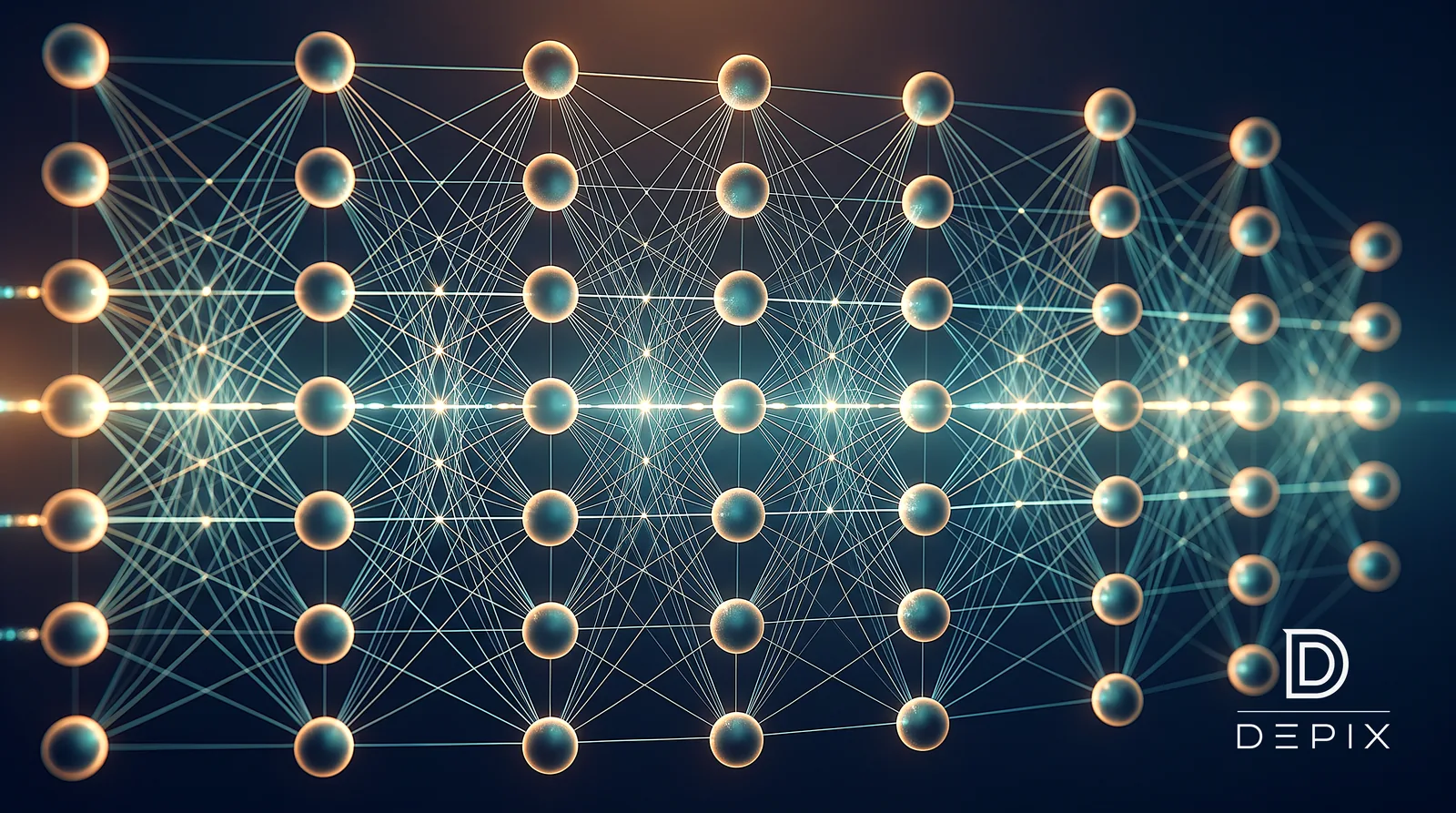
"Neural network" is a wonderful piece of branding and a slightly misleading one. It conjures a digital brain, some artificial mind humming away with thought. The reality is more mundane and, honestly, more impressive: a neural network is a large stack of very simple arithmetic, arranged in layers, with a set of adjustable numbers that get tuned until the whole thing produces useful answers. No thinking required. Let us open the box and look at the four parts.
Neurons are just tiny calculators
The basic unit, borrowed loosely from biology, is the artificial neuron, and it does something almost embarrassingly simple. It takes a few numbers in, multiplies each by a weight that says how important that input is, adds them all up along with a small offset called a bias, and passes the total through one final function. That is the entire job. A neuron is a tiny calculator that turns several numbers into one. The intelligence is never in any single neuron. It is in how millions of them are wired together.
Weights are the knobs that hold the knowledge
Those weights are the heart of the machine. A weight is simply a number that controls how strongly one neuron's output feeds into the next. Turn it up and that connection matters more; turn it down and it fades toward irrelevance. A large model has billions of these weights, and collectively they are what the network knows. When people say a model was "trained", they mean these billions of knobs were slowly adjusted until the outputs came out right. Nobody sets them by hand. There are far too many, and no human ever could.
Layers turn simple into sophisticated
Neurons are organised into layers: an input layer that receives the raw data, one or more hidden layers in the middle that do the real work, and an output layer that delivers the verdict. Data flows through them in order. Early layers pick up crude features, an edge in an image or a fragment of a sound. Later layers combine those into something meaningful, a face, a word, a recommendation. Depth is where the power lives. Stack enough simple layers and the network can represent staggeringly complex relationships.
The activation function is the secret ingredient
There is one more piece, and without it the whole edifice collapses into something useless. After each neuron adds up its inputs, it passes the result through an activation function, a small non-linear bend in the maths. This sounds like a technicality. It is actually the difference between a network that can only draw straight lines and one that can model curves, exceptions and nuance. Google's own machine learning course is blunt about it: activation functions are what allow neural networks to capture complex, non-linear relationships. Remove them and, no matter how many layers you stack, the network can only ever add up to one long straight line.
There is no ghost in the machine. There is a very large number of dials, tuned until the answers come out right.
So where is the intelligence?
Here is the honest answer, the one that disappoints and delights people in roughly equal measure. There is no intelligence tucked away in there. There is a very large number of dials, arranged in layers, bent by activation functions, and tuned until the numbers flowing out the far end are useful. Your face unlocking your phone, your inbox filtering spam, your streaming service guessing the next track, all of it is this same trick at different scales. Not a brain. A machine of simple parts and an astonishing amount of tuning.
Understanding that does not make it less remarkable. If anything it makes it more so. The fact that arithmetic this plain, repeated at this scale, can recognise a friend's face across a crowded room is one of the strangest and most useful discoveries of the age.