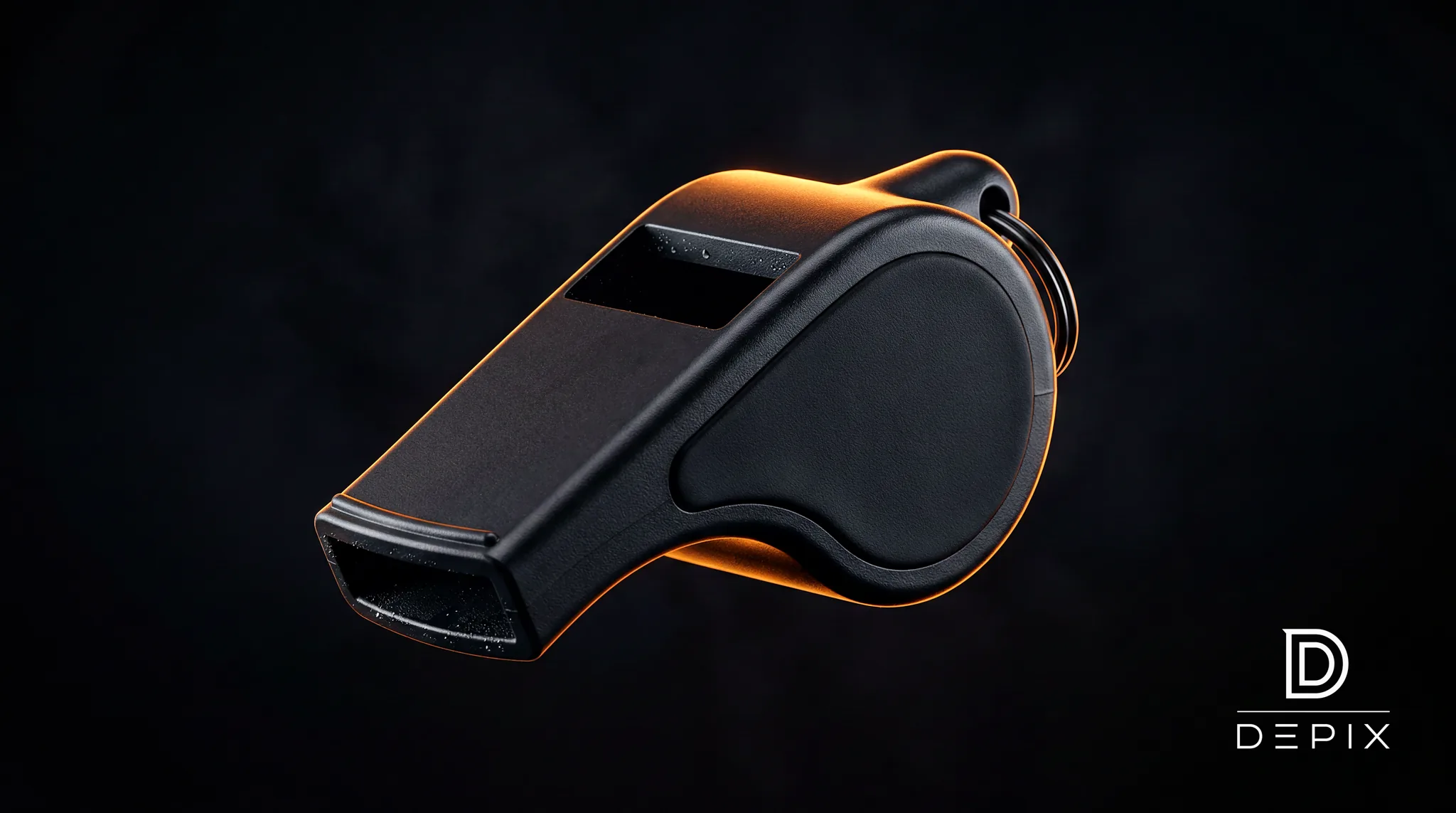
The World Cup's most trusted tool works because it's empty.
date: 2026-07-06
The World Cup's most trusted tool works because it's empty.
Listen to any match at the 2026 World Cup and the single most consequential object on the pitch is not the ball, the boot or the armband. It is a small plastic whistle — and it works precisely because a designer took out the one part everyone assumed made a whistle a whistle.
For a century, a referee's whistle meant a pea: a small cork or plastic ball rattling in a chamber, chopping the airstream into that trilling note. The pea was the whistle. It was also the flaw. Cork swells when wet. It jams when frozen. It sticks when clogged with saliva and dirt. And a referee's whistle fails at the exact instant it matters most — a hard call, a packed stadium, one breath to be heard.
Ron Foxcroft learned that the hard way. Refereeing the 1976 Montreal Olympic basketball final in front of 18,000 people, he saw a Yugoslav player elbow an American, blew hard to call it — and no sound came out. The pea had stuck. The non-call stood. He spent the next decade unable to let it go.
Working with Oakville design consultant Chuck Shepherd, Foxcroft went through more than 14 prototypes chasing a single, radical brief: a whistle with no moving parts at all. Not a better pea. No pea. The breakthrough was to stop tuning the old object and re-conceive what a whistle is — three separate chambers producing three slightly different frequencies at once, deliberately out of phase, alternately reinforcing and cancelling each other into a piercing vibrato you cannot mistake and cannot ignore. There is nothing inside to swell, freeze or clog. The Fox 40 Classic reads at up to roughly 115 decibels, and unlike the pea whistle it does not choke when you blow it hardest.
Foxcroft put $150,000 of his own money in and founded Fox 40 International in 1987. The pealess whistle debuted that year at the Pan Am Games in Indianapolis and became the choice at the 1990, 1994 and 2002 World Cups — and it is the sound cutting through American stadiums right now. The object that once symbolised authority-by-luck became authority-by-design.
Here is the part a design chief should sit with. Everyone who tried to improve the referee's whistle before Foxcroft improved the pea — better cork, sealed chambers, drainage holes. They optimised the failure. The winning move was not a better version of the component; it was the decision that the "essential" component was the entire problem, and that the object was better off without it. The hardest thing in design is not adding the clever part. It is deleting the part everyone is emotionally certain must be there.
That decision is almost free at the concept stage and almost impossible later. Foxcroft could question the pea on a sketchpad. Once a whistle is tooled around a pea chamber — the mould, the supply chain, the assembly line, the marketing that says this is what a whistle is — the pea stops being a design choice and becomes a constraint nobody is allowed to reopen. Most products carry a pea: an inherited component everyone treats as load-bearing that is actually the single point of failure, protected only because questioning it feels like questioning the category.
This is exactly where design intelligence earns its keep. The value is not in rendering a prettier whistle. It is in interrogating, before anything is tooled, which "obviously essential" element is really the liability — and being able to visualise and pressure-test the version where it is simply gone, while that decision still costs a sketch instead of a factory. A parallel design team that asks what if we delete the core? on day one is worth more than a hundred that polish the pea on day 400.
The whistle you hear at every 2026 World Cup call is a monument to subtraction. It is loud, trusted and unbreakable for one reason: someone was willing to look at the one part everyone protected and decide the product was better empty.
Sources

The World Cup's most-designed kit belongs to no team.
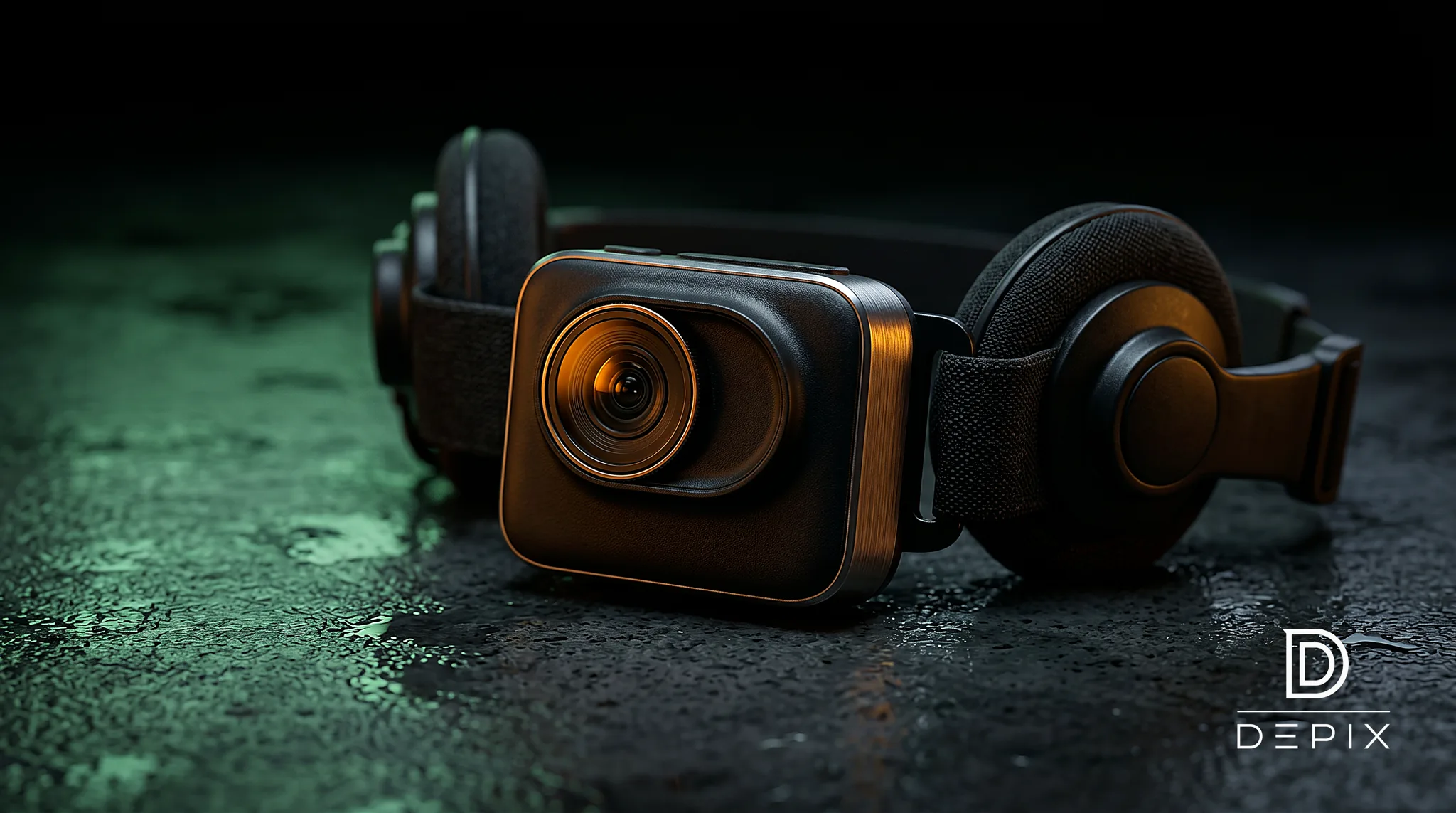
FIFA's ref-cam shows the referee's view, never the wrong calls.
