
The World Cup's 'free' fan zone is its most designed product
date: 2026-07-05
The World Cup's 'free' fan zone is its most designed product
Walk into a World Cup Fan Festival this month and it reads as spontaneous public joy: a giant screen, a crowd, free entry, a country in a good mood. It is nothing of the sort. The fan zone is one of the most deliberately engineered products the tournament ships — a space, a brand, a retail floor and a data funnel, all decided in the concept phase long before the first fan walks in. The "free" part is the design flourish that hides the machine.
It was Germany that turned a crowd into a product. FIFA had noticed the appetite in 2002, when ticketless fans in Korea and Japan flooded places like Seoul Plaza to watch on big screens. In 2006 it formalised that instinct as the first official FIFA Fan Fest, standardised across 12 host cities — giant screens, sponsor zones, concerts, a repeatable template. More than 18 million visits were logged across the tournament (a cumulative attendance figure over the month, not a single crowd). The Berlin "Fan Mile" at the Brandenburg Gate became the postcard.
The real output was not football. It was a rebranded nation. For decades after the war, waving the German flag in public felt loaded; in the summer of 2006 it suddenly felt normal, even joyful, and the country renamed the experience its "Sommermärchen" — summer's fairy tale. No advertising campaign in the world could have bought that shift in national self-image. A designed public space did it, because the space set the terms: what you saw, what you bought, what you felt, who stood next to you. That is the tell. When a "free" environment produces a precise emotional result at national scale, it was authored, not stumbled into.
Twenty years on, the 2026 tournament has scaled the format past its inventor. FIFA is running the Fan Festival across 13 host cities — more than the 12 of Germany 2006 or Brazil 2014 — and, crucially, each site is designed bespoke to its city rather than stamped from one master. Access is mostly free, though several cities gate it behind free online registration to cap and count the crowd. The ambition is openly industrial: Monterrey's organisers are targeting more than two million visitors and a Guinness record for the largest fan festival, while Miami has designed for up to 30,000 people a day across its run and Kansas City has capped its site at 25,000. Those are not audience guesses. They are capacity specifications, the way a stadium or a phone assembly line has a throughput number.
Here is the design-intelligence point a chief should not miss: free registration is not hospitality, it is instrumentation. The moment entry runs through a form, the fan zone stops being a plaza and becomes a measured product — headcount, dwell time, sponsor impressions, an email list, a heat map of who came and when. The giant screen is the bait; the funnel is the business. Calling it "free" is the most expensive line item, because feeling free is exactly what makes people spend and share.
None of this is cynical — it is just honest about where value gets decided. The nation-branding, the crowd math, the retail adjacencies, the registration wall: every one of those is a concept-phase call, locked before a single truss is bolted or a screen is hung. Get the intent right early and you get a Sommermärchen. Get it wrong and you get a fenced car park with a screen. The difference is not budget or execution. It is the quality of the decisions made when the thing was still an idea.
That is the whole DEPIX thesis. The fan festival proves that the most valuable design work is invisible and upstream — the choices about what a thing is and what it is for, made before anyone can see it. Design intelligence is the discipline of getting those concept-phase bets right on purpose, with evidence, instead of hoping the summer turns out to be a fairy tale. The teams that treat the concept phase as the product, not the preamble, are the ones who get to rebrand a nation with a big screen and a crowd.
Sources
- ●FIFA — FIFA Fan Festival history
- ●FIFA — 2006 FIFA Fan Fest, Germany
- ●FIFA — Biggest selection of Host City fan events in tournament history (2026)
- ●Wikipedia — FIFA Fan Festival
- ●Deutale — World Cup 2006: the "Sommermärchen" cultural moment
- ●AP via Washington Times — Why Germany's 2006 patriotic fervour is unlikely to repeat
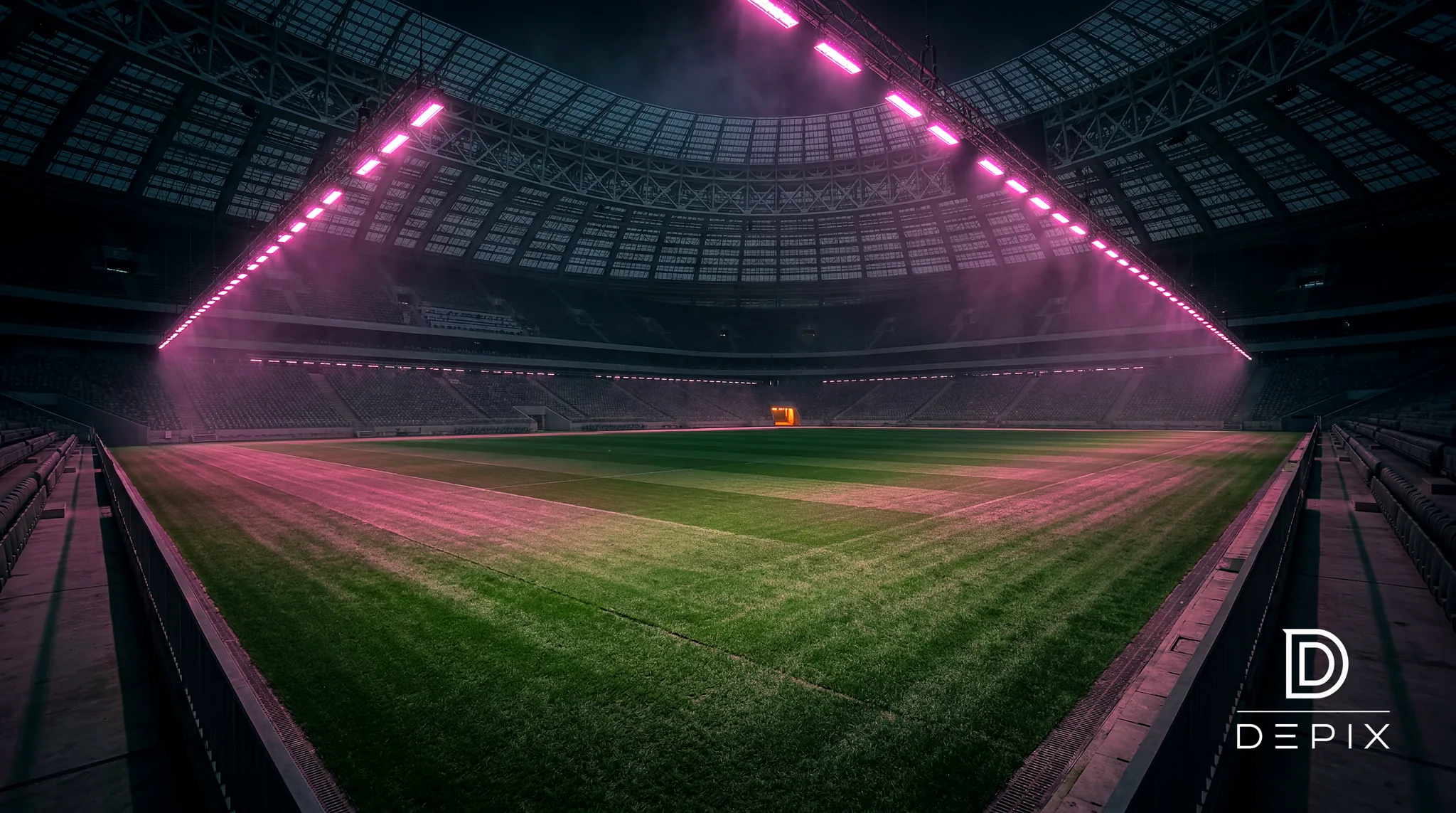
The World Cup's most engineered product is a lawn.

FIFA gave the 2026 World Cup 16 faces, not one.

