
The Windshield Is the Last Clear Surface — and Now It's a Design Decision
For a century the windscreen was the one part of the car a designer was forbidden to touch — glass you saw the world through, nothing more. In 2026 that rule died quietly. BMW's Panoramic Vision lights a data ribbon across the full base of the screen; at CES on 5 January LG showed a windshield that paints translation and entertainment straight onto the glass. The surface designers were told to leave alone has become the most contested canvas in the cabin. The decision is no longer where to put the screen — it is what the driver is allowed to keep seeing through.
The surface that was off-limits
Every other plane in the car has already been claimed. The dashboard went to the 56-inch Hyperscreen, the centre stack to a tablet, the binnacle to a configurable cluster. The windscreen held out — protected not by taste but by physics and law: it had to stay transparent.
That protection is gone. BMW's Panoramic Vision — confirmed for Neue Klasse series production from 2025, reaching the US in the iX3 successor with deliveries in autumn 2026 — projects onto a dark-coated band at the lower edge of the glass, running the full width, "an extremely sharp image that is always visible." Frank Weber, BMW's board member for development, framed the ambition plainly: "The windscreen becomes a single large display." The last clear surface is now addressable real estate.
What earns the eyeline
This is the decision, and it is editorial, not technical. The windscreen is the only surface in the car aligned with where the driver must already look. Anything placed there is free of the glance-down cost that every dashboard screen pays — and for exactly that reason, anything placed there competes with the road itself.
So the design question sharpens to a single axis: what earns the eyeline, and what stays glass. Speed and a turn arrow earn it. A streaming thumbnail does not — yet LG's CES demo put entertainment on the same surface, and BMW's own framing invites passengers to "interact with entertainment" across the width. The temptation of an addressable surface is to fill it. The discipline is to defend the emptiness.
The 10-degree budget
There is a hard constraint the marketing language skips. As the optics firm AHEAD noted on LinkedIn last month, today's automotive HUDs render inside roughly a 10–12 degree horizontal field of view — a narrow window dictated by mirror size and packaging. The "full-width windscreen display" is, optically, a small bright strip plus a much larger painted-graphics band that is not true AR depth.
That gap matters to a designer. It means the eyeline budget is not a wall to fill but a thin, precious slot — and that the honest version of this feature renders a few things crisply at the right focal distance rather than scattering a HUD's worth of icons across glass that cannot actually focus them. Cognitive-load researchers raised exactly this at CES: a surface-scale UI risks overload precisely where overload is lethal.
AR depth versus painted glass
Two philosophies are now visibly diverging. Mercedes' AR head-up display projects a turn arrow that appears to lie on the tarmac about nine metres ahead — information registered to the world, so the graphic is the road. BMW's painted band sits flat at the base of the glass — information adjacent to the world, a strip you read and then look up from.
Neither is wrong; they are different design bets. Road-registered AR is the more ambitious and the more dangerous: when the overlay is wrong, it lies about reality. The flat band is humbler and harder to misread, but it reintroduces a glance, just a shorter one. The choice a brand makes here encodes how much it trusts its sensors to draw on the real world — and how much it wants the driver to keep authoring the scene themselves.
What this means for the design decision
The windscreen is not a new screen to win; it is a shared resource to ration. The brands that get this right will treat the glass the way a great editor treats a front page — most of it deliberately empty, a very few things earning their place, nothing competing with the story the road is already telling. The ones that get it wrong will discover that the most expensive pixel in the car is the one painted over the thing the driver needed to see. The product was never the display. It was the clear glass you chose to leave alone.

The Number That Designed The Car: How A Single Cd Figure Quietly Took Over The Front, The Mirrors And The Wheels
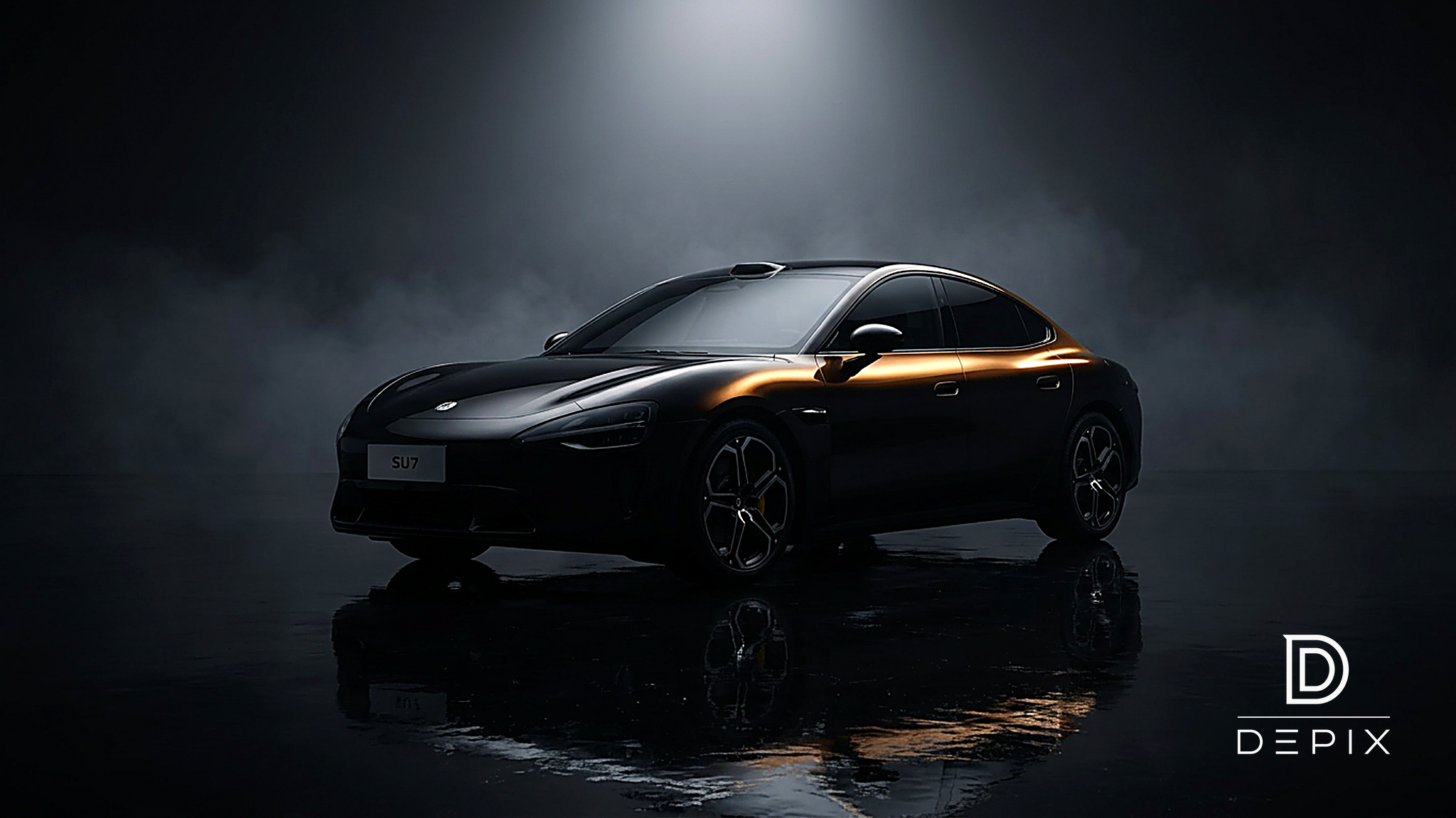
A Phone Company Made a Car the Design Press Couldn't Dismiss — Because It Imported a Discipline, Not a Heritage


