The window keeps shrinking, and the people inside keep saying nothing
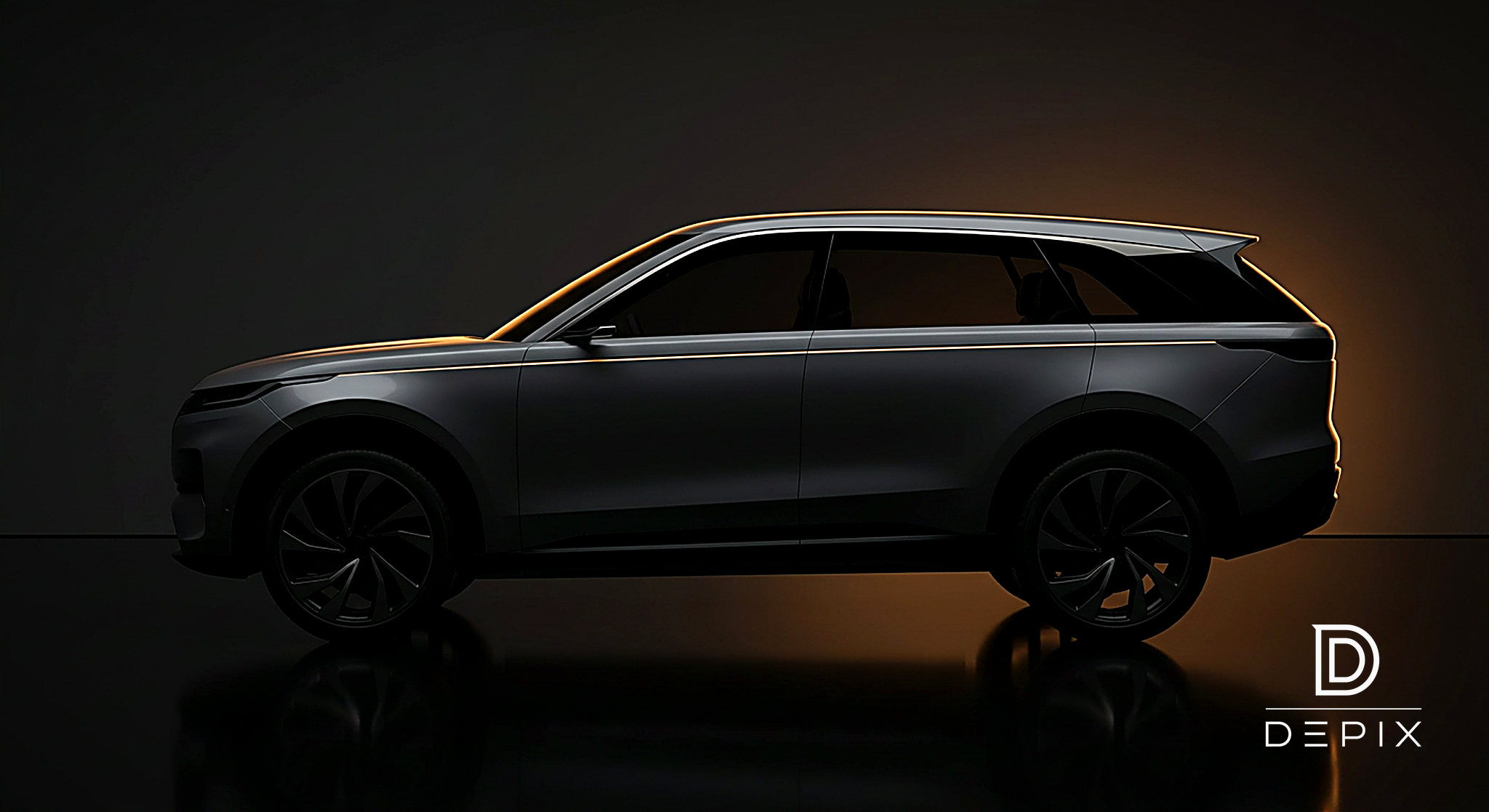
The single biggest piece of glass on the side of a car — the long opening you look out of, that your child presses a face against, that the whole cabin breathes through — has been quietly closing for twenty-five years. The waistline crept up, the windows turned to slits, and where the glass ran out the studio glued on a piece of black plastic shaped like a window so the proportion still read right in the brochure. The reveal render shows the car from outside, looking lethal and low-roofed and planted. It cannot show you the view from the back seat. That view is now measurably worse than it was in 1997 — and the designers who drew it will tell you, on the record, that they know.
The contested surface here is the side daylight opening — the DLO, the great swathe of glass between the front pillar and the back of the greenhouse that, more than any single feature, decides whether a car feels open or sealed, whether a rear passenger can see out, whether a shorter driver can place the car, whether the whole interior feels like a room or a bunker. For most of the car's history the brief was simple: more glass, thinner pillars, lower beltline, lighter cabin. That brief has been quietly inverted. The beltline has risen for a quarter-century, the glass has shrunk to match, and the gap between the glass the design wants and the glass that survives production now gets filled with an opaque panel pretending to be a window. It is one of the most consequential decisions on the car — it shapes the daily experience of everyone who rides in it — and it is made almost entirely for how the car looks from the outside, by people deciding for occupants who are never in the room.
The waistline went up, and up, and up, and up
You do not have to infer the trend; the designers responsible say it plainly. Matthew Beaven, chief exterior designer at Range Rover, put the mechanism in one sentence: "The general feeling is that the lower the waistline, the more vulnerable the occupant can feel, so it's probably kind of trended up and up and up and up" (The Globe and Mail, Matt Bubbers, 14 Apr 2026). Read that again: the windows did not shrink because anyone wanted a worse view. They shrank because a high beltline makes the occupant feel less vulnerable and makes the car look more substantial — a styling and emotional choice, dressed as protection, ratcheting one model cycle at a time with no one ever deciding to stop. The glass is the variable that gives way, because the glass is the cheapest thing in the equation to give up — until you are the one sitting behind it.
The reasons are real — and they are not the whole story
There is a genuine engineering case, and the same reporting lays it out. Hussein Al Attar, director of automotive design at BMW Designworks, names the forces: "There are different reasons why you have so much more metal and less glass" — electric-vehicle battery packs in the floor push the cabin upward, rooflines are held low to cut aerodynamic drag, and the thick pillars now housing side-curtain airbags add bulk (The Globe and Mail, 14 Apr 2026). All true. A battery floor really does raise the hip point; a low drag roofline really does squeeze the glass between a rising sill and a falling roof; curtain airbags and side-impact rules really did fatten the pillars. The honest version of the trade is that the side window got crushed between a floor that went up and a roof that stayed down, with safety hardware eating the edges.
But the data refuses to let the engineering case carry the whole weight. When the U.S. Department of Transportation's Volpe Center and the Insurance Institute for Highway Safety built a new way to measure how much a driver can actually see, and ran it across successive generations of popular vehicles from 1997 to 2023, the decline was steep — and selective. Forward visibility within a 10-metre radius fell by as much as 58% across redesigns (IIHS, 26 Jun 2025). The 1997 Honda CR-V let the driver see 68% of the nearby scene; the 2022 CR-V, 28%. The Chevrolet Suburban fell from 56% (2000) to 28% (2023) — another 58% collapse. "The across-the-board decrease in visibility for this small group of models is concerning," said IIHS, with senior research engineer Becky Mueller leading the work. The tell is in the controls: over the same decades, the Honda Accord and Toyota Camry — sedans, not SUVs — lost under 8% of their visibility. If side-impact rules and airbags were the whole story, the sedans would have suffered too. They did not. The greenhouse collapsed where the stance mattered most — on the tall, blunt-faced SUVs whose entire visual proposition is mass — and held where the design wanted to look lithe. The shrinking window is a styling decision wearing a safety badge.
The black plastic window that isn't a window
The most revealing artefact of all is the one the studio invented to hide that the glass had run out. When a design team draws a long, sleek glass graphic down the side and then production cannot deliver it — because a pillar has to land there, or a mechanism, or the door's actual window can't reach that far — the team does not redraw the line. It fills the missing glass with an opaque black panel shaped and finished to look like more window. The automotive-design writer Sajeev Mehta named it a decade ago: "DLO FAIL," the black plastic cheater panel "giving the false appearance of a longer, sleeker glass element" (The Truth About Cars, Sajeev Mehta, 19 Dec 2017). He traced its spread to the era when "recent changes to roof-crush standards (and head-curtain airbags) permanently altered our landscape," squeezing glass area — and noted it "didn't seem to be a thing until the 2000s," and that it is on the increase. Sit with what that panel is: a piece of trim whose only job is to make the brochure photo read as more glass than the occupant will ever get to see through. The proportion is preserved for the camera; the view is not preserved for the human. The car looks like it has the window. The person inside does not have it.
The four rooms, the one greenhouse, and the empty seat
Four parties touch the side glass and none of them is looking at the same object. The exterior designer sees a graphic — the DLO line, the kick-up at the rear quarter, the relationship of glass-to-body that makes the car look fast, planted, premium, or menacing; a high beltline and a slim window are simply a more flattering line. The body/safety engineer sees structure and packaging — a sill raised by the battery, pillars that must pass side-impact and roof-crush, hardware that has to live somewhere, glass as the soft variable that yields. The cost engineer sees that a stamped panel painted black is cheaper than a larger pane of laminated glass with its seal, mechanism and crash analysis. And the occupant — the rear passenger, the child who can't see the horizon and gets carsick, the shorter driver who can't place the corners, the older passenger who feels closed in — is in none of those rooms. The greenhouse is the single design element that most defines what it is like to be inside the car, and it is decided almost entirely by how the car looks from outside it.
The render shows the one view that hides the cost
Here is the trap, and it is the recurring one. A car's body side is signed off from the exterior hero still — the three-quarter beauty shot, low and lit, where a high beltline and a slim band of glass look exactly as intended: lethal, low, planted, expensive. That image is, by construction, the view from outside the car. It is the one viewpoint from which a shrinking window is pure upside and zero cost. The property the whole controversy turns on — what the world looks like from the back seat, how much sky a child can see, whether a driver can place the front corner, whether the cabin feels like a room or a slot — is the interior, occupant's-eye view, and it is structurally absent from the artefact the decision is made from. So the high beltline and the cheater panel sail through review looking like confidence, the body side gets tooled, and the cost surfaces years later in the place the studio never rendered: a passenger who feels boxed in, a parent fielding "I can't see out" from the third row, a government visibility study, an owner who notices the "window" behind the rear door is painted plastic. The greenhouse was approved from the one angle — outside, low, three-quarter — that conceals the experience it actually creates.
Where the decision goes wrong — and what we do about it
The mistake is treating the side glass as an exterior graphic when it is simultaneously the single biggest determinant of the interior experience for everyone who isn't driving — and judging it only from the outside. The render says "planted, premium, substantial." The back seat says "I can't see out." The two are produced by the same line, and only one of them is ever put on the wall at the design review.
This is the gap DEPIX Design Intelligence exists to close. Not to draw the beltline or spec the glass — to put the call (how high does the waistline go, how much glass does the occupant keep, and is that a window or is it plastic) in front of the design chief as photoreal evidence in the states the exterior hero structurally hides: the proposed body side rendered not only from the flattering three-quarter outside, but from the rear passenger's eye and the shorter driver's eye, so leadership can see what the occupant will see before the proportion is locked; the high-beltline option shown against a lower one with the actual interior view of each attached; the cheater panel shown honestly as opaque trim, beside the version where that area is real glass, so the trade between brochure proportion and lived experience is made eyes-open. Side by side, at decision time, while the body side is still a surface in CAS and the glass tooling is still unordered — not after a visibility study, a carsick child, and a forum thread about your fake window turn the look you chose into the experience you sold.
The point of design intelligence is to use the intelligence of AI to make the better decision before the line is locked, the glass is signed off, and the people inside are left looking at black plastic. Draw the planted, premium stance — of course. Then render the view from the seat that has to live behind it, and decide which greenhouse the brand can stand behind when the person looking out of it is the one you sold the car to. The photoreal output is the evidence. The decision is the product.
Sources
- ●The Globe and Mail — "Why did car design take such a wrong turn?" (Matt Bubbers; Range Rover chief exterior designer Matthew Beaven: "the lower the waistline, the more vulnerable the occupant can feel, so it's probably kind of trended up and up and up and up"; BMW Designworks automotive design director Hussein Al Attar: "There are different reasons why you have so much more metal and less glass" — EV battery floors raising the cabin, low drag rooflines, thick airbag-housing pillars), 14 Apr 2026 — https://www.theglobeandmail.com/drive/culture/article-why-did-car-design-take-such-a-wrong-turn/
- ●Insurance Institute for Highway Safety — "New IIHS measurement technique points to growth in vehicle blind zones" (with the U.S. DOT Volpe Center; forward visibility within a 10-metre radius fell as much as 58% across redesigns 1997–2023; Honda CR-V 68% in 1997 → 28% in 2022; Chevrolet Suburban 56% in 2000 → 28% in 2023; Honda Accord and Toyota Camry lost under 8% over comparable spans; senior research engineer Becky Mueller; "The across-the-board decrease in visibility for this small group of models is concerning"), 26 Jun 2025 — https://www.iihs.org/news/detail/new-iihs-measurement-technique-points-to-growth-in-vehicle-blind-zones
- ●The Truth About Cars — "Vellum Venom: Daylight Opening (DLO), Defined" (Sajeev Mehta; defines the side DLO as "the large swath of glass down the body side, between the first and the last roof pillar"; "DLO FAIL" = the opaque black plastic cheater panel "giving the false appearance of a longer, sleeker glass element"; ties its rise to roof-crush standards and head-curtain airbags squeezing glass area; notes it "didn't seem to be a thing until the 2000s" and is increasing), 19 Dec 2017 (updated 15 Oct 2019) — https://www.thetruthaboutcars.com/2017/12/venom-vellum-daylight-opening-dlo-defined/
- ●Hooniverse — "Reversing the trend: The future of automotive design" (feature on the rising-waistline / shrinking-glass trend and designers' calls to reverse it; the high beltline, slit windows and thick pillars as a stylistic direction rather than a pure safety necessity) — https://www.hooniverse.com/reversing-the-trend-the-future-of-automotive-design/
- ●Wikipedia — "Greenhouse (car)" (reference definition: the greenhouse is the upper glass-and-pillar structure above the beltline — windscreen, side and rear glass and the pillars supporting the roof — used here for the established meaning of the contested surface) — https://en.wikipedia.org/wiki/Greenhouse_(car)


