
The face you recognise the car by isn't where the light comes from
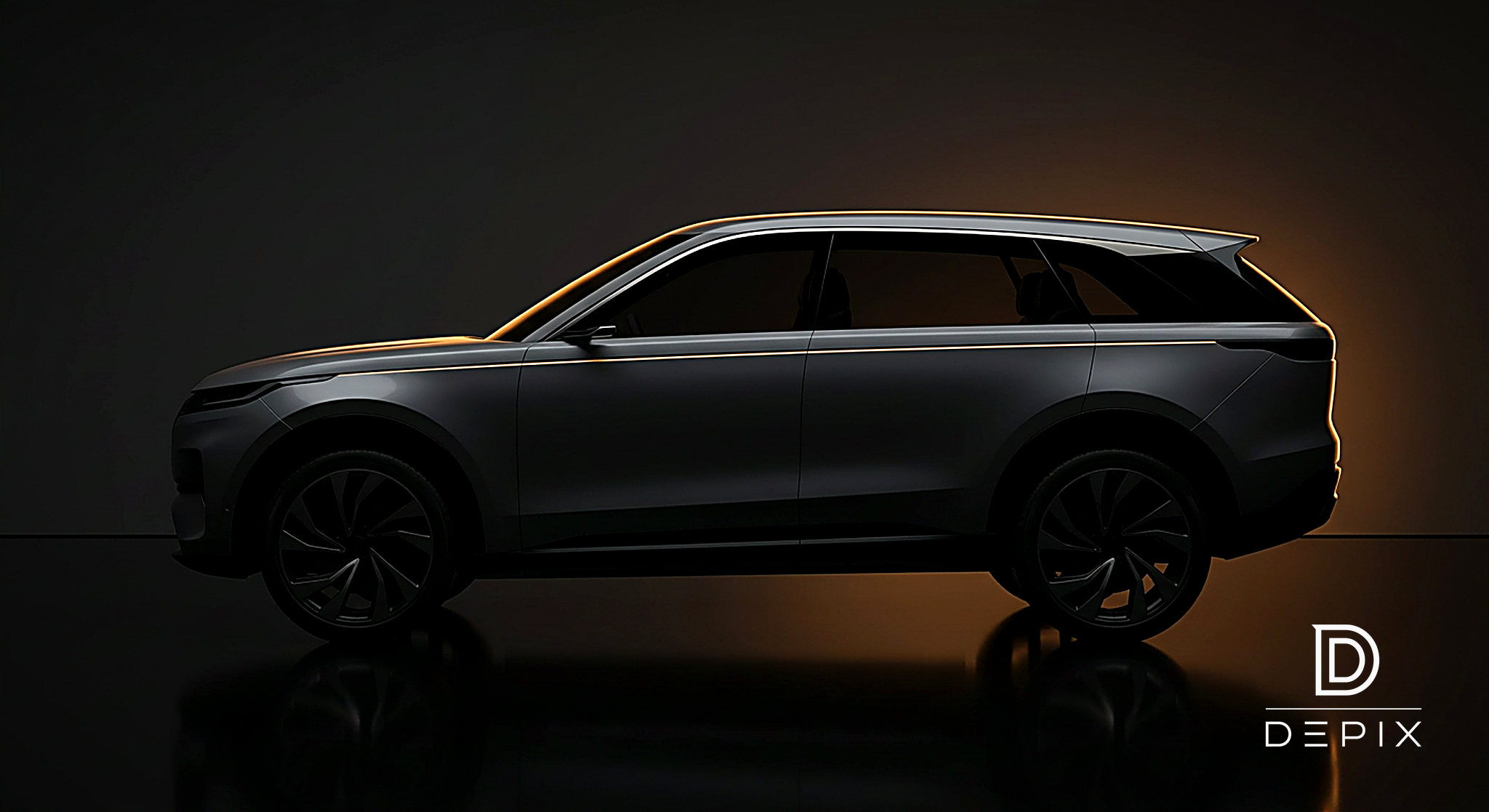
The thin glowing line across the nose of almost every new car — the bit you'd point to and say "that's the headlight" — is, increasingly, not the headlight. It is the daytime running light: a styling signature mounted high where the design reads best. The lamp that actually lights the road has been banished down into the bumper, low and out of the way. The reveal render shows the face glowing in the dark. It cannot show that the light is coming from somewhere you're not looking — and it cannot show that, in 2026, that light is the single most-complained-about thing on the road.
The contested surface here is the front lighting graphic — the "eyes" by which a brand is recognised at a glance. For most of the car's history the eyes and the light were the same object: a round, then rectangular, then wrapped lamp that both was the face and did the seeing. That unity has been broken on purpose. The recognisable graphic — a slim, jewel-like ribbon or a pair of fine brows — is now the daytime running light, sited high on the fascia where it shapes the face. The functional headlamp, low and high beam, is a separate module pushed down into the lower bumper, deliberately understated so it doesn't disturb the signature. The split is now the default front-end language of the industry, and it sits on top of three collisions the studio rarely reconciles in the same room: a brand-identity win, a packaging-and-safety driver, and a public-health complaint about glare that is getting louder every quarter.
The thing you call the headlight is the running light
Hyundai's "Seamless Horizon Lamp" is the trend stated in its purest form. The company describes it as "a sleek line" — one continuous horizontal light bar, on the seventh-generation Grandeur measured at 1.8 metres long and only 6.5 millimetres thick, built from 230 individual LEDs, integrating the daytime running light, position lamp, turn signal and a dynamic welcome animation into a single component it calls "the ultimate minimalism design" (Hyundai Motor Group, 22 Feb 2023). The crucial part is what that ribbon is not: it is not the low or high beam. On the second-generation Kona and the Grandeur that wear it, the main headlamp modules sit lower, in the bumper, below the line that gives the car its face. The graphic you recognise the car by, day or night, is the running light. The light that lets the car see is a separate object you were never meant to notice.
It's everywhere now, and the design reason is honest enough
This is not a Hyundai quirk; it is the front-end default. A 2026 trend analysis of the split-headlight movement puts the design rationale plainly: separating the daytime running lights from the main beams lets a brand build "a recognizable 'face'" up high while giving designers "greater creative freedom in shaping the vehicle's front fascia," and — the part that matters for the SUV era — the high thin line "helps to visually reduce the perceived height of larger vehicles, making them appear wider and more athletic" (Accio, 14 Jun 2026). That is a real designer's argument and a good one: the slim DRL is a more flexible, more brand-ownable, more proportion-flattering graphic than a big all-in-one lamp. The trouble is that the same analysis carries the standard safety gloss — DRLs "positioned higher for better visibility to other road users, while main beams are placed lower to illuminate the road without dazzling oncoming traffic" — as if low-mounting the beam were purely a courtesy. The road in 2026 says otherwise.
The low mount isn't only style — the law and the SUV pushed it down
There is a structural reason the beam went low, and it predates the styling. US federal standard FMVSS 108 requires lower-beam headlamps to sit "not less than 22 inches nor more than 54 inches from the road" (CarBuzz, Justin Pritchard, 16 Jan 2025). As front ends climbed — crossovers and trucks now make up close to nine in ten new-vehicle sales in the US — designers ran into the ceiling of that envelope and the rising scrutiny of pedestrian-impact safety, where the same CarBuzz piece notes the IIHS finding that "vehicles with taller front ends pose a significantly increased risk of serious injuries to pedestrians." Splitting the lamp solves both at once: keep the recognisable graphic up where the design wants it, drop the regulated, pedestrian-sensitive, glare-sensitive beam down into the bumper where the rules and the crash structure prefer it. The split headlight is, in large part, the visible scar of a packaging fight — the studio kept its face by surrendering the light to the engineers and the regulators.
The complaint the render can't show: the road is being dazzled
Here is the state the glowing reveal image conceals. The light that the split-lamp car actually projects is, in 2026, the subject of a genuine public backlash. In RAC research drawn from a January 2026 survey, 57% of drivers affected by headlight glare said the problem had got worse in just the previous twelve months; a quarter (25%) reported either driving less at night or giving up night driving altogether — rising to 33% of under-35s and 43% of those aged 75 and over (RAC Drive, 2026). The cause is not subtle: LED beams run far brighter and bluer than the halogens they replaced — roughly 200 lumens per watt against about 24 for a halogen — and where they sit matters enormously. The RAC found that 56% of dazzled drivers in conventional low cars blame higher vehicles, while only 28% of drivers in higher vehicles blame similar-height ones: the glare is a geometry problem, and headlamp height and aim are at the centre of it (RAC Drive, 2026). The pressure was enough that the UK Department for Transport commissioned independent research into headlight glare, run by TRL across 2024–2025 (RAC Drive, 2026). The reveal render shows a beautiful frozen face. It cannot show what the oncoming driver sees three seconds later.
The split the studio never reconciles
Four parties touch the front lamp and none of them sees the same object. The designer sees the signature — the thin high line that makes the car recognisable from 200 metres and flatters a tall nose into looking wide and planted. The packaging and safety engineer sees a regulated module that has to live inside the FMVSS 108 / pedestrian-impact envelope and is happiest low in the bumper. The lighting engineer sees a beam pattern, an intensity, an aim that determines whether the car is safe and legal and whether it blinds the person in the other lane. And the other road user — never in any of those rooms — sees two different things at two different times: by day, a graphic that is pure brand; by night, a low, hard, blue-white source that a growing majority say is dazzling them. The decision that produced the face and the decision that produced the glare were made by different people optimising different things, and the car ships with both.
The render shows the one state that hides the cost
This is the trap, and it is the recurring one. A car's front end is signed off from the photoreal hero still — and the hero still is almost always shot in the flattering state: dusk or studio dark, the DRL signature glowing, the car static and head-on or three-quarter. That image shows the graphic beautifully and the beam not at all. The property the whole controversy turns on — what this lamp does to the eyes of the person coming the other way, from a low car, on a wet road, at the real mounting height and aim — is structurally invisible in the exact artefact the decision is made from. So the split face sails through review looking like jewellery, the bumper and lamp get tooled, and the truth surfaces later in the place the studio can't see: an oncoming driver flinching, a 75-year-old who has stopped driving at night, a parliamentary review, a survey headline. The face was approved in the one state — frozen, glowing, oncoming-traffic-free — that conceals the thing it should have surfaced.
Where the decision goes wrong — and what we do about it
The mistake is treating the front lamp as a daytime graphic when it is simultaneously a brand signature, a regulated safety module, a packaging compromise, and a promise to every other person on the road at night. The render says "recognisable, premium, planted." The oncoming lane says "dazzled." The two are produced by the same lamp and judged in different rooms.
This is the gap DEPIX Design Intelligence exists to close. Not to style the DRL ribbon or tune the beam pattern — to put the call (where does the signature sit, where does the beam sit, and what does each cost the other and the road) in front of the design chief as photoreal evidence in the states the hero render structurally hides: the proposed face shown as the brand graphic by day and as the oncoming driver sees it by night, from a low car, at the real mounting height; the high-signature/low-beam split rendered against the alternatives — a unified lamp, a higher beam, a softer source — so leadership trades brand recognisability against glare and pedestrian-impact geometry with its eyes open; the face shown not only as a launch-day beauty shot but as the most-affected road user will actually experience it. Side by side, at decision time, while the fascia is still a surface in CAS and the tooling is still unordered — not after a glare survey and a government review turn your signature into a liability.
The point of design intelligence is to use the intelligence of AI to make the better decision before the lamp is tooled, the proportion is locked, and the complaint becomes a headline. Draw the unmistakable face — of course. Then render the version the oncoming lane sees, with the beam truth attached, and decide which split the brand can stand behind when the most-affected person on the road is the one looking back at it. The photoreal output is the evidence. The decision is the product.
Sources
- ●Hyundai Motor Group — "The All-New Grandeur's Seamless Horizon Lamp: A Sleek Line Made By 230 LED Lamps" (Hyundai's own description: a continuous horizontal light line 1.8 m long and 6.5 mm thick, 230 LEDs, integrating DRL/position/turn-signal/dynamic-welcome functions, "the ultimate minimalism design"; main headlamp modules sit lower, below the signature line), 22 Feb 2023 — https://www.hyundaimotorgroup.com/en/story/CONT0000000000078578
- ●Accio — "Split Headlight Trend: Why It's Dominating Car Design" (design rationale: DRLs separated from main beams build "a recognizable 'face'" up high and give "greater creative freedom in shaping the vehicle's front fascia"; the high line "helps to visually reduce the perceived height of larger vehicles, making them appear wider and more athletic"; main beams placed lower), 14 Jun 2026 — https://www.accio.com/business/split-headlight-trend
- ●CarBuzz — "Headlight Height Limits: The Unexpected Consequence of Our SUV Obsession" (Justin Pritchard; FMVSS 108 lower beams "not less than 22 inches nor more than 54 inches from the road"; the SUV ride-height rise — close to nine in ten US sales — pushing front ends up; IIHS finding that "vehicles with taller front ends pose a significantly increased risk of serious injuries to pedestrians"), 16 Jan 2025 — https://carbuzz.com/split-headlight-trend-history/
- ●RAC Drive — "Everything you need to know about headlight glare" (January 2026 survey: 57% of dazzled drivers say glare got worse in 12 months; 25% drive less at night or have stopped — 33% of under-35s, 43% of those 75+; 56% of dazzled drivers in low/conventional cars blame higher vehicles vs 28% the reverse; LED ~200 lm/W vs halogen ~24 lm/W; UK DfT commissioned TRL glare research across 2024–2025), 2026 — https://www.rac.co.uk/drive/advice/road-safety/headlight-glare/
- ●Motor1 — "Why Do So Many Cars Have Split Headlights?" (feature on the spread of the split-headlight layout across SUVs, sedans and wagons; DRL-as-signature up high with main beams tucked low in the bumper as the emerging front-end default) — https://www.motor1.com/news/775651/cars-with-split-headlights/
The window keeps shrinking, and the people inside keep saying nothing

The vents on your car breathe nothing — and the buyer is starting to notice
