
The screen bolted to a seat that was obsolete before it shipped — the one cabin feature a designer keeps installing that the back-seat passenger already replaced with their own
There is a screen on the back of the front seat. It has been there, in one form or another, since the late 1990s: a small display sunk into the headrest, fed by a DVD player, sold as the thing that would keep the children quiet. Three decades on, the studio is still drawing it — and the back-seat passenger has already replaced it with a phone they brought from the kitchen table. The seat-back screen is the rare cabin feature that is contested not because it is dangerous or ugly, but because it may be the single most expensive way to do a job the occupant now does for free. And yet the industry's response has been to make it bigger.
The feature that aged in public. Screens stuffed into the backs of the front headrests "used to scream technology," as the buyer press now puts it; today they "look as nostalgic as portable DVD players from the quirky '90s" (BMW of Milwaukee North, on the 2026 7 Series). That is the core problem, and it is structural, not aesthetic. A screen bonded into a seat is frozen at the moment of tooling: its resolution, its codecs, its connectors, its software. The phone in the passenger's hand is replaced every two or three years and is, by definition, newer than the car for the car's entire life. CARFAX put the verdict bluntly — factory rear-seat entertainment is "generally not worth the money": a tablet "offers all of the benefits," can be clipped to the same headrest, powered from the same socket, and never goes obsolete, while the built-in system's graphics date and its video connections "may become outdated." The price gap is not subtle: the factory rear-seat option on the 2025 Toyota Sienna runs over $1,400; two tablets cost a fraction of that and travel between cars, houses and aeroplanes.
Why this is a real fight, and why the answer is getting bigger. Confronted with a feature the customer has already routed around, a studio has two honest moves: delete it, or make it something a tablet cannot be. BMW chose the second, emphatically. The 2026 7 Series replaces the two little headrest screens with the BMW Theater Screen — a 31.3-inch, 8K ultra-wide panel that drops from the roofline across nearly the full width of the cabin, with Amazon Fire TV and Netflix, Prime, Disney+ and YouTube running off the car's own 5G connection (BMW of Milwaukee North; BimmerTech). That is a coherent counter-argument: no tablet is 31 inches, no phone fills a limousine's rear cabin like a cinema. But it doubles down on the very thing that dated the original — it is more frozen silicon, more tooling, more cost, betting that scale and integration outrun the obsolescence clock. The other camp simply walks away: the cheapest, most future-proof rear-seat entertainment system is an iPad and a $20 headrest mount, and a growing number of mainstream buyers (and reviewers) treat the factory box as money better spent elsewhere.
The part the brochure never shows. There is a quieter reason the seat-back screen is contested, and it lives in the crash, not the configurator. A display protruding from the back of a seat is a hard object in the head-strike zone of the passenger behind it. The patent literature is candid about it: passenger contact with a protruding screen "may result in the screens being inadvertently dislodged, or result in occupant injury in a collision," which is precisely why headrest monitors are engineered to pivot, to be light, and to break away — design work that exists only to undo a hazard a flat seat-back never had. A loose tablet on a flimsy mount is the unregulated version of the same problem: a projectile at the worst possible moment. None of this appears in the hero shot of a child smiling at a cartoon. It appears in the test the studio does not photograph.
What good design intelligence does here. The seat-back screen is a near-perfect specimen of a decision that looks settled in the render and is anything but. The render shows the screen on, the content fresh, the cabin still — the one state in which the feature is unambiguously good. It does not show the screen four years on, running an OS no streaming app supports any more; it does not show the $1,400 line item next to a $300 tablet that does the same job better; it does not show the head-strike geometry in a rear-end collision. Design intelligence is the parallel team that puts all of those states in front of the decider before the seat is tooled: the cinema case BMW is right about and the obsolescence case CARFAX is right about and the crash case the patents quietly engineer around. The right answer is almost never "draw the screen because the segment expects one." It is to know, on evidence, whether you are building a cinema the tablet can't be — or a DVD player that will be obsolete the day it ships.
The screen was never the feature. Being newer than the car the passenger sits in was — and that is the one thing a bolted-in screen can never be.
Sources
- ●Inside the 2026 BMW 7 Series Theater Screen & Rear Seat Tech — BMW of Milwaukee North
- ●BMW Theater Screen – Not Just a Glorified Backseat Screen — BimmerTech
- ●Built-In Car Entertainment Systems: Are They Worth the Money? — CARFAX
- ●Inexpensive DIY Rear-Seat Entertainment Systems (tablet + headrest mount) — Techlicious
- ●Headrest-mounted monitor (occupant-injury / dislodged-screen design problem) — US Patent 8,585,140, USPTO
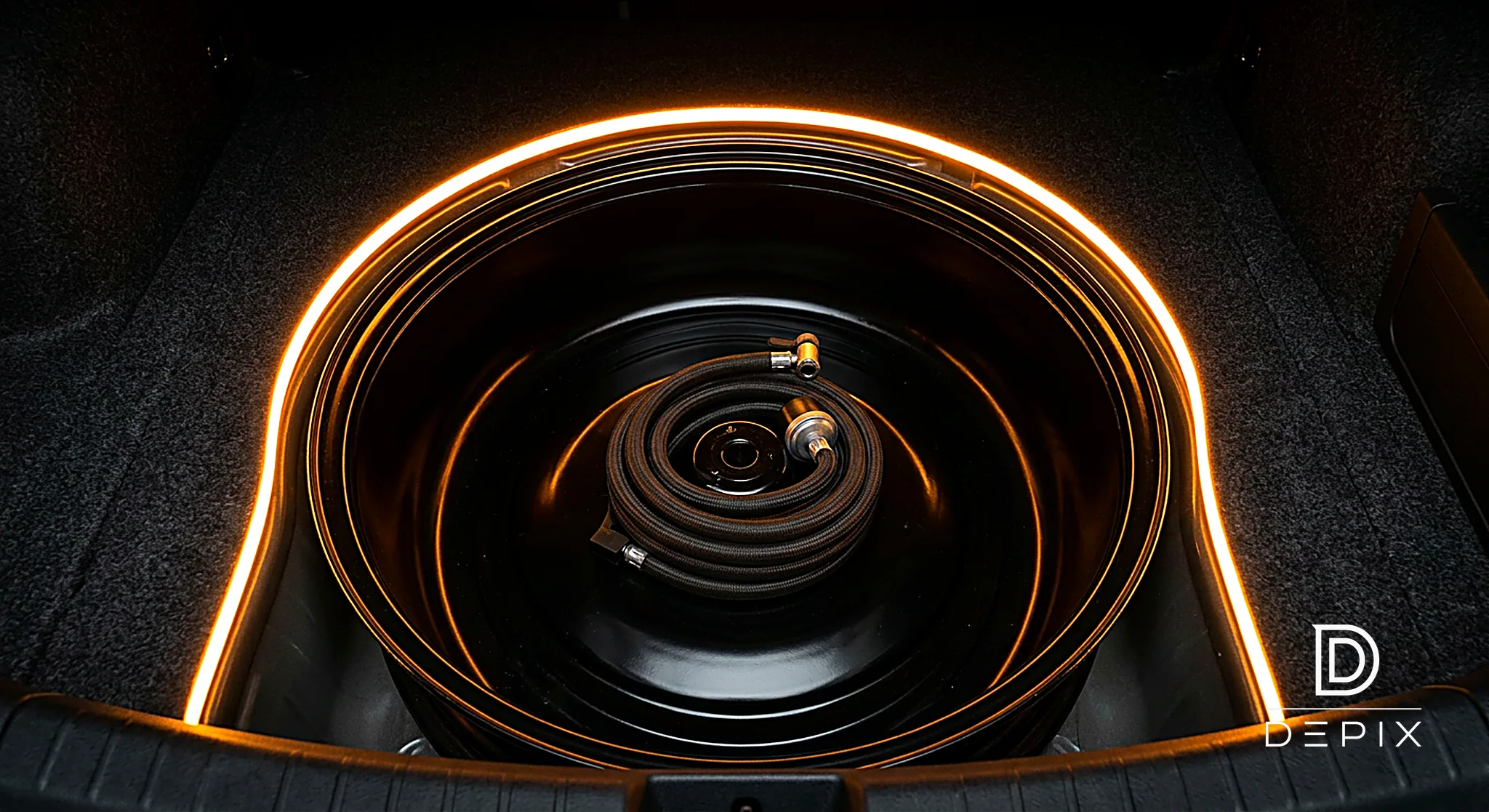
The fifth wheel the spreadsheet deleted — the one part no designer ever wanted, that a quarter of new-car buyers don't know is already gone

The roof that isn't the colour of the car — the cheapest-looking option a studio can charge the most for, that the body shop quietly dreads
Related posts

We made the headlights brighter, bluer, and taller — then made the only cure illegal.

We finally flattened the floor — then deleted the safest seat in the car.

The bridge of air where the gearstick used to be — the console the studio floats for the look, that the elbow and the loose phone never agreed to